Boot Barn Holdings (BOOT): Customer Relationships Drive a U.S.-Centric, Loyalty-Fuelled Retail Franchise
Boot Barn monetizes by selling western and work footwear, apparel, and accessories through a national store footprint and a growing direct-to-consumer e-commerce channel, anchored by its digital flagship, bootbarn.com. The company captures repeat spend through a large loyalty program (9.6 million members as of fiscal 2025) and supplements demand via third‑party channels such as marketplaces and regional resellers. For investors, this is a retail cash‑flow story: high gross margins on branded product, concentrated U.S. exposure, and margin upside tied to e‑commerce mix and inventory turns. Learn more about our signal coverage at https://nullexposure.com/.
Why customers matter: a retail model built on repeat buyers and one flagship site
Boot Barn’s operating model is classic specialty retail: product assortment centered on boots, customers transacting at the point of sale, and digital fulfillment that recognizes revenue on delivery. The business is predominantly consumer‑facing and transactional — individual consumers buy at retail prices, frequently from the loyalty base that generates the majority of sales. On the P&L, this translates to meaningful gross profit (gross profit TTM of roughly $831 million) and operating leverage when traffic, conversion, or repeat purchase frequency improves.
Channel map you need to know
Boot Barn runs multiple channels in parallel: its own stores, pop‑ups at sponsored events, a dedicated e‑commerce site (bootbarn.com), and ancillary third‑party partners and marketplaces. Bootbarn.com is the digital flagship and the single largest e‑commerce driver; third‑party channels are additive rather than core. Investors should treat marketplace channels as complementary distribution that helps broaden reach but can introduce pricing and margin variability.
The explicit customer relationships observed (FY2026 reporting)
Below are every relationship in the source results, with plain‑English summaries and source context.
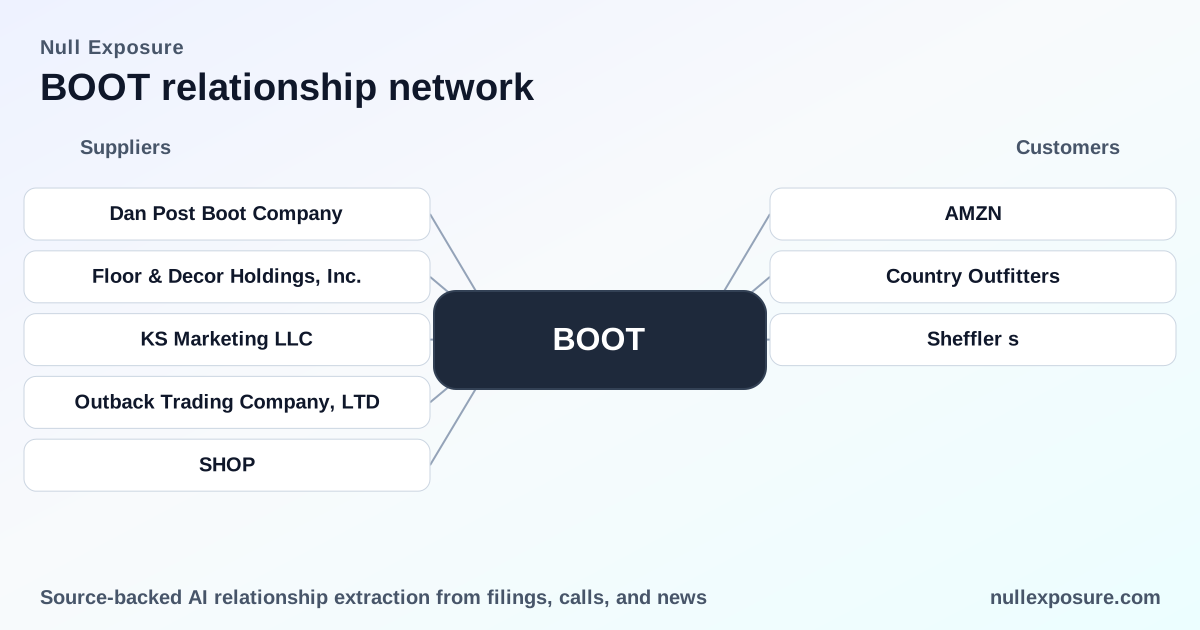
Amazon (AMZN) — entry one
Boot Barn sells product through Amazon as one of several channels outside its flagship site, indicating continued use of large marketplaces to extend reach beyond owned channels. According to an earnings call transcript covering FY2026, the company listed Amazon among the other channels where it historically sold product. (InsiderMonkey Q3 FY2026 earnings call transcript, published March 9, 2026.)
AMZN — duplicate entry
The same FY2026 commentary repeats that Amazon is a distribution channel Boot Barn has used for years, underscoring that marketplace relationships are part of the company’s multi‑channel playbook rather than a new or experimental initiative. (InsiderMonkey Q3 FY2026 earnings call transcript, March 9, 2026.)
Country Outfitters
Boot Barn sells through Country Outfitters as another channel outside its direct site, reflecting partnerships with regional or specialty retailers to reach adjacent customer cohorts. Management noted Country Outfitters alongside other third‑party channels in the FY2026 remarks. (InsiderMonkey Q3 FY2026 earnings call transcript, March 9, 2026.)
Sheffler’s
Sheffler’s is listed by management as an additional secondary channel where Boot Barn products have been sold over time, indicating legacy or ongoing wholesale/reseller relationships that supplement direct retail and e‑commerce. (InsiderMonkey Q3 FY2026 earnings call transcript, March 9, 2026.)
Operational constraints and what they signal about risk and resilience
Company disclosures and the relationship signals produce a coherent picture of how Boot Barn contracts and where operational leverage and risks lie.
- Contracting posture — predominantly spot retail transactions. Sales are recognized at point of purchase for in‑store and upon delivery for e‑commerce, which implies limited long‑term receivable exposure and quick cash conversion. This is a company‑level signal drawn from fiscal 2025 disclosures.
- Counterparty profile — individual consumers. The customer base is primarily retail shoppers ranging from western enthusiasts to workers seeking dependable footwear and apparel, aligning incentives around brand, fit, and service rather than enterprise contracting.
- Geographic concentration — United States‑centric. The company generated approximately 99.6% of consolidated net sales in the U.S. in fiscal 2025, signaling low international diversification and sensitivity to U.S. consumer cycles and regional trends.
- Relationship role — seller. Boot Barn’s relationships are transactional retail sales and sponsorship‑driven pop‑ups rather than embedded B2B procurement contracts.
- Maturity of relationships — mature, repeat purchaser base. The loyalty program is large and established (about 9.6 million members as of March 29, 2025), and the majority of sales are made to these returning customers — a structurally positive signal for predictable revenue.
- Product segmentation — core product focus. The assortment is anchored by western and work boots, with apparel and accessories as adjunct categories that help increase basket size and margin per customer.
All of the above are company‑level signals drawn from fiscal disclosures (fiscal 2025) and recent management commentary.
What investors should watch — levers and vulnerabilities
- E‑commerce mix versus marketplace exposure. Increasing direct e‑commerce penetration through bootbarn.com improves margins and customer data capture; reliance on marketplaces such as Amazon can compress margins and dilute customer ownership.
- Loyalty program retention and activation. With a large loyalty base, small percentage improvements in purchase frequency materially affect revenue and inventory turns.
- U.S. consumption cycles. With almost all revenue generated domestically, macro strength in U.S. discretionary spending and regional weather patterns that influence boot demand are direct drivers of revenue.
- Channel conflict and pricing dynamics. Sales through third‑party resellers and marketplaces create potential pricing and inventory control challenges that can pressure gross margin or brand positioning.
Actionable near‑term indicators: same‑store sales trends, direct e‑commerce growth vs. marketplace sales, loyalty active rate and cohorts, and gross margin trajectory.
Investment takeaway
Boot Barn is a mature, U.S.‑focused specialty retailer with a high‑quality loyalty asset and a clear monetization model centered on product sales across stores and a dominant digital flagship. The firm’s cash conversion is reinforced by retail spot sales and e‑commerce fulfillment timing, while its near‑term upside is concentrated in digital mix optimization and loyalty monetization. Key risks for investors are channel mix dilution from marketplaces like Amazon and near‑term sensitivity to U.S. consumer trends.
For deeper signal coverage and follow‑up diligence on customer relationships and channel risk, visit https://nullexposure.com/.