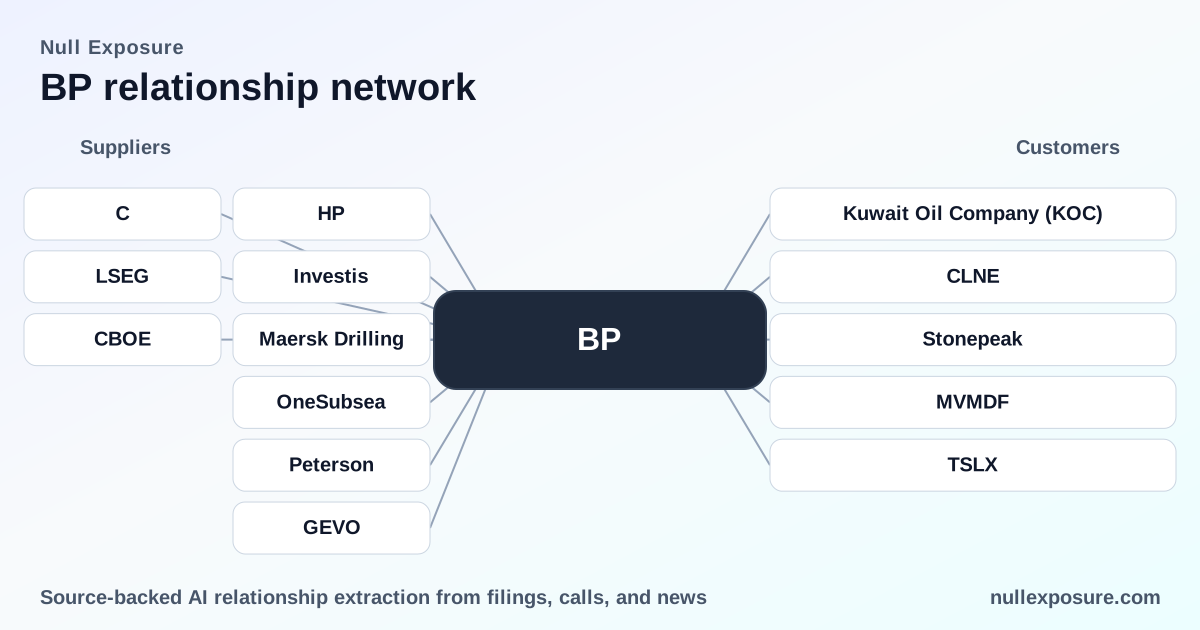
BP’s customer footprint: commercial ties that shape earnings and strategic direction
BP monetizes a global energy value chain: upstream oil and gas production, midstream transport and trading, downstream refining and retail, and an expanding low‑carbon portfolio that sells RNG, power and EV charging services. Revenue derives from commodity sales and marketing, refined product margins, long‑term supply contracts and equity monetizations, while strategic dispositions and JV partnerships recycle capital into growth areas. Investors should evaluate BP through the lens of counterparty concentration, contract tenure, and the criticality of BP as a supplier or buyer across energy subsectors.
How BP contracts and why it matters to investors
BP executes a mixed contracting posture: long‑dated supply agreements and technical service contracts sit alongside asset sales and minority‑stake disposals, enabling capital redeployment while retaining commercial exposure via contracts. Counterparty concentration is sector‑specific — BP is a critical offtaker and supplier for RNG, LNG and refined fuels but also moves to reduce operational footprint through portfolio exits and minority divestments. Maturity of relationships spans legacy shipping and retail supply to newer power and renewable JV arrangements, creating a layered risk profile: price exposure through commodity markets, counterparty credit in supply agreements, and execution risk on strategic transitions.
Explore deeper company relationship analytics at https://nullexposure.com/ for transaction‑level context and source documents.
The relationships that matter — concise, source‑linked summaries
-
GNE (GNE) — GNE pledged restricted cash and trade receivables as collateral to BP against payables and is party to an Amended and Restated Preferred Supplier Agreement maturing November 30, 2026. Source: GNE FY2024 10‑K filing.
-
WDS (Woodside / WDS) — Woodside entered a long‑term agreement with BP to secure up to 640 billion cubic feet of natural gas for a Louisiana LNG project starting in 2029. Source: Woodside earnings call excerpt, 2025 Q4.
-
CLNE (Clean Energy Fuels / CLNE) — Clean Energy Fuels is identified as a seller of RNG to BP and has formed a 50‑50 RNG joint venture with BP, indicating BP’s buyer and JV partner role in low‑carbon gas. Source: CLNE FY2024 10‑K and industry reporting (Rigzone, 2021 referenced in 2026 aggregation).
-
Kuwait Oil Company (KOC) — KOC and BP extended an Enhanced Technical Services Agreement (ETSA) through March 2029, preserving BP’s technical services revenue stream in Kuwait. Source: IndexBox news report, March 2026.
-
Clearlight Energy — Clearlight Energy agreed to acquire BP Wind Energy North America Inc., representing BP’s divestment of an onshore wind business unit. Source: SimplyWall.St report, July 18, 2025 (reported in 2026 aggregation).
-
MVM Energetika / MVMDF — MVM acquired a 10% stake in a BP‑linked Azerbaijan solar project, reflecting BP’s asset rotation and third‑party co‑investment in renewables. Source: SimplyWall.St and RenewablesNow reporting, February–March 2026.
-
Apollo Global Management (APO) — Funds managed by Apollo agreed to buy a 25% stake in BP Pipelines (Tanap) Limited from BP for $1 billion, signaling BP’s pipeline monetization strategy. Source: SimplyWall.St and related news, March 2026.
-
OSG (Overseas Shipholding Group / OSG) — OSG purchased or chartered multiple tankers from BP subsidiaries, evidencing BP’s historical fleet disposals and charter arrangements. Source: gCaptain and MarineLog reporting on vessel sales and charters (2019–2023 events reported in later summaries).
-
SREA (Sempra LNG / SREA) — BP delivered a carbon‑offset LNG cargo to Sempra’s Costa Azul terminal in Mexico, marking BP’s product offering in carbon‑offset LNG sales. Source: VesselFinder news on LNG delivery, 2021 (referenced in 2026 aggregation).
-
CAPL (CrossAmerica Partners / CAPL) — CrossAmerica lists BP among multiple major oil brands with established supply relationships across its U.S. retail footprint, showing BP’s role as a branded supplier in U.S. network distribution. Source: CrossAmerica press releases and filings (2024–2026).
-
TANNZ / TANNI (TravelCenters of America / TA) — BP is rolling out BP Pulse EV charging hubs and the Amoco brand across TA sites, integrating retail branding and EV infrastructure into its downstream network. Source: CSP Daily News and CSNews reporting, January 2026 and related 2024–2025 coverage.
-
Stonepeak — Reporting references BP’s agreement to sell a 65% shareholding in Castrol to Stonepeak, consistent with BP’s strategy to monetize non‑core assets. Source: StockTitan / news aggregation, 2026.
-
MVM (MVMDF) — RenewablesNow reports BP trimmed a stake in a 240‑MW Azerbaijan solar project, selling 10% to MVM, demonstrating BP’s co‑investment and incremental de‑risking of renewables assets. Source: RenewablesNow, March 2026.
-
Sixth Street / TSLX (Sixth Street/TSLX) — BP agreed to sell $1.5bn of pipelines in the US Permian and Eagle Ford basins to Sixth Street, illustrating BP’s capital recycling through asset sales to financial buyers. Source: Yahoo Finance / Financial news, March 2026.
Note: Several CAPL entries in the source set reiterate the same CrossAmerica relationship across press releases and filings (2024–2026); each references consistent supplier relationships between BP and CrossAmerica. Source examples: CrossAmerica press releases and Form 10‑K filings, 2024–2026.
Strategic thread across these customer ties
Across the relationship set, three themes are consistent and material for investors: (1) contract duration — BP relies on multi‑year supply and technical service contracts that stabilize future cash flows; (2) asset monetization — sales of pipelines, wind businesses and stakes in projects free capital and transfer operational risk to financial and strategic buyers; (3) product diversification — BP is both supplier and buyer in RNG, LNG and EV charging markets, shifting revenue composition toward lower‑carbon products while preserving commodity trading exposure.
Investment implications and risk checklist
- Revenue resilience flows from long‑dated contracts and branded retail exposure, but commodity price volatility and counterparty credit cycles remain central risks.
- Execution risk on divestments and JV formations affects near‑term cash generation and long‑term strategic positioning.
- Concentration signals vary by segment: retail partnerships and RNG/LNG supply agreements show distributed counterparties, while pipeline and large asset sales concentrate counterparty risk into financial buyers.
For transaction‑level documents, historical filings and source links used in this review, visit https://nullexposure.com/ to review the underlying company documents and news archives.
This relationship map positions BP as a commercial counterparty that actively rebalances between direct ownership and contract‑based exposure — a dynamic that defines both its cash‑flow profile and strategic optionality.