Bridgford Foods (BRID): Customer concentration, channel dynamics, and what counterparties mean for value
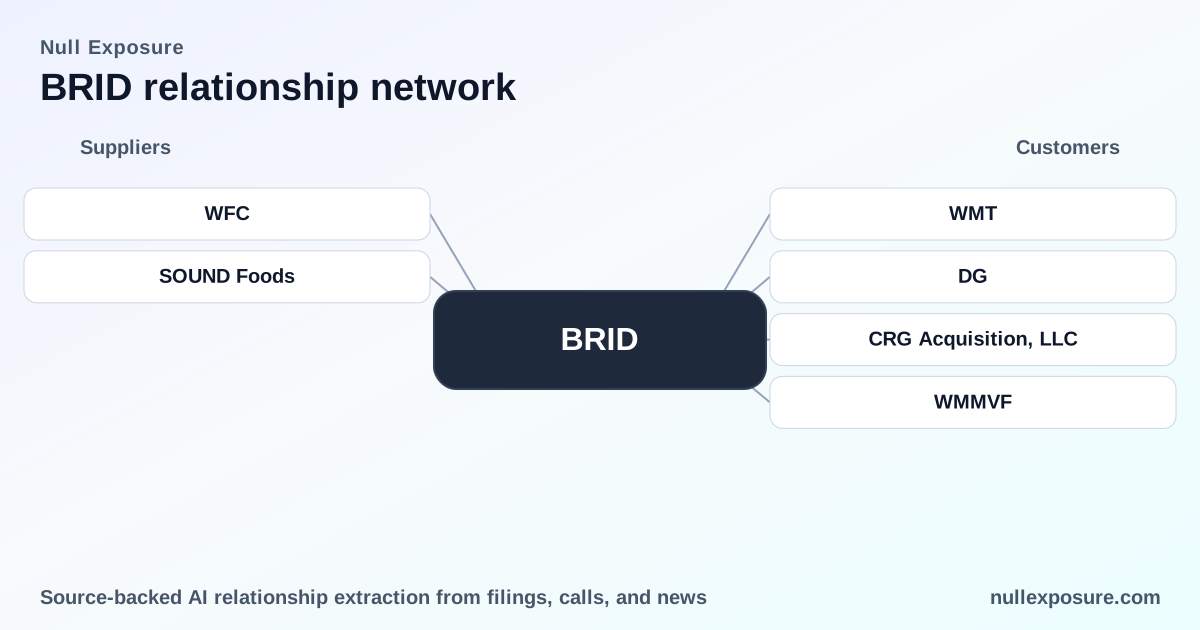
Bridgford Foods manufactures, markets and distributes frozen and snack food products and monetizes through wholesale and retail sales across two reportable segments: Frozen Food Products and Snack Food Products. The company generates revenues by selling branded and private-label items into large national retailers, regional distributors and foodservice operators — a model that produces stable shelf demand but concentrated counterparty exposure and receivables sensitivity. For investors and operators evaluating credit or operating risk, the critical lens is counterparty mix — Wal‑Mart and Dollar General drive a material share of revenue and receivables, while a broad distributor footprint supports national reach. Learn more about how we map customer exposure at https://nullexposure.com/.
The investor thesis in one line
Bridgford is a niche packaged‑foods manufacturer whose upside is a function of execution across distribution channels and cost controls, while downside is dominated by customer concentration risk (large retail anchors and receivable concentration) and margin pressure in a low-growth, competitive aisle.
Why customers are the valuation hinge
Bridgford’s go‑to‑market is a classic manufacturer + distributor + big‑box retailer chain: internal production sells into wholesalers and distributors and directly to national retailers and non‑commercial foodservice. This structure gives the company scale in distribution and placement, but it also creates several operational constraints:
- Concentration: A single large retailer accounts for a third of sales; another national chain represents mid‑teens percent of revenue. That concentration creates earnings volatility and negotiating leverage for buyers.
- Receivables exposure: Large accounts also hold a disproportionate share of accounts receivable, amplifying cash‑flow risk if collection or payment terms shift.
- Channel mix: A meaningful distributor network underpins national coverage, but distributors and foodservice customers imply different margin and payment dynamics than direct retail.
- Geography and segment focus: Operations are U.S.‑centric, split between manufacturing and distribution of frozen and snack categories — this is scale in a defined market, not a global diversification hedge.
Those operating characteristics are company‑level signals drawn from public filings and reporting; they frame how investors should think about contract terms, working capital cycles, and counterparty risk.
Relationship ledger — every reported mention, source by source
Below I cover each reported relationship mention in the dataset. Each entry is a 1–2 sentence plain‑English note with the cited source.
-
TradingView (SEC 10‑K report summary, first seen 2026‑03‑09): The TradingView summary of Bridgford’s 10‑K notes that Wal‑Mart is a major customer, accounting for a substantial share of revenues in the most recent reporting period. Source: https://www.tradingview.com/news/tradingview:b96b1898eb9c1:0-bridgford-foods-corp-sec-10-k-report/
-
Quartz (earnings report, FY2025, first seen 2026‑03‑09): Quartz’s earnings piece reiterates the company’s two operating segments and lists Wal‑Mart and Dollar General as major customers, underscoring the retail concentration thesis in FY2025. Source: https://qz.com/bridgford-foods-corporation-brid-reports-earnings-1851751190
-
Food Business News (facility sale report, FY2020 filing, first seen 2026‑03‑09): Bridgford disclosed a sale of a Chicago processing plant to CRG Acquisition, LLC, indicating asset disposition activity and potential footprint rationalization in past years. Source: https://www.foodbusinessnews.net/articles/15664-bridgford-selling-chicago-processing-plant
-
TradingView (SEC 10‑K report summary, first seen 2026‑03‑09): The same TradingView 10‑K synopsis also highlights Dollar General alongside Wal‑Mart as a significant customer in recent filings. Source: https://www.tradingview.com/news/tradingview:b96b1898eb9c1:0-bridgford-foods-corp-sec-10-k-report/
-
TradingView (SEC 10‑K report summary, first seen 2026‑03‑09): TradingView’s summary repeats the identification of Wal‑Mart as a primary counterparty and material revenue source for Bridgford in the reported period. Source: https://www.tradingview.com/news/tradingview:b96b1898eb9c1:0-bridgford-foods-corp-sec-10-k-report/
-
Quartz (earnings report, FY2025, first seen 2026‑03‑09): Quartz again references Dollar General as a named major retailer customer when summarizing Bridgford’s earnings and segment positioning for FY2025. Source: https://qz.com/bridgford-foods-corporation-brid-reports-earnings-1851751190
-
Quartz (earnings report, FY2025, first seen 2026‑03‑09): Quartz’s coverage also separately calls out Wal‑Mart in the same FY2025 context, reinforcing the dual anchor‑customer characterization. Source: https://qz.com/bridgford-foods-corporation-brid-reports-earnings-1851751190
-
Bridgford Form 10‑K (FY2025 filing): Bridgford’s FY2025 Form 10‑K states that sales to Dollar General comprised 14.2% of revenues in fiscal 2025, and that Dollar General represented 28.8% of total accounts receivable as of October 31, 2025 — a notable receivable concentration. Source: Bridgford Foods FY2025 Form 10‑K (filed in February 2026)
-
Bridgford Form 10‑K (FY2025 filing, duplicate DG mention): The Form 10‑K repeat entry for DG restates the same revenue and receivable figures for Dollar General in FY2025. Source: Bridgford Foods FY2025 Form 10‑K (filed in February 2026)
-
Bridgford Form 10‑K (FY2025 filing): Bridgford’s FY2025 Form 10‑K reports that sales to Wal‑Mart comprised 33.5% of revenues in fiscal 2025 and 8.2% of accounts receivable was due from Wal‑Mart as of October 31, 2025, confirming a single‑customer materiality that drives both revenue and cash‑flow exposure. Source: Bridgford Foods FY2025 Form 10‑K (filed in February 2026)
-
Bridgford Form 10‑K (FY2025 filing, duplicate WMMVF mention): The second 10‑K entry for WMMVF (Wal‑Mart variant) reproduces the Wal‑Mart revenue and receivable figures, reinforcing the single‑retailer concentration point in FY2025. Source: Bridgford Foods FY2025 Form 10‑K (filed in February 2026)
Constraints that shape the operating model
The filings and excerpts produce a compact set of operational constraints investors should internalize:
-
Concentration is a defining risk: Wal‑Mart’s 33.5% share of revenue is explicit in the FY2025 10‑K; Dollar General’s 14.2% of revenue and 28.8% of receivables further emphasize single‑counterparty receivable risk. These are relationship‑level facts grounded in the 10‑K.
-
Channel and counterparty mix are heterogeneous: The company sells through national retail chains, smaller independents, wholesalers, cooperatives and distributors, and also serves non‑commercial foodservice and government channels (including military and institutional buyers). This is a company‑level signal of complexity in margin profiles and contract terms.
-
Geography is U.S.‑centric: The frozen food business covers the United States, which concentrates demand and regulatory exposure domestically.
-
Role and stage: Bridgford functions as both manufacturer and seller to wholesale/distributor channels; relationships are mature and longstanding, which supports stable shelf placement but not immunity to price or payment pressure from large buyers.
Taken together, these constraints indicate a business that is mature and operationally efficient on distribution, but structurally exposed to a small number of large buyers for both revenue and working capital.
Investment implications — what matters now
-
Earnings sensitivity: A loss of favorable terms or shelf placement with Wal‑Mart or Dollar General would have an outsized impact on revenue and working capital metrics. That makes monitoring buyer negotiations and promotions cadence essential.
-
Receivables management is key: Dollar General’s nearly 29% share of AR in FY2025 is a critical liquidity signal and a potential single‑point failure if payment timing shifts.
-
Operational optionality: Asset sales (for example, the Chicago facility sale to CRG Acquisition, LLC) demonstrate management agility to reshape footprint, which can be a source of cash or cost reduction in downside scenarios. Source: Food Business News report on plant sale.
-
Mitigants: A broad distributor network and a split segment model (frozen vs. snack) provide some diversification of routes‑to‑market and product mix, but they do not eliminate buyer concentration.
For a deeper read on counterparty exposures and to map similar supplier/retailer relationships across portfolios, visit https://nullexposure.com/.
Final read
Bridgford’s economics are straightforward: product monetization through established retail and distributor channels yields steady topline but leaves investors exposed to concentrated buyer power and receivable risk. The company’s ability to protect margins and collections with its two largest customers will determine near‑term free cash flow and valuation re‑rating.