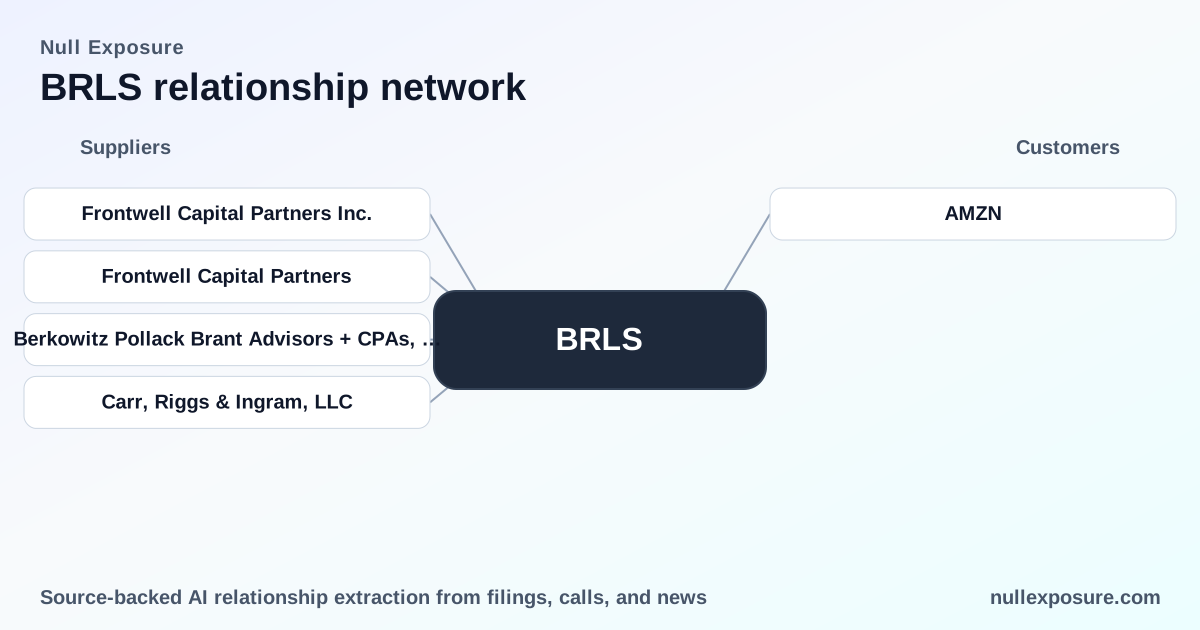
Borealis Foods (BRLS): Customer Relationships That Drive Growth — and Concentration Risk
Borealis Foods sells high-protein, plant-based ready-to-eat products through a mix of retail, e-commerce and institutional channels and monetizes primarily through wholesale distribution to large retail partners and direct e-commerce sales. The company captures scale advantages by producing competitively priced SKUs (reported retail pricing under $2) and leverages both grocery distribution and Amazon as distribution channels; these customer relationships generate the bulk of revenue but create high single- and dual-customer concentration that investors must price into valuation and liquidity scenarios.
If you want a concise, data-driven view of the customer map and what it implies for revenue stability, see our analysis below or explore more company relationship intelligence at Null Exposure.
Retail placement at scale: Walmart is a distribution lever and margin driver
Borealis has secured Walmart placement, which the company uses to deliver low-price, high-protein products to mass-market consumers—pricing that management highlights as a competitive differentiator at under $2 per package. According to Food Business News (May 2026), Borealis’ production scale has enabled retail pricing that targets mainstream grocery buyers, positioning Walmart as a cornerstone retail partner for broad market penetration. (Source: Food Business News, May 2026 — https://www.foodbusinessnews.net/articles/25681-borealis-merges-affordability-high-protein-using-ramen)
E‑commerce scale and milestone sales: Amazon is both channel and growth engine
Borealis lists its products on Amazon and reports significant unit movement through that platform; industry reporting states availability across the U.S., Canada and Mexico and management announced an Amazon milestone of over 2 million units sold. SustainableBiz documented Amazon as a sales channel and the company’s cross-border retail ambitions (mentioning plans for Europe), and a separate report recorded the 2 million unit milestone tied to Amazon sales. (Sources: SustainableBiz, March 2026 — https://sustainablebiz.ca/borealis-foods-cooks-up-sustainable-healthy-instant-noodles; StockTitan reporting of company filing, March 2026 — https://www.stocktitan.net/sec-filings/BRLS/schedule-13g-borealis-foods-inc-passive-investment-disclosure-5-f1af95fd46b6.html)
Institutional and social distribution: Feeding America extends reach beyond retail
Borealis distributes product to food programs and institutional outlets, including donations or shipments to Feeding America, representing a non-retail channel that complements grocery and e-commerce sales and supports brand reach in community and food-security programs. Food Business News specifically notes Borealis’ efforts to send meals to food programs like Feeding America. (Source: Food Business News, May 2026 — https://www.foodbusinessnews.net/articles/25681-borealis-merges-affordability-high-protein-using-ramen)
What the customer map implies about concentration, contract posture and geographic reach
Company disclosures and industry coverage together sketch a clear operational profile that investors must factor into risk and upside.
- High revenue concentration: Company filings report that sales to two customers accounted for approximately 33% of revenue in 2024, and sales to one customer accounted for approximately 57% of net revenues in 2023, indicating that a small number of large buyers control a material share of top-line performance. This concentration is a critical risk factor for cashflow stability. (Source: company disclosures, FY2024 filing)
- Short-term commercial contracts and trade credit: Borealis extends unsecured credit to customers on net 30-day terms with early-payment discounts up to 10%, signaling a short-term receivables cycle and working capital sensitivity to large buyers’ payment timing. (Source: company disclosures)
- Broad North American and Latin American distribution footprint with European expansion plans: Management and press note product availability in roughly 28,000 points of distribution across the U.S., Canada, Mexico and Latin America, and reporting also references distribution across 20,000 grocery stores in North America, with planned entry into France and Germany—an omnichannel footprint that supports scale but also operational complexity across regions. (Sources: company disclosures; SustainableBiz, March 2026)
- Seller role and distribution segment focus: Borealis operates as a product seller through retail and institutional/foodservice channels, positioning the business as a distribution-focused consumer-packaged-goods operator rather than a direct-service business. (Source: company disclosures)
Operational constraints that influence investor decision-making
These are company-level operating model signals — not relationship-specific assertions unless explicitly named in disclosures.
- Contracting posture is short-term and transactional, increasing sensitivity to abrupt volume swings from large customers and to trade-credit cycles. The net-30 terms and early-payment discounts compress margins and tie working capital tightly to receivables cadence.
- Customer concentration is material to critical: a handful of buyers represent a large share of revenue, creating single-counterparty risk that elevates revenue volatility and negotiation leverage for those customers.
- Geographic reach is North America‑first with Latin America exposure, and limited but growing European ambitions; this mix reduces dependence on any single national retail system but increases distribution complexity and cross-border execution risk.
- Channel maturity: the company is an emerging commercial operator with negative operating margins and modest scale metrics (as reported through FY2025 data), so customer relationships that scale distribution quickly are central to moving toward profitability.
Key takeaways for investors
-
Walmart and Amazon are strategic distribution anchors that enable mass-market pricing and unit volume; losing placement or facing significant order reductions would materially affect revenue given the concentration statistics disclosed. (Sources: Food Business News; SustainableBiz; StockTitan/company filing)
-
Short payment terms and unsecured trade credit amplify working-capital exposure to top customers’ behaviors; early-payment discounts further reduce effective margins on large retailer sales. (Source: company disclosures)
-
Institutional channels like Feeding America broaden reach but are not revenue diversifiers at scale—they support brand and social mission while retail and e-commerce drive revenue concentration. (Source: Food Business News)
-
Geographic expansion into Europe is a growth vector, but current sales remain heavily weighted to North America and Latin America, so operational execution and retailer relationships in new markets will determine the speed and quality of international growth. (Sources: company disclosures; SustainableBiz)
-
For investors focused on downside protection, monitor 1) the identity and revenue share of Borealis’ top two customers quarter-to-quarter, 2) changes to retail pricing and slotting at mass merchants like Walmart, and 3) receivables days and early-payment discount uptake—these metrics will move cashflow and valuation most directly.
If you want a deeper breakdown of counterparties and contract signals for modeling scenarios, explore our expanded governance and counterparty maps at Null Exposure for curated, investor-grade relationship intelligence.
Borealis’ customer relationships are simultaneously its greatest growth channel and principal concentration risk; under current disclosures, any change in ordering patterns from Walmart or major e-commerce volumes on Amazon can swing near-term revenue materially, so price the concentration into expectations for cashflow stability and capital needs when evaluating BRLS.