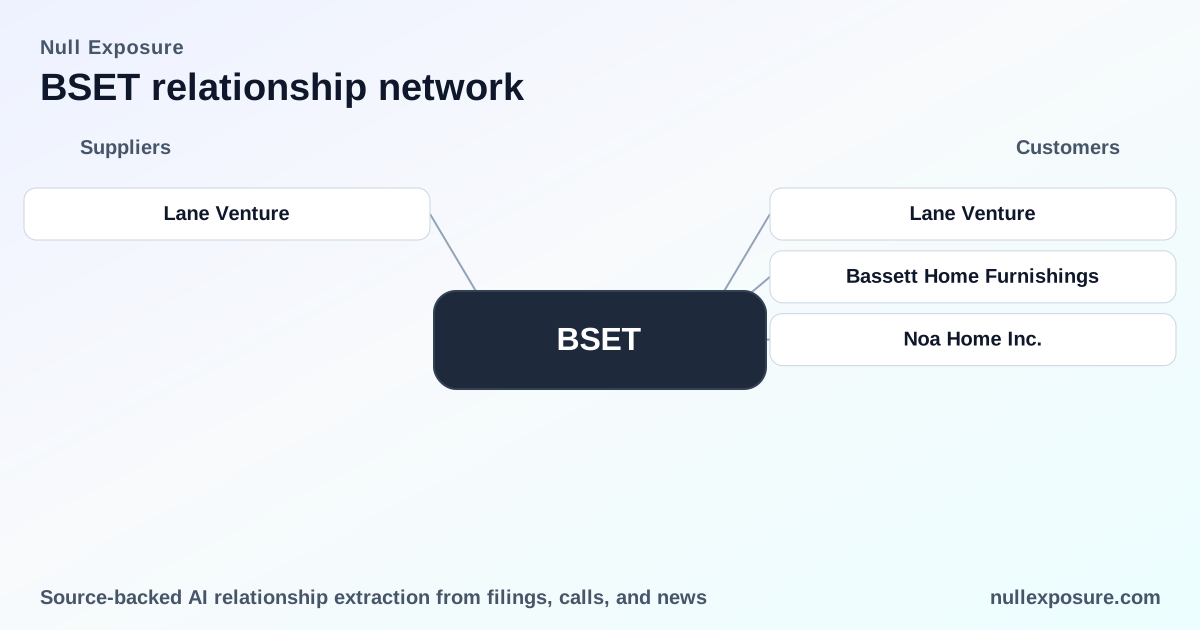
Bassett Furniture (BSET): customer relationships that underpin the wholesale franchise
Bassett Furniture Industries manufactures and sells home furnishings through a hybrid retail‑wholesale model: the company produces and distributes products to an exclusive network of company‑owned and licensee Bassett Home Furnishings (BHF) stores while also servicing a traditional wholesale channel of more than 1,000 open‑market accounts (including the Lane Venture outdoor brand and interior design firms). Revenue is recognized on shipment, with payment terms typically 30–60 days, so the business monetizes by turning manufactured inventory into near‑term receivables across a concentrated customer base. For a focused view of counterparty risk and operating leverage in the wholesale channel, see more at https://nullexposure.com/.
The quick investor thesis
Bassett generates the majority of its wholesale volume through a dual channel: an owned/licensee retail network that accounts for roughly 60% of wholesale sales, and a broad open‑market wholesale channel that services specialty stores, design firms and branded partners. This structure produces steady top‑line flow but concentrates credit exposure in a small set of counterparties and keeps commercial terms short, so the stock’s risk profile is a function of customer concentration and wholesale shipment variability rather than long receivable durations.
Customer roll call: the relationships investors should watch
Lane Venture — an outdoor brand within the wholesale mix
Lane Venture is identified as one of Bassett’s wholesale accounts and part of the company’s sizable wholesale business serving over 1,000 accounts. In FY2026, Bassett reported a 13% decline in shipments for Lane Venture, even as overall wholesale net sales rose, signaling brand‑level volatility inside the larger wholesale bucket. This characterization is drawn from the company’s FY2026 commentary and third‑party reporting on the earnings call (InsiderMonkey transcript, March 2026) and industry news coverage summarizing the wholesale composition (bitget summary, March 2026).
Bassett Home Furnishings (BHF) — the core licensed/owned retail network
Bassett Home Furnishings is an 86‑store network of company‑ and licensee‑owned stores that contributes roughly 60% of wholesale sales, making BHF the structural backbone of Bassett’s wholesale revenue. The company’s public conference call materials and press release for the fourth quarter explicitly attribute the majority of wholesale flow to this network (GlobeNewswire release, January 26, 2026).
Noa Home Inc. — a closed channel with a trailing impact
Noa Home Inc. was a customer channel that closed in late 2024; Bassett’s reported consolidated revenue for FY2025 increased 7.3% when excluding Noa Home sales, indicating that the closure removed a modest but measurable channel effect on year‑over‑year comparisons (The Globe and Mail coverage of the company release, FY2025 results).
How these relationships shape Bassett’s operating model and risk profile
Pulling the public excerpts together gives a coherent picture of how Bassett runs its customer book and what investors should monitor.
-
Short‑term contracting posture. Bassett recognizes revenue at shipment and extends payment terms typically 30–60 days for licensees and wholesale customers, creating a receivables profile that turns quickly into cash but leaves limited time to remediate delinquency. This is a company‑level signal reported in the firm’s fiscal disclosures.
-
Concentration is meaningful and actionable. Bassett reported aggregate customer risk exposure of approximately 18,528 (reported figure) with roughly 41% of that exposure concentrated in five customers, making counterparty distress among a small number of accounts a material risk to earnings and working capital.
-
Mixed geography: national anchor with global reach. The business is organized around a nationwide BHF retail footprint across North America while also recording modest export sales (reported export totals for fiscal 2025, 2024 and 2023 were presented in company filings). North America is core; exports are present but not dominant.
-
Role definitions that matter for remittance and obligations. The BHF network operates through a mix of company‑owned and licensee stores, a structure the company classifies and evaluates for accounting and guarantee exposure; licensee arrangements increase operational control over brand placement but introduce lease‑guarantee and credit dynamics tied to local retail performance. Separately, Bassett’s wholesale channel includes resellers and branded partners (the public filings explicitly cite the Lane Venture outdoor brand inside the wholesale mix), which behave like open‑market customers rather than captive retail outlets.
-
Relationship maturity supports predictability, not invulnerability. Bassett emphasizes a philosophy of long‑term customer relationships, producing a mature relationship profile that dampens churn but does not eliminate top‑line swings dictated by retail traffic and shipments to partners like Lane Venture.
Portfolio implications for investors and operators
Bassett’s customer configuration creates a clear set of investment tradeoffs.
-
Strengths: The company’s BHF network supplies a recurring, brand‑anchored wholesale base that accounts for the majority of wholesale sales and supports margin capture through custom and direct retail flows. Short receivable terms limit DSO compression risk if credit remains intact.
-
Risks: Customer concentration is the defining operational risk: with roughly 41% of risk exposure concentrated among five customers, a single large counterparty disruption could materially affect reported receivables and working capital. Volatility in specific wholesale brands (for example, the FY2026 shipment decline to Lane Venture) can produce outsized movement in quarterly wholesale results. Lease guarantees and licensee economics introduce contingent balance‑sheet obligations that deserve ongoing monitoring.
-
What to watch next: monitor quarterly shipment trends across the wholesale channel, changes in days‑sales‑outstanding driven by 30–60 day terms, and the disclosure of any movements in the top‑five customer exposure. Also track the performance of the 86 BHF stores for indications of retail health and credit stress among licensees.
For a deeper look at Bassett’s counterparty exposures and to track changes across quarters, visit https://nullexposure.com/.
Bottom line
Bassett monetizes through a concentrated wholesale model anchored by its 86‑store Bassett Home Furnishings network and a large open‑market wholesale channel. The business converts inventory into short‑term receivables under 30–60 day payment terms, but retains material counterparty concentration concentrated among a handful of customers—a structural feature that defines its credit and growth profile. Investors should favor continued transparency on top‑five exposures, shipment trends to branded accounts like Lane Venture, and licensee performance metrics to gauge the balance between stable retail flow and concentrated wholesale risk.