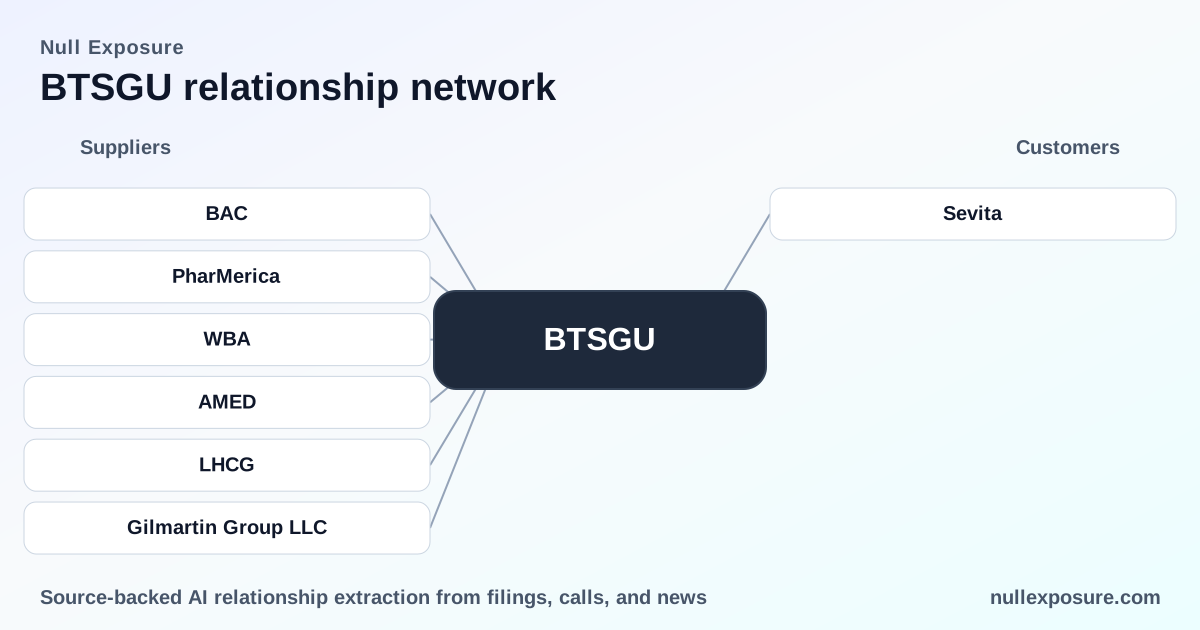
BrightSpring (BTSGU): Customer Relationship Brief — Sevita and Platform Signals
BrightSpring Health Services operates a two‑leg platform that delivers pharmacy solutions and provider services to complex, home‑based patients and monetizes through reimbursement and service fees: government payor reimbursements (Medicare/Medicaid), PBM and specialty pharmacy contracts, and fee arrangements with pharmaceutical manufacturers. The company’s cash profile and leverage moved materially in Q1 FY2026 after the sale of its ResCare Community Living business — an event that changes both capital structure and the footprint of customer-facing services. Investors evaluating BTSGU should view customer relationships through the lens of reimbursement concentration, short contract tenors for many services, and the company’s role as a high‑touch service provider.
Learn more at https://nullexposure.com/
The core customer relationship: what happened with Sevita
Sevita — the transaction in plain English
BrightSpring completed the sale of its ResCare Community Living business to Sevita on March 30, 2026, generating approximately $811 million in net cash proceeds before tax and recording a $31.2 million gain on sale (net of tax) in discontinued operations. The proceeds were designated to reduce leverage and improve liquidity. (GlobeNewswire press release, March 31, 2026; BrightSpring Q1 2026 results release, May 1, 2026).
Why the Sevita deal matters to customers and investors
The ResCare divestiture to Sevita removes a Community Living operating unit from BrightSpring’s direct provider roster while converting operating value into liquidity. According to management commentary on the Q1 FY2026 earnings call, the company expects roughly $100 million of taxes in Q2 on the transaction and plans to apply proceeds to debt reduction, moving reported leverage from about 2.99x to 2.27x and leaving net debt near $1.7 billion. That deleveraging materially changes BrightSpring’s capital flexibility and its capacity to invest in core pharmacy and provider services. (Earnings call transcript, Investing.com; MarketBeat earnings highlights, May 2026.)
Every relationship in the record — concise summaries
- Sevita: BrightSpring completed the sale of ResCare Community Living to Sevita on March 30, 2026, receiving roughly $811M net cash before tax and booking a $31.2M gain on sale, with proceeds earmarked for debt paydown and improved liquidity. (GlobeNewswire, March 31, 2026; BrightSpring Q1 2026 release, May 1, 2026; earnings call transcript, May 2026.)
How BrightSpring’s contracting and counterparty posture shapes risk and optionality
BrightSpring’s customer dynamics deliver both resilience and operational constraints:
- Short‑term, renewal‑driven contracts dominate much of the revenue base. The company documents that many contract terms run one year or less with renewal options and reimbursement windows of 30–60 days, which implies revenue visibility is driven more by recurring performance and claims throughput than by long locked‑in book. This structure supports agility but increases sensitivity to near‑term reimbursement and utilization shifts.
- Spot economic characteristics exist in pharmacy fulfillment. Pharmacy performance obligations often resolve at shipment or delivery — a point‑in‑time recognition model consistent with transactional fulfillment and customer immediacy.
- Longer PBM arrangements coexist with short contracts. PBM agreements range from annual to multi‑year, providing pockets of revenue durability alongside shorter provider contracts; this mixed tenor reduces but does not eliminate churn risk.
- Government payors are principal counterparties. BrightSpring derives substantial revenue from Medicare, Medicaid, MCOs and state agencies; reimbursement policy and rate dynamics therefore drive top‑line sensitivity and working capital timing.
- Geographic concentration is North America. Substantially all revenue is U.S.‑based (with modest Canada exposure), concentrating regulatory and payor risk regionally.
- The company operates as a service provider and distributor. BrightSpring’s role as a provider of care and as a pharmacy distributor makes it operationally critical to patients and pharma manufacturers who rely on its distribution and patient‑access services.
These characteristics are company‑level operating signals and apply across BrightSpring’s customer base; none of the above constraints are attributed specifically to Sevita unless the source explicitly names it.
What the constraints imply for investors
- Revenue predictability is mixed. The combination of short contract tenors and government reimbursement concentration means revenue is dependable in aggregate but exposed to policy and utilization cycles; PBM multi‑year contracts impart partial smoothing.
- Working capital and cash flow timing matter. A 30–60 day reimbursement lag requires disciplined receivables management and makes liquidity events (like the Sevita sale) important to capital structure.
- Service criticality underpins pricing power but requires execution. BrightSpring’s provider‑and‑pharmacy posture gives it leverage with manufacturers and payors when performance is strong, but failing to meet service levels risks contract loss or access restrictions.
- Geographic and payor concentration limit diversification benefits. Heavy U.S. and government payor exposure concentrates regulatory and reimbursement risk.
Financial and corporate implications from the Sevita sale
The sale executes three strategic objectives simultaneously: crystallize value from a non‑core operating unit, materially reduce leverage, and increase near‑term liquidity to support the remaining growth platform. Management’s disclosures show proceeds will be used for debt paydown and liquidity improvement — a direct deleveraging action that improves balance‑sheet optionality for the core pharmacy and provider segments. (MarketBeat; GlobeNewswire, May 2026.)
Risks investors should monitor now
- Contract renewals within a predominantly short‑term book; watch ASPs and utilization trends.
- Reimbursement rule changes for Medicare/Medicaid that affect margins.
- Execution risk in pharmacy fulfillment, given point‑in‑time performance obligations.
- Tax and one‑time accounting impacts from divestitures that can mute near‑term cash flow benefits.
Quick takeaways and next steps
- Sevita transaction materially strengthens the balance sheet and reduces leverage. The sale generates liquidity that lowers financial risk and creates runway for strategic execution. (GlobeNewswire; Q1 2026 release.)
- Customer risk remains concentrated in government payors and short‑tenor arrangements. Revenue durability is mixed; the company balances transactional pharmacy economics with longer PBM relationships.
- Operational execution drives valuation. For investors, monitoring claims throughput, reimbursement timing, and contract renewal trends provides the most direct read on business momentum.
For a consolidated view of relationship‑level signals and how these transactions interlock with capital markets commentary, visit https://nullexposure.com/ — the platform used to source and normalize the disclosures above.
This analysis synthesizes company releases and earnings commentary through Q1 FY2026 to present a concise investor view on how a single material customer/transaction interacts with BrightSpring’s broader operating model.