Peabody Energy (BTU): Customer Relationships and Commercial Posture
Peabody Energy monetizes a global portfolio of thermal and metallurgical coal assets by selling mined coal under predominantly long-term supply agreements to large utility and industrial customers, supplemented by shorter-term and spot sales when market conditions justify. The company’s earnings hinge on contract tenure, seaborne export capability and the stability of its counterparty base — factors that shape credit exposure and revenue predictability for investors. For a concise, regular feed of relationship intelligence, see https://nullexposure.com/.
How Peabody runs the commercial engine — long contracts, global reach
Peabody’s operating model is centered on mining, preparing and selling coal, with long-term coal supply agreements comprising the bulk of volume. According to Peabody’s 2024 Form 10‑K, sales under such agreements accounted for roughly 90% of worldwide mining volumes in 2024 (and similarly high shares in 2023 and 2022). This contracting posture creates a high degree of revenue visibility and reduces short-term commodity volatility in the company’s upstream cash flows.
Key company-level signals from the 2024 filing:
- Contracting posture: The company prioritizes long-term agreements (initial terms ≥ 1 year), which often include price reopener and extension provisions, while keeping a smaller allocation to short-term and spot sales for flexibility.
- Counterparty profile: Peabody sells primarily to large enterprises — electricity generators, energy marketers, steel producers and nonfinancial trading houses — concentrating exposure among creditworthy industrial buyers.
- Global footprint: Peabody operates in the U.S., Australia and other international markets and runs a seaborne platform that services export customers across multiple countries.
- Materiality and maturity: Long-term contracted volumes are material to revenue (approximately 85–92% by volume in recent years), and the company evidences an active commercial pipeline, including ~85 million tons of U.S. thermal coal priced and committed for 2025 per the FY2024 disclosure.
Together these signals depict a business that trades commodity cyclicality for contractual stability and geographic diversification — a profile that matters when assessing counterparty credit, renewal risk and realized prices.
The disclosed customer relationships — what’s on the record
Peabody’s FY2024 disclosure lists active interests across its operations and identifies specific joint ventures and equity stakes as part of its asset footprint. The full results set returned one relationship entry:
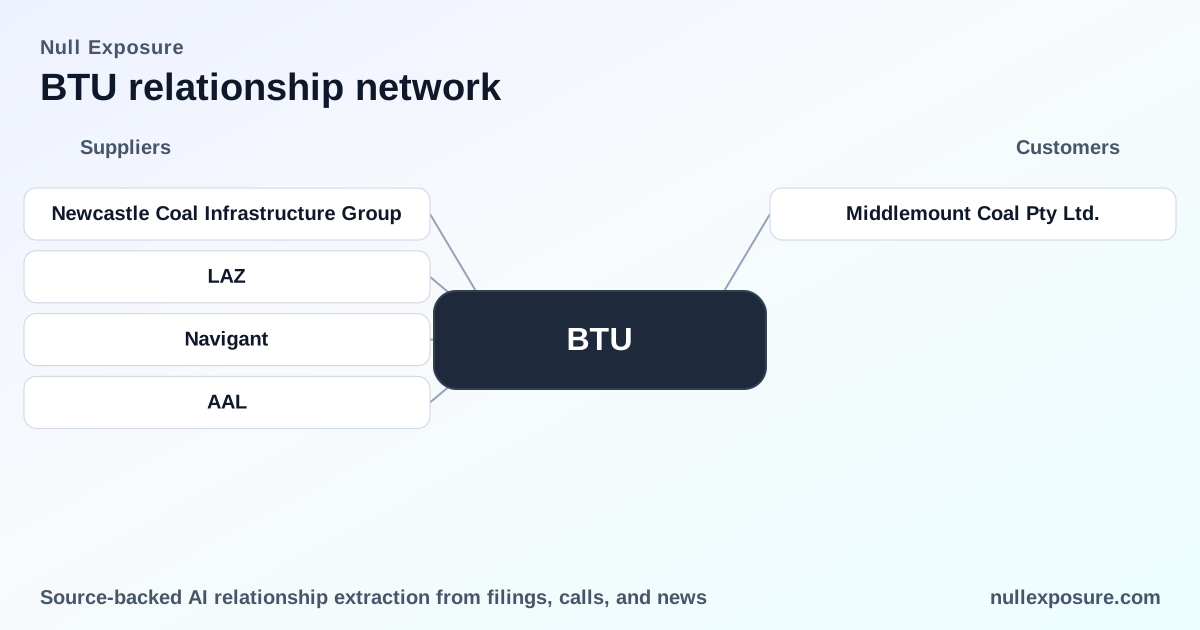
- Middlemount Coal Pty Ltd. — Peabody owned a 50% equity interest in Middlemount as one of its 17 active coal mining operations as of December 31, 2024, establishing the company as a joint-owner of the asset. This is disclosed in Peabody’s 2024 Form 10‑K and is presented as part of the company’s operational portfolio. (Source: Peabody Energy 2024 Form 10‑K, FY2024)
That is the single customer/asset-level relationship disclosed in the results set; the 10‑K catalogs it within Peabody’s broader operating base rather than as a standalone commercial counterparty with separate supply contracts in the filing excerpt provided.
Why these relationship disclosures matter to investors
The Middlemount stake signals Peabody’s strategy of holding operating equity in a diversified set of mines rather than relying solely on third‑party contractors or spot purchases to meet contracted deliveries. From an investor perspective:
- Contract runway and revenue visibility are structural strengths. With long‑term supply agreements comprising the majority of volumes, Peabody locks in demand for production from its asset base, including equity-owned operations like Middlemount (Peabody 2024 Form 10‑K).
- Counterparty concentration is a double-edged sword. Selling primarily to large utilities, steelmakers and trading houses reduces credit and collection risk per transaction, but it leaves Peabody exposed to cyclical demand in a relatively narrow set of industrial customers.
- Geographic diversification limits single-market shocks. A seaborne export platform and Australian operations (including equity stakes) give the company access to multiple markets, dampening the impact of a single regional downturn.
- Active asset management continues to matter. The filing references transactions tied to strategic portfolio moves (for example, contractual sales tied to the Anglo acquisition and planned disposals to third parties such as BUMA), underscoring that asset ownership and dispositions are part of the commercial playbook and affect future contracted volumes (Peabody 2024 Form 10‑K).
For a streamlined view of Peabody’s counterparty posture and to monitor updates to ownership and contract disclosures, visit https://nullexposure.com/.
Investment implications: where the risk/reward lives
Investors should weigh the following, which flow directly from Peabody’s commercial model and disclosed relationships:
- Price sensitivity vs. contract protection. Long-term contracts insulate near-term revenue but include price reopener mechanisms that can reset economics if market conditions deteriorate. That keeps some exposure to commodity cycles while preserving a baseline of committed sales.
- Concentration and credit exposure. Large enterprise counterparties improve collection prospects but concentrate demand risks (utility and steel demand cycles). Monitor counterparty credit quality and any sign of downgrades among major buyers.
- Execution and asset rotation risk. The company’s commercial strategy includes asset sales and acquisitions; successful execution preserves contracted volume targets, while delays or failed sales (for example, asset dispositions tied to strategic deals) could compress expected free cash flow.
- Operational and regulatory context. Thermal coal faces demand headwinds from decarbonization trends in some markets, while metallurgical coal remains tied to steelmaking; Peabody’s mixed product set is relevant when forecasting long-term contract renewals.
Bottom line: Peabody’s customer relationships, typified by equity stakes like Middlemount and a heavy long‑term contract mix, create predictable near-term cash flows but still leave investors exposed to medium-term demand shifts and execution risk on asset management.
What to watch next
- Contract renewals and the incidence of price reopeners in major supply agreements.
- The status and timeline of asset sales tied to larger strategic transactions and whether contracted disposals close as disclosed.
- Changes in the mix between long-term and spot sales and any movement in the company’s committed tonnage beyond the 2025 horizon.
- Counterparty credit developments among major utility and steel customers that could affect collections or renegotiations.
If you evaluate corporate commercial exposures, tracking these items in Peabody’s periodic filings and operational releases is essential for a forward-looking view of earnings durability and downside risk.
Conclusion: Peabody combines a long‑contracted sales model with a geographically diversified asset base and selective asset ownership (for example, a 50% interest in Middlemount), producing a commercially defensive revenue profile that nonetheless requires active monitoring of contract terms, asset transactions and macro demand for coal.