BW LPG Limited (BWLP): Customer Relationships that Move Cash and Risk
BW LPG Limited is an asset-owning and chartering business that monetizes a fleet of very large gas carriers (VLGCs) through time charters, sale-and-lease or sale-and-charterback transactions, and selective asset disposals. The company converts shipownership into predictable cash flow via medium- to long-term charters and recurring dividend distributions; its profitability profile is underpinned by a large fleet, steady global LPG demand, and disciplined capital allocation reflected in a 7.38% dividend yield and a trailing EV/EBITDA of roughly 6x. For background detail and structured signals on counterparties and customer ties, visit https://nullexposure.com/.
Quick financial posture — stable cash engine, asset-heavy balance sheet
BW LPG is a market-capitalized, Singapore-headquartered shipping owner listed on NYSE with a FY running to December. Key financial characteristics: revenue roughly $3.58 billion TTM, EBITDA around $434 million, trailing P/E about 12.5, and a dividend yield north of 7%. These figures indicate a mature, cash-generative midstream shipping operator that converts asset returns into shareholder distributions while maintaining operating leverage to charter market cycles. Institutional ownership sits at ~30% with insiders holding ~38%—a governance and ownership structure that concentrates control and aligns management incentives with large shareholders.
How the operating model shapes customer exposure
BW LPG’s operating model is contract-centric and asset-critical. The company routinely uses time charters and sale/repurchase-style transactions to monetize vessels, which creates:
- Contracting posture: A bias toward medium- to long-term charter contracts that deliver predictable revenue streams and reduce spot-market volatility in earnings.
- Concentration signals: While the fleet diversifies market exposure geographically, counterparty concentration can be meaningful when large transactions involve related entities or group affiliates.
- Criticality: Vessels are mission-critical assets—charter counterparties are essential to revenue realization, so counterparties’ credit and strategic alignment directly affect cash flow.
- Maturity: The company shows the traits of an established midstream operator: steady EBITDA, recurring dividends, and modest leverage metrics implied by EV/EBITDA and strong operating margins (~15.8%).
These are company-level signals for investors to weigh when assessing customer counterparty risk and earnings durability; there are no explicit contractual constraints disclosed in the customer data set beyond reported commercial activity.
What the customer links are — two relationships that matter
The dataset identifies two customer-related relationships. Each is described below with the reporting source.
BW LPG India — intra-group asset sale activity
BW LPG signed a memorandum of agreement to sell two VLGCs to BW LPG India, reflecting an intra-group asset transfer that redeploys capital and adjusts fleet ownership while preserving commercial control options for the group. This transaction is a near-term cash crystallization event that reduces fleet ownership on BWLP’s balance sheet but can preserve revenue through charter arrangements or group commercial redeployment, according to a Business Wire announcement cited via Finviz on May 2, 2026.
BW Group — purchase options and chartering links to the parent group
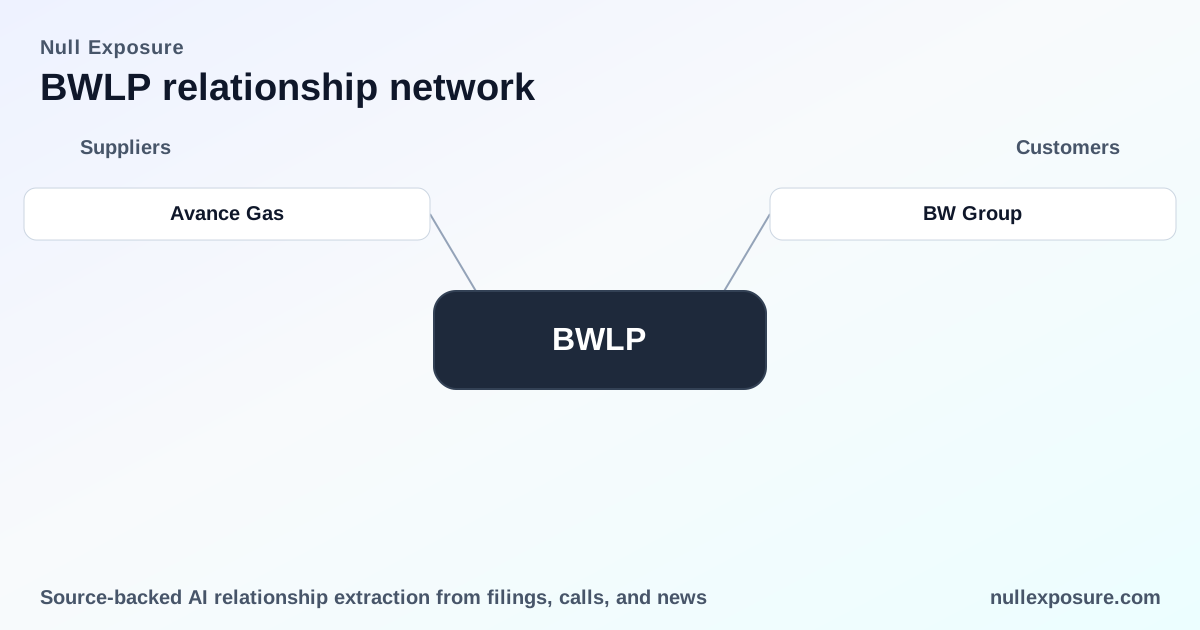
BW Group, the wider shipping conglomerate with dual-listed units, is a recurring commercial partner: the group exercised a purchase option on the vessel BW Yushi (circa $70m) and BWLP has fixed VLGCs on multi-year time charters with BW Group entities, reflecting ongoing affiliate-level asset transfers and long-term chartering relationships that underpin revenue predictability. This commercial and ownership interplay was reported in a Splash247 article on March 9, 2026.
Why these relationships matter to investors
Both relationships highlight two investor-relevant dynamics:
- Affiliate transactions that shift balance-sheet economics. The sale of vessels to BW LPG India is a form of capital recycling that preserves group-level fleet capacity while allowing BWLP to realize asset proceeds; for investors this converts fleet exposure into liquidity and potential dividend funding. Source: Business Wire via Finviz (May 2, 2026).
- Long-term charters and purchase options lock in revenue and crystallize asset values. Transactions with BW Group demonstrate that BWLP benefits from intra-group demand and strategic asset reassignments that support medium-term cash flow and reduce spot-rate dependence. Source: Splash247 (March 9, 2026).
Key takeaway: these customer relationships both de-risk and concentrate BWLP’s commercial profile — they reduce exposure to volatile spot freight but increase economic interdependence with group-related counterparties.
Risk factors highlighted by customer links
- Counterparty concentration risk: Significant commercial activity with group affiliates concentrates credit exposure and leaves BWLP sensitive to group-level strategic shifts.
- Asset redeployment risk: Sales to related entities can reduce consolidated asset base and future upside from charter-rate improvements if not offset by favourable charterback terms.
- Governance and minority-holder considerations: With insiders controlling a large stake (~38%), transactions with affiliates deserve scrutiny for arm’s-length pricing and minority protection, especially when they affect dividend sustainability.
Investment implications and tactical view
For investors focused on income and capital preservation, BWLP’s model—asset-backed cash generation combined with affiliate-supported charters—is a compelling income vehicle, supported by a high dividend yield and stable EBITDA. The trade-off is concentration and governance exposure: affiliate transactions and intra-group purchase options can be value-accretive but also opaque if not fully disclosed or if pricing diverges from market norms.
Institutional investors should watch:
- Disclosure around charterback terms and continued revenue recognition after asset sales.
- Any changes in affiliate counterparty credit quality or strategic posture at BW Group.
- Dividend coverage metrics relative to realized proceeds from asset sales.
Bottom line — actionable investor next steps
BW LPG generates predictable cash through chartering and strategic asset transactions, and the identified customer relationships with BW LPG India and BW Group materially shape that profile. Investors seeking yield and asset-backed exposure should weigh the dividend and EBITDA strength against concentration risk in affiliate dealings.
For a structured view of counterparties and more granular relationship signals, explore NullExposure further at https://nullexposure.com/.