Blaize Holdings (BZAIW) — Customer Relationships That Drive the Edge AI Story
Blaize sells AI-enabled edge computing through a dual hardware-plus-software model: compute cards embedding its GSP processor and a low‑code/no‑code software stack that together enable on‑edge inference and hybrid edge/core deployments. The company monetizes via hardware sales, software licenses/subscriptions and multi-year enterprise contracts, with recent commentary highlighting meaningful enterprise bookings that will drive near‑term revenue recognition and production cadence.
If you want continuous tracking of these customer signals and earnings‑call extractions, visit https://nullexposure.com/ for regular updates.
Two customer relationships move the revenue needle right now
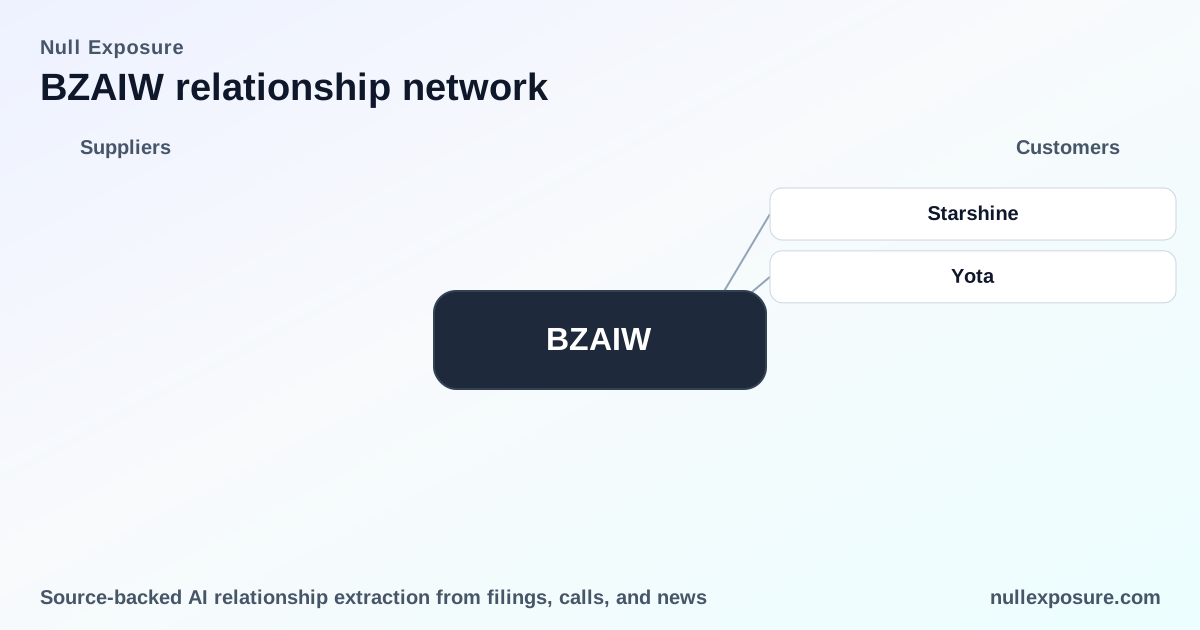
Blaize’s public disclosures show two named customers in recent earnings calls. Each relationship offers a different signal: scale and geography for Starshine, and execution/delivery for Yota.
Starshine — a large, headline contract in Asia
Blaize disclosed a $120 million contract with Starshine to build hybrid AI systems across Asia, which represents a material enterprise win and validates demand at scale for Blaize’s combined hardware/software solution. According to the company’s 2025 Q2 earnings call, management presented this as a flagship order tied to regional deployments and hybrid system integration (2025 Q2 earnings call).
Yota — purchase order in fulfillment and near-term deliveries
Blaize reported it is fulfilling Yota's purchase order with initial deliveries expected to be completed this year, a signal that the company has moved from pilot phases to production shipments on at least one customer program. That update came in the 2025 Q3 earnings call where management described ongoing delivery activity (2025 Q3 earnings call).
What these two wins imply about Blaize’s commercial posture
- Scale and concentration: The Starshine contract is large relative to Blaize’s trailing revenue and implies meaningful concentration risk if a few enterprise contracts dominate annual bookings. A single $120 million order can materially change fiscal-year revenue profiles and gross‑margin dynamics once recognized.
- Commercial maturity: Yota’s transition from order to delivery indicates Blaize is progressing from testing to manufacturing and logistics execution — an important signal of commercial maturity for a hardware vendor.
- Geographic reach and use case validation: Starshine’s Asia focus underscores Blaize’s ability to sell regional hybrid systems, suggesting cross‑border supply chain and compliance considerations that investors should monitor.
- Revenue model mixture: Both relationships reinforce Blaize’s hardware-led sales with software/solutions attached, aligning with the company’s public description of compute cards plus a full‑stack software platform.
Company-level signals from filings and evidence excerpts
Several non‑customer excerpts from filings and calls provide company‑level constraints and operational characteristics:
- Financing/backstop posture: A Backstop Subscription Agreement dated April 22, 2024, required the Sponsor to purchase shares to ensure a minimum cash threshold at closing, indicating a SPAC-era financing safety net that reduced execution risk around listing capital. This is sourced from the company’s April 2024 filing discussing the backstop arrangement.
- Enterprise counterparty profile: Management stated that sales cycles with large enterprise customers can be long and unpredictable, pointing to a deliberate, resource‑intensive commercial approach aimed at large customers rather than high‑volume small shipments.
- Relationship maturity: Public remarks note that Blaize has worked with customers in testing and technical evaluations across industries, which signals a pipeline heavy on pilots and technical validation prior to scale deployments — consistent with early enterprise commercialization.
- Product segmentation: Company descriptions explicitly categorize offerings as hardware (compute cards incorporating the GSP processor) and software (a programmable processor architecture and low‑code/no‑code platform), clarifying the mixed revenue streams and the technical bundling that drives enterprise deals.
These excerpts function as company‑level evidence of Blaize’s contracting posture, customer concentration tendencies, criticality of its solutions to specific enterprise use cases, and the relative maturity of customer engagements.
Financial and operational implications for investors and operators
- Revenue recognition spike potential: The Starshine contract, if deliverable within a fiscal period, can generate a pronounced revenue uplift and materially improve the company’s Price/Sales profile given current scale. Watch how management describes milestone accounting and backlog treatment in the next quarterly filing.
- Execution risk concentrated in delivery and supply chain: Large hardware orders shift the risk profile from sales to production, testing, and logistics. Yota’s early delivery progress is encouraging, but long‑lead component availability and manufacturing ramp issues remain primary delivery risks.
- Margin leverage and mix: Hardware shipments will initially carry component and manufacturing costs that compress margins; the attached software/subscription element is the logical margin lever over time. The balance between hardware recognition and recurring software revenue will determine durable gross margin expansion.
- Customer concentration risk: A single multimillion-dollar contract materially influences financials at Blaize’s current revenue base. Investors must assess the pipeline breadth beyond the two named customers to gauge sustainability.
Practical checklist for monitoring commercial progress
- Confirm how much of the Starshine $120 million is recognized in which fiscal periods and the milestone/payment schedule cited in subsequent filings.
- Track shipment confirmations and acceptance tests for Yota to validate timing of revenue recognition and to surface any warranty or integration liabilities.
- Monitor commentaries on manufacturing capacity, supplier commitments, and lead times to evaluate the company’s ability to scale deliveries without margin leakage.
- Watch for additional enterprise name disclosures that reduce concentration risk and demonstrate a broadened customer base.
Bottom line and next steps
Blaize is at a pivotal commercialization juncture: Starshine provides a high‑value validation of demand and Yota demonstrates that Blaize is executing shipments. Collectively, these relationships shift the narrative from pilot to production but concentrate risk in delivery and single‑customer dependence. Investors should focus on revenue recognition detail, backlogged orders, and margin evolution in upcoming filings and earnings calls.
For a rolling feed of customer‑level signal extraction and to compare Blaize’s customer moves against peers, visit https://nullexposure.com/.
Key takeaway: large enterprise contracts are now driving Blaize’s near‑term revenue profile, but execution and customer diversification will determine whether these wins convert to sustainable growth.