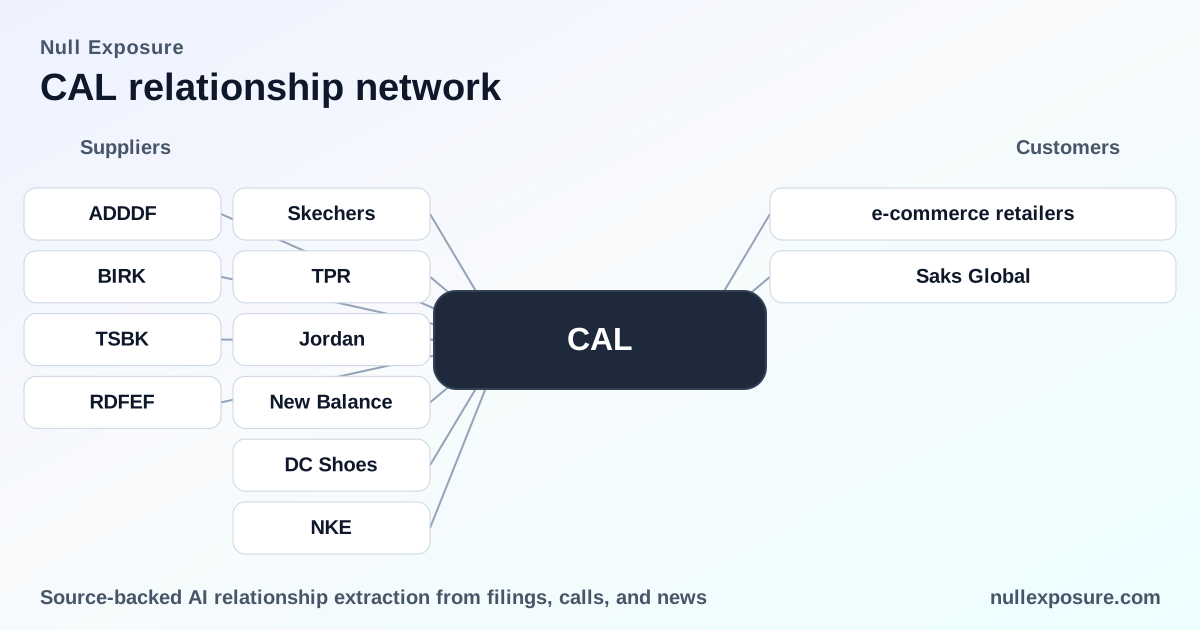
Caleres (CAL) — customer map and what it means for revenue and risk
Caleres is a vertically integrated footwear company that monetizes through two complementary channels: retail sales (Famous Footwear and direct-to-consumer e‑commerce) and wholesale distribution to a broad set of retailers. The business combines point‑of‑sale retail economics with brand portfolio wholesale margins, and its revenue profile is shaped materially by loyalty‑driven retail demand and large wholesale relationships. For a concise, investor‑facing view of the platform and partner exposure, visit https://nullexposure.com/.
Quick take: what investors need up front
Caleres runs a mixed model: retail‑dominant revenue generation supported by a global wholesale distribution arm. The company recognizes retail sales at the point of sale and distributes product wholesale to more than 2,200 retailers across North America and approximately 58 additional countries, creating a balance of spot retail cash flows and recurring wholesale contracts that influence working capital and risk.
How Caleres’ customer relationships show up in filings and media
Below are the relationships surfaced in public filings and industry coverage. Each entry is a plain‑English summary with the supporting source.
E‑commerce retailers — wholesale channel to online merchants
Caleres explicitly identifies e‑commerce retailers as a component of its wholesale customer base, alongside national chains and mass merchandisers, reflecting that the Brand Portfolio is sold broadly via online partners. This designation is drawn from Caleres’ FY2025 Form 10‑K disclosure. (Caleres FY2025 10‑K, filed Feb 2026)
VNCE (Vince) — drop‑ship and assortment partnership
Vince has publicly described a drop‑ship relationship that leverages Caleres shoe inventory to fill assortment gaps and expand Vince’s product mix, indicating direct inventory collaboration rather than a simple one‑time purchase. The arrangement is discussed in both Vince earnings transcripts and investor coverage. (Vince earnings call transcript and Investing.com / InsiderMonkey coverage, Q3–Q4 2025 / FY2026)
Saks Global — bankruptcy exposure and earnings impact
Industry reporting linked Caleres’ fourth‑quarter performance to the Saks Global bankruptcy, which could create sales volatility and a modest earnings‑per‑share headwind; Caleres disclosed it is evaluating the impact, including potential bad‑debt reserves. (WWD reporting and company commentary as covered by WWD, March–May 2026; Intellectia.ai summary March 2026)
Saks (SAKSOFT.BSE label in one report) — shipments stopped and reserves taken
Caleres’ own commentary in earnings transcripts notes shipments to Saks were halted for a period and the company recorded a full reserve for related bad debt, an operationally material action that directly affected fourth‑quarter execution. (InsiderMonkey transcript of Caleres Q4 2025 earnings, May 2026)
Operating constraints and what they imply for the business model
The public evidence yields a set of company‑level operating signals that shape how investors should think about revenue durability, counterparty risk and contract posture.
- Contracting posture — predominantly spot retail and wholesale orders. Caleres recognizes retail sales at the point of sale, which indicates a high share of cash/spot transactions in its retail channel and shorter contractual duration for many customer interactions compared with long‑term supply contracts.
- Geographic footprint — North America first, global distribution second. Net sales are heavily weighted to the United States, but the Brand Portfolio is distributed to Canada and roughly 58 other countries, meaning domestic retail trends drive the bulk of revenue while wholesale gives geographic diversification.
- Concentration and criticality — loyalty program drives a large share of demand. Approximately 75% of Famous Footwear sales were generated by Rewards members in 2024, making program retention a critical revenue driver rather than a marginal channel.
- Relationship role — Caleres operates as seller and distributor. Disclosure of discounts and allowances to wholesale customers underscores the firm’s seller role with negotiated commercial terms across its Brand Portfolio.
- Segment maturity and distribution posture — established wholesale/distribution platform. The Brand Portfolio’s distribution to some 2,200 retailers signals a mature wholesale operation that supports both national and independent customers.
- Spend and allowance signal — mid‑range customer economics. Customer allowance figures reported for the fiscal year imply meaningful commercial allowances in the $10m–$100m spend band, which shapes margin volatility and promotional expense dynamics.
Investment implications: drivers and risks
- Revenue durability is tied to retail loyalty and wholesale partner stability. The Reward program concentration makes in‑store/loyal customer behavior central to near‑term revenue predictability; loss of loyalty engagement would compress sales meaningfully.
- Wholesale counterparts can create episodic risk. The Saks Global situation demonstrates how a single large wholesale customer’s distress can produce immediate margin and working capital impacts (stopped shipments, bad‑debt reserves).
- Strategic partnerships like the VNCE drop‑ship relationship are margin and inventory levers. Drop‑ship arrangements enable incremental reach with lower store capital requirements and help smooth inventory turn, but they also transfer some margin and control to partners.
- Geographic exposure limits some macro risk, but global distribution adds complexity. Heavy U.S. concentration keeps the company sensitive to domestic consumer cycles, while international wholesale provides diversification at the cost of longer receivable cycles and FX/operational complexity.
Bottom line for investors
Caleres’ operating model blends high‑frequency retail cash flows supported by a global wholesale engine. The business is materially dependent on its Famous Footwear loyalty base and on a wide set of wholesale relationships, which creates a mix of predictable retail receipts and episodic counterparty risk exemplified by the Saks interaction. For investors evaluating counterparty exposure and revenue resilience, the combination of spot retail economics, mature distribution to thousands of retailers, and mid‑range commercial spend signals a company with steady core cash flow but exposure to concentrated wholesale shocks.
If you want a more granular customer‑level risk assessment or scenario analysis for Caleres, explore the platform at https://nullexposure.com/ — the entry point for deeper relationship maps and exposure analytics.