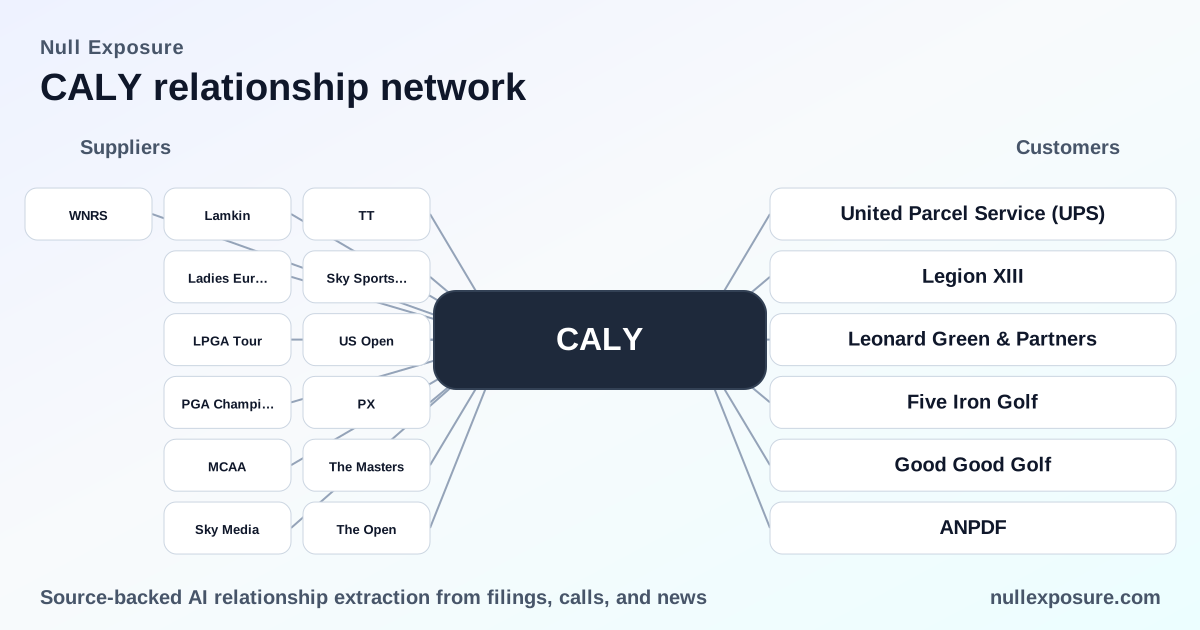
Callaway Golf (CALY): Customer map and what it means for investors
Callaway Golf monetizes through a mix of equipment and apparel sales, licensing and venue-based entertainment operations. The company designs and sells golf clubs, balls and apparel through wholesale distributors, retail partners and direct-to-consumer channels, while licensing proprietary technologies such as Toptracer and operating venue assets under the Topgolf/Toptracer/Swing Suite umbrella; recent portfolio moves (asset sales and minority divestitures) reflect a strategic refocus on core golf equipment. For investors, the customer profile combines broad retail distribution with selective strategic partnerships and recurring licensing income—a business that generates scale through consumer reach while extracting higher-margin royalties from technology and venue agreements. For more customer intelligence on CALY, visit https://nullexposure.com/.
The partner list you need to know
Below I cover every customer- and partner-facing relationship surfaced in the public record and news sample for CALY. Each entry is a plain-English take with the source called out.
United Parcel Service (UPS)
Callaway uses UPS for substantially all ground shipments to U.S. customers, making UPS a critical logistics counterparty for last‑mile product delivery. This reliance on a single domestic shipper for ground fulfillment is documented in Callaway’s FY2024 10‑K. (Source: Callaway FY2024 10‑K, referenced 2026)
Takeaway: UPS is an operational dependency for U.S. product distribution and affects cost and service performance for e-commerce and retail shipments.
Legion XIII (Jon Rahm’s LIV team)
Callaway signed a deal to become the official club supplier to Jon Rahm’s LIV Golf team, Legion XIII, marking Callaway’s first official club-supplier relationship with a LIV team and reflecting a strategic sponsorship and product-supply partnership. (Source: Front Office Sports, March 2026; Golf.com, March 2026)
Takeaway: This sponsorship extends product visibility on an elite playing platform and reinforces the brand’s competitive-equipment positioning.
Leonard Green & Partners
Callaway and its Topgolf businesses completed a transaction selling a 60% stake in Topgolf and Toptracer to Leonard Green & Partners, a private-equity investor; public reporting values that deal at approximately $1.1 billion. (Source: Golfweek/USA Today, Nov 2025; SGB Online, March 2026)
Takeaway: The LGP transaction materially de-risks Callaway’s venue exposure while preserving a strategic relationship through minority ownership and licensing flows.
Five Iron Golf
Callaway announced a partnership with indoor simulator chain Five Iron Golf to designate each Five Iron location as a Callaway Certified Fitting Center, integrating Callaway fittings into urban simulator venues. (Source: MyGolfSpy, March 2026)
Takeaway: This partnership expands Callaway’s fitting and brand footprint in dense urban markets and creates additional distribution and consumer-experience outlets.
Good Good Golf
Callaway has an established partnership with social/entertainment golf brand Good Good Golf that dates to 2023, aligning Callaway with digitally native golf content and consumer engagement channels. (Source: Dallas Innovates, referenced 2026)
Takeaway: The Good Good Golf tie enhances Callaway’s reach into younger and digitally native golf audiences.
Anta Sports / ANPDF (Jack Wolfskin transaction)
Callaway completed the sale of its Jack Wolfskin outdoor apparel business to Anta Sports for $290 million as part of a strategic refocus on core golf-related assets. Multiple reports document the sale and its role in reshaping Callaway’s portfolio. (Source: SGB Online, March 2026; Golf Business News, March 2026)
Takeaway: The Jack Wolfskin divestiture to Anta generates non-core liquidity and signals a commitment to concentrate capital and management attention on golf equipment and related franchises.
What these relationships reveal about Callaway’s operating model
Callaway’s customer relationships indicate a hybrid commercial posture: broad, retail-oriented distribution combined with selective, higher-margin licensing and strategic partnerships.
- Contracting posture: Callaway operates both product sales agreements (wholesale and retail) and licensing contracts—Toptracer and Swing Suite licensing is an explicit revenue stream, demonstrating a deliberate shift toward recurring, contract-based income in addition to one-time product sales. (Company disclosures reference licensing and royalty recognition for Toptracer and Swing Suite.)
- Counterparty mix: Callaway sells direct to individual consumers and through wholesale/distributor channels; the company explicitly serves on‑ and off‑course shops, national retailers, e-commerce buyers, and venue operators. This diversified counterparty set reduces single-counterparty concentration risk.
- Geographic footprint: Revenue is concentrated in North America while maintaining global distribution in Europe and Asia; the firm reports the United States as its principal market but operates internationally across EMEA and APAC channels.
- Concentration and materiality: On a consolidated basis, no single customer accounted for more than 10% of revenue in 2024, which positions Callaway as lacking material customer concentration but still sensitive to retail channel dynamics.
- Relationship roles and criticality: The business mixes buyer/distributor relationships for goods with venue and technology licensees for services; logistics partners such as UPS are operationally critical for fulfillment but not revenue-generating customers.
These are company-level signals drawn from Callaway’s filings and public commentary rather than tied to any single named partner.
For an ongoing, investor-grade view of how these commercial ties evolve, see https://nullexposure.com/.
Investment implications and risk factors
Callaway’s commercial architecture drives distinct investment implications:
- Positive: Recurring royalties and licensing from Toptracer/Swing Suite improve revenue quality and create higher-margin, asset-light cash flows compared with hardware sales. Strategic sponsorships (e.g., Legion XIII) and experiential partnerships (Five Iron, Good Good) support brand equity and lifetime customer value.
- Risk: Operational exposure to logistics providers and retail-channel health can compress margins or slow sell-through; reliance on broad retail distribution leaves revenue sensitive to consumer discretionary cycles. The company’s divestitures reduce complexity but increase dependence on the core golf equipment cycle.
- Portfolio strategy: The LGP minority sale of Topgolf assets and the Anta sale of Jack Wolfskin both return capital and management focus to the core equipment business, improving balance-sheet flexibility while potentially ceding some upside in venue and outdoor-apparel growth trajectories.
Bottom line for investors
Callaway’s customer landscape combines scale in consumer sales with strategically chosen partnerships and licensing agreements that shift the revenue mix toward higher-margin, recurring sources. The company is structurally diversified across retailers, direct consumers and licensees, with an operational dependency on logistics partners and a geographic concentration in North America. Portfolio streamlining through targeted divestitures has improved focus and liquidity, but investors should monitor retail sell-through, logistics costs, and the performance of retained minority stakes in venue businesses.
For a concise, data-driven summary of Callaway’s counterparty map and real-time relationship signals, visit https://nullexposure.com/.