Capricor’s commercial pivot: how partnerships convert clinical success into revenue
Capricor Therapeutics develops cell- and exosome-based therapies and monetizes primarily through exclusive commercialization and distribution agreements for its lead asset, deramiocel, rather than direct global sales today. The company has converted clinical progress — notably positive Phase 3 HOPE‑3 data — into upfront payments, stepped milestone receipts, and large contingent sales milestones via partner deals that assign distribution to external pharmaceutical companies across the U.S., Japan and (under term sheet) Europe. For investors, the question is no longer whether Capricor can build a product; it is how partner economics, geographic exclusives and milestone timing will determine realized cash flow and valuation. (Explore the underlying relationship signals at https://nullexposure.com/.)
Commercial structure: a partner-first model with concentrated counterparty exposure
Capricor’s operating model is explicit: the company retains clinical development and manufacturing responsibilities while granting exclusive distribution rights to external partners who shoulder commercialization in major markets. This contracting posture produces near-term cash via upfront and development milestone payments and shifts commercialization risk to partners — but it also concentrates commercial leverage in a small number of counterparties. According to Capricor’s disclosures and multiple press releases, the company received material upfronts ($30.0 million under the U.S. deal and $12.0 million under the Japan agreement) and two $10.0 million milestone payments tied to clinical and regulatory progress, all recognized ratably into revenue as milestones were achieved (Capricor earnings call, 2025 Q3; GlobeNewswire, Dec 2025).
Counterparties and what each relationship means for investors
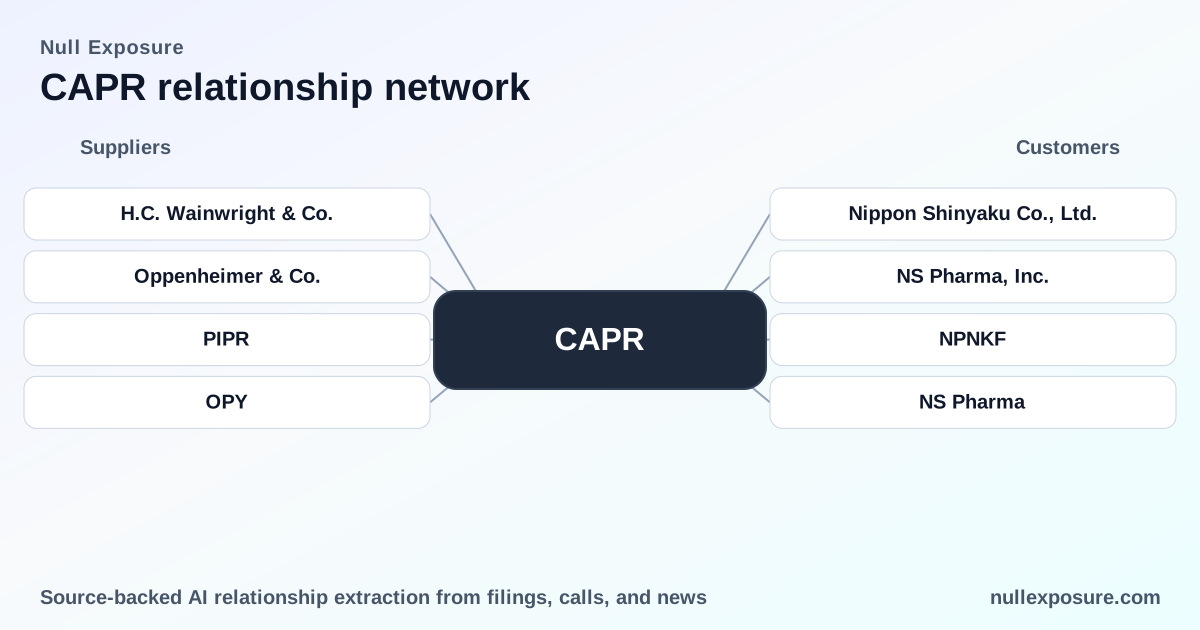
Capricor’s public filings and press coverage reference a tightly defined set of commercial partners and related entities. Below are plain‑English summaries for every counterpart listed in the public results, with sources.
Nippon Shinyaku Co., Ltd.
Capricor has executed commercialization and distribution agreements with Nippon Shinyaku that appoint the Japanese company as an exclusive distributor for deramiocel in major territories; the parent deal structure includes upfront payments and sales‑based milestone provisions. According to GlobeNewswire press releases and investor communications (Dec 2025–Mar 2026), those agreements cover the U.S. and Japan and include material contingent milestones linked to commercial performance.
Source: Capricor press releases on GlobeNewswire (Dec 2025; Mar–Apr 2026) and subsequent investor communications.
NS Pharma, Inc.
NS Pharma is the U.S. subsidiary used by Nippon Shinyaku to execute and operate the U.S. distribution arrangement; documents and news coverage describe NS Pharma as the on‑the‑ground partner responsible for U.S. commercialization activities, subject to regulatory approval. Multiple firm announcements and conference materials reference NS Pharma’s role in the U.S. distribution plan (SahmCapital, Mar–Apr 2026; GlobeNewswire).
Source: SahmCapital reporting on Capricor presentations (Feb–Apr 2026) and related GlobeNewswire releases.
Nippon Shinyaku (name variant)
Market commentary and analyst notes reference the same parent company with an abbreviated name; coverage consolidates the parent and affiliate distribution responsibilities and reiterates milestone upside and commercialization scope. Investment write‑ups highlighted potential milestone totals tied to the Nippon Shinyaku agreements following HOPE‑3 results (SimplyWallSt and SahmCapital, Jan–Mar 2026).
Source: SimplyWallSt and SahmCapital coverage of the HOPE‑3 results and commercialization agreements (Jan–Mar 2026).
NS Pharma (name variant)
Investor commentary and outlets sometimes reference the NS Pharma trade name when discussing projected U.S. sales and partner forecasts; analyst models mention NS Pharma’s projected U.S. revenues for deramiocel as part of partner forecasts. Oppenheimer and other analysts discussed projected 2031 U.S. sales under NS Pharma’s commercialization (market coverage, Feb–Mar 2026).
Source: Market reporting and commentary (StockTwits summary of analyst notes, Feb–Mar 2026).
NPNKF (inferred symbol for Nippon Shinyaku)
Public equity observers and research sites link Nippon Shinyaku’s inferred ticker (NPNKF) to Capricor’s deals when modeling partner balance‑sheet and milestone capacity; coverage cites deal economics including potential total milestone pools — commentary referenced up to US$1.5 billion in potential milestone payments across regions in some analyst write‑ups. TradingView and SimplyWallSt summaries use the inferred symbol when discussing partner revenue scenarios (Mar–May 2026).
Source: TradingView and SimplyWallSt analysis pieces referencing Nippon Shinyaku’s inferred symbol and the commercialization agreements (Mar–May 2026).
(Each relationship above is validated repeatedly in Capricor press releases, investor calls and market coverage across the Dec 2025 – May 2026 period.)
Contracting posture, geography and commercial constraints investors must price
Capricor’s public disclosures and the extracted constraint signals together describe a clear set of commercial facts that shape cash flow timing and risk:
- Exclusive distributor model. Capricor retains development and manufacturing while appointing exclusive distributors for key geographies; this reduces Capricor’s go‑to‑market burden but concentrates counterparty risk (company filings, 2022–2024 agreements).
- Geographic segmentation. Agreements allocate rights by region: North America and Japan are covered by Nippon Shinyaku/NS Pharma, and Capricor executed a binding term sheet for Europe; this creates staggered commercialization exposure across NA, APAC and EMEA (filings and term sheet, 2023–2024).
- Contract stage and maturity. The U.S. and Japan agreements are active with upfront and milestone payments already received and recognized through 2024; the European arrangement remains at term‑sheet/prospect stage pending a definitive contract (earnings call 2025 Q3; Sep 2024 term sheet).
- Cash and milestone profile. The partner deals delivered low‑double digit millions in upfront cash (e.g., $30M U.S., $12M Japan) and discrete $10M development milestones, with additional sales‑based milestones that can scale into the high hundreds of millions (evidence in Capricor disclosures; some external commentary cited up to $605M in annual sales‑linked thresholds and aggregate milestone pools in the broader $1.5B range).
- Concentration and criticality. Deramiocel is Capricor’s principal commercial asset; success hinges on partner execution and regulatory approvals. The company’s revenue concentration is high, and valuation sensitivity to partner milestones and approval timing is therefore material.
Source: Capricor earnings call (2025 Q3), company filings and press releases (2022–2026), and market commentary (SimplyWallSt, TradingView, SahmCapital).
If you want a single view that tracks partner milestones, geography and payment timing for modeling, visit https://nullexposure.com/ for consolidated relationship signals and timeline mapping.
What investors should price in now
- Regulatory milestones drive realized value. Upfront cash is material but finite; the next valuation inflection points are BLA review outcomes and first‑in‑market launches under partner control (company filings and recent RTTNews coverage, Mar 2026).
- Partner execution risk is the dominant commercial risk. Exclusive distribution shifts market risk to Nippon Shinyaku/NS Pharma; investors should underwrite penetration assumptions against partner capabilities and market access plans discussed in partner announcements.
- Large contingent upside is real but conditional. Sales‑based and other performance milestones create significant upside potential — some analyses cite aggregate milestone ceilings in the high‑hundreds of millions to over $1 billion — but those payments are contingent on successful regulatory approval and commercial uptake.
Bottom line
Capricor’s post‑HOPE‑3 strategy is commercially focused and partner‑driven: the company has converted clinical wins into upfront cash and staged milestones while outsourcing commercialization to Nippon Shinyaku/NS Pharma across major markets. For investors, the trade is clear — near‑term downside is buffered by upfront receipts, while long‑term upside depends on partner execution and regulatory timelines. Model exposure accordingly and monitor partner milestones and BLA developments as the primary drivers of realized value.