Cars.com Customer Relationships: Dealer Subscriptions, OEM Ads, and a Dealer Case
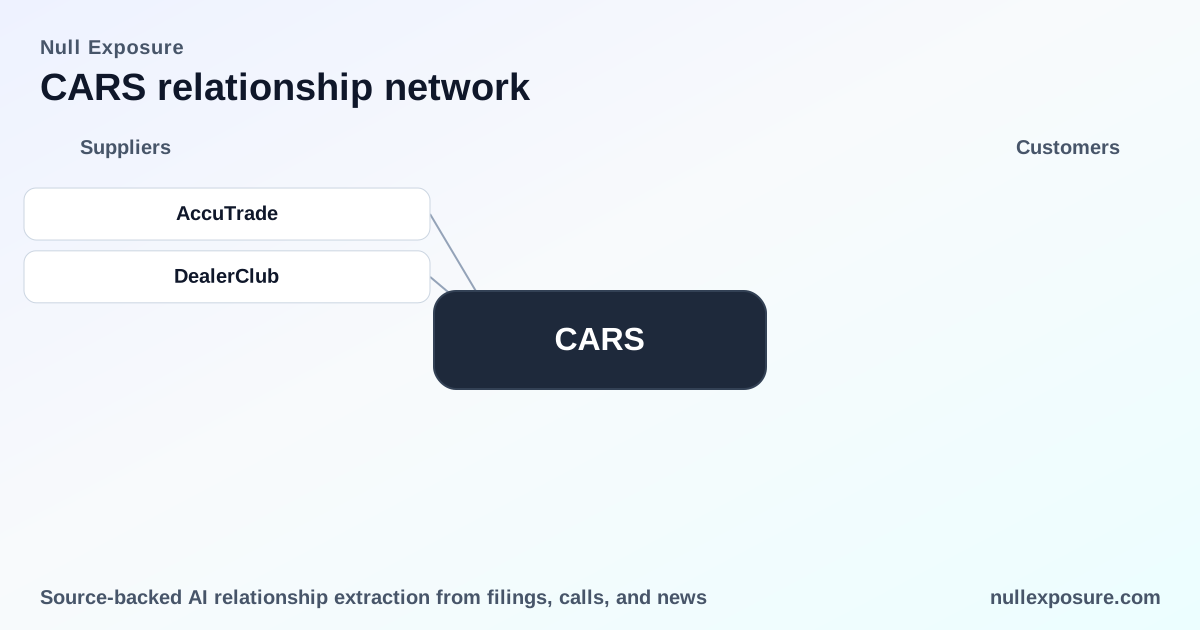
Cars.com monetizes a two-sided automotive marketplace by selling subscription-oriented products to local dealers and transaction-oriented media to OEMs and national advertisers. Revenue comes from recurring dealer subscriptions (marketplace listings, website and digital retail tools, AccuTrade) and usage-based advertising (impressions and clicks) for national/OEM accounts, with subscription revenue recognized ratably over contract terms and ad revenue recognized as delivery occurs. For investors, that combination delivers a predictable recurring base plus variable top-line upside through advertising performance and product adoption. Learn more at https://nullexposure.com/.
The business model in plain terms: predictable base, variable upside
Cars.com is fundamentally an audience-driven platform that converts shopper attention into monetizable dealer subscriptions and programmatic-style ad sales. Dealers form the recurring revenue anchor through short-term subscription packages, while national advertisers and OEMs contribute variable, performance-linked revenue. According to company disclosures, subscription packages commonly run three to six months and automatically renew on a month-to-month basis, which frames both the revenue durability and the churn risk.
- Contracting posture: Subscription-first for dealers with short-term, auto-renewing terms; transaction/usage billing for OEM and national advertising that is billed by impressions or click-throughs. (Company filings and disclosures; subscription and ad revenue recognition language.)
- Concentration and location: Revenue is concentrated in North America — substantially all revenue is generated within the U.S. — and no single customer generated more than 10% of total revenue in the years ended December 31, 2024, 2023 and 2022, indicating low customer concentration risk at the revenue-line level.
- Criticality and role diversity: Cars.com serves both sellers (dealers) and manufacturers (OEMs); substantially all OEMs selling vehicles in the U.S. and Canada do business with the company, making Cars.com a core distribution and advertising channel for the industry.
- Maturity and product adoption: Dealer customers increasingly leverage more of Cars.com’s platform to power local retail operations, signaling a ramping stage in product penetration among its dealer base rather than a nascent market fit.
These company-level signals shape how to underwrite growth: stable base ARR-like subscription cashflows, seasonal and cyclical ad spend variability, and potential upside from deeper product adoption among dealers.
How contracts and revenue recognition affect predictability
The short-term, subscription-primary contracting model means revenue is relatively predictable quarter-to-quarter, but more susceptible to pricing and churn dynamics than longer enterprise contracts. Subscription package revenue is recognized ratably over the contract term; this improves near-term visibility but requires constant new business or renewals to sustain growth. Conversely, OEM and national revenues are usage-based and immediately tied to impressions and clicks, which creates higher volatility but also more direct upside when engagement products like AI-driven video ads gain traction.
Relationship spotlight: Heiser Automotive
Heiser Automotive deployed Cars.com’s AI-driven video ads and reported that those videos reach “lower-funnel and ready-to-buy” shoppers, indicating effectiveness in converting intent into transactions. This customer feedback was quoted in an agency press release and reported by CBT News on May 2, 2026. (Source: CBT News — May 2, 2026, quoting Heiser Automotive’s Director of Marketing.)
What that single-case signal means for operators and investors
The Heiser example is representative of two broader dynamics: first, Cars.com is pushing higher-value, performance-oriented ad products (AI video) that can increase per-dealer ARPU if they convert into sales; second, dealer testimonials point to product-market fit for video creative in lower-funnel conversion, which supports a pricing premium for performance channels. The Heiser case is a positive signal but should be evaluated alongside adoption rates, campaign ROI, and retention metrics across the dealer base.
Operational implications for sales, churn, and product strategy
Because dealer contracts are typically short-term and auto-renew monthly after initial terms, the sales organization must continually justify the subscription value proposition. Direct sales remain the primary revenue engine, and the company’s go-to-market will focus on expanding wallet share with existing dealers by selling additional digital solutions and local retail tooling. For OEM and national accounts, success depends on measurable delivery (impressions/clicks) and campaign effectiveness, so measurement fidelity is a gating factor for higher-spend growth.
Major risks and upside — a concise investment checklist
- Risk: Short-term contracts increase churn sensitivity. Auto-renewing, 3–6 month packages require active retention programs and product stickiness to sustain ARR.
- Risk: Ad spend cyclicality. Usage-based OEM and national revenue creates quarter-to-quarter volatility tied to industry ad cycles and promotional calendars.
- Upside: Cross-sell and product depth. Dealers leveraging more of the platform reflect a path to higher ARPU and longer lifetime value as digital retail capabilities expand.
- Upside: Advertising product innovation. Successful rollout of AI video and similar performance offerings can lift variable revenue without diluting subscription economics.
- Structural strength: Low customer concentration and U.S.-centric scale. No customer exceeded 10% of revenues in recent years, limiting single-account exposure while the U.S. market provides depth.
What to monitor going forward
Investors and operators should watch three leading indicators: dealer retention and average revenue per dealer, adoption rate of higher-margin digital solutions (video, digital retail), and OEM/national ad spend volatility. Also monitor reported geography exposure — the company’s revenue is substantially U.S.-based — and any shifts in contract length or billing mixes that would change predictability.
For a concise corporate overview and data-driven relationship analysis, visit https://nullexposure.com/.
Bottom line
Cars.com combines recurring dealer subscriptions as a predictable revenue base with performance-driven ad sales that deliver upside, and recent dealer-level signals such as Heiser Automotive’s adoption of AI video point to the practical commercial value of new ad products. Investors should underwrite the business as a mature marketplace with manageable concentration risk but structural sensitivity to churn and ad cyclicality; rewards come from deeper dealer penetration and continued innovation in performance media.