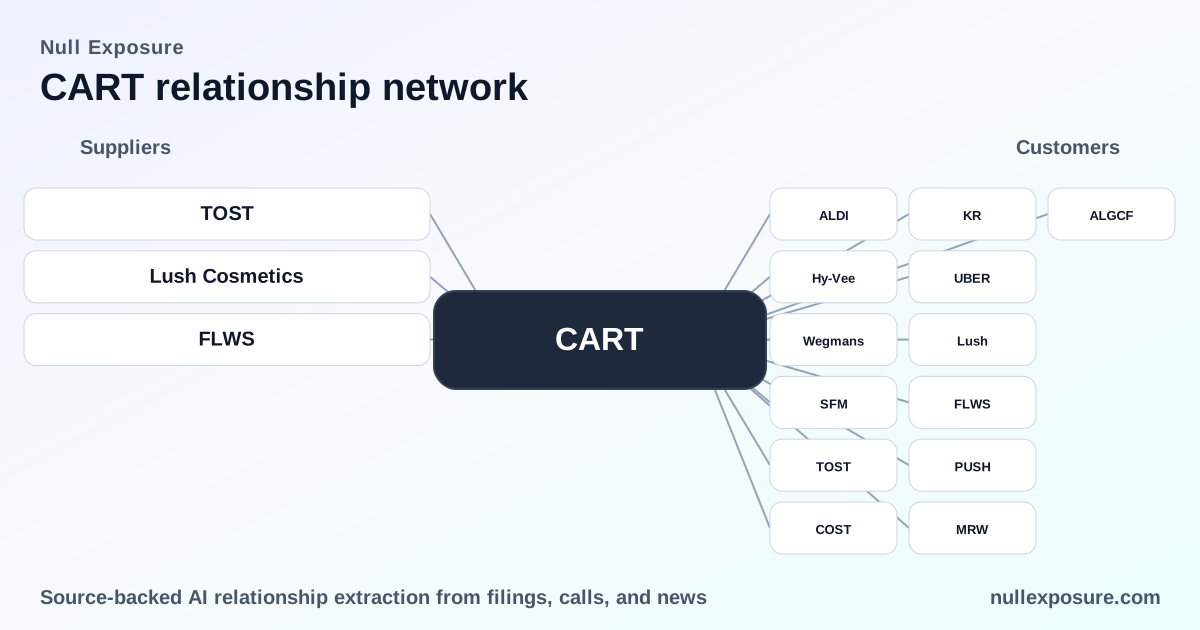
Instacart (Maplebear/CART): the retailer platform turning fulfillment and software into a predictable enterprise business
Instacart’s parent Maplebear (CART) operates a two‑pronged merchant model: a low‑friction consumer marketplace and a growing enterprise platform that sells fulfillment, storefront software, and retail media to large retailers and restaurants. The company monetizes through transaction and fulfillment fees, software subscriptions (Storefront Pro), and advertising (Carrot Ads), and is accelerating international reach through acquisitions and partner rollouts—making B2B contracts a core driver of margins and recurring revenue. For a quick enterprise relationship overview, visit https://nullexposure.com/.
How the platform scaffolds revenue and what that implies for investors
Instacart’s economics combine variable transaction revenue with higher‑margin, contractually recurring software and services. Revenue recognition for software is ratable over subscription periods, and partner payments are structured on relatively short terms (retailers ~45 days; brands 30–90 days), which supports cash visibility but also requires continuous sales velocity to sustain growth. The company’s customer base is weighted toward large enterprise retail partners and North American operations (98% household reach in the U.S. and Canada), and a small number of customers historically account for double‑digit revenue shares—an important concentration risk to underwrite alongside growth potential.
Key operating signals at the company level:
- Contracting posture: presence of subscription contracts and short payment terms creates recurring but relatively short‑tail cash flows.
- Counterparty profile: skew toward large enterprise retailers and restaurant groups, raising negotiations and retention as strategic priorities.
- Geographic footprint: predominantly North America, with rapid international expansion via Instaleap and partner rollouts.
- Materiality and concentration: a handful of customers have represented >10% of revenue historically, making customer retention a financial lever.
- Business roles: Instacart functions as seller, service provider, and buyer (platform provider, fulfillment operator, and marketplace).
- Revenue segments: core services (fulfillment/marketplace) plus software subscriptions and retail media.
Customer map — what every named partner in public disclosures says about go‑to‑market
Below are concise, investor‑grade summaries for every partner mentioned in the available relationship results, each with a direct source cue.
ALDI U.S. / Aldi
Instacart powers ALDI’s redesigned website and exclusive fulfillment across owned digital channels, positioning Storefront Pro as ALDI’s commerce backbone. — Source: multiple March–May 2026 news reports and company PR referencing the Storefront Pro rollout.
Wegmans
Instacart supplies fulfillment and in‑store picking technology support to Wegmans as part of its fulfillment services for large grocers. — Source: 2025 Q3 earnings call (excerpt on fulfillment services).
Hy‑Vee
Hy‑Vee is listed among major retail partners that leverage Instacart’s marketplace and fulfillment capabilities across grocery and retail channels. — Source: 2025 Q3 earnings call.
Costco Wholesale (Costco)
Costco has upgraded from a marketplace relationship to Storefront Pro, priority delivery, and same‑day sites in France and Spain, illustrating the full enterprise progression Instacart pursues with anchor retailers. — Source: 2025 Q4 earnings commentary and multiple FY2026 news reports about European expansion.
Lulu
Lulu appears as a retailer served by Instaleap’s footprint; the acquisition expands Instacart’s access to major international grocery partners. — Source: FY2026 Instaleap acquisition coverage (InsiderMonkey).
Fareway Stores, Inc.
Fareway adopted Storefront Pro and joined the Instacart Marketplace with no markups, underscoring Instacart’s push to convert regional grocers to its enterprise stack. — Source: March 2026 news and coverage (Shop.Fareway.com announcement).
Toast
Instacart Business will serve as a procurement and same‑day delivery partner for Toast‑powered restaurants, enabling foodservice supply on short notice. — Source: March 2026 partnership press reports and news items.
Kroger
Kroger is cited as a fulfillment partner where Instacart enables picking, packing, and delivery operations for large grocery chains. — Source: 2025 Q3 earnings call.
Sprouts Farmers Market
Sprouts launched an Instacart storefront and expanded into curbside pickup using Instacart’s in‑store picking technology, a template for moving customers from marketplace to fulfillment engagement. — Source: 2025 Q4 earnings call.
Publix
Publix is listed among large retailers whose e‑commerce storefronts are powered by Instacart’s white‑label technology. — Source: 2025 Q3 earnings call.
Woodman’s
Woodman’s is named among banners supported by Storefront Pro and the enterprise platform that powers retailer‑owned commerce programs. — Source: FY2026 PR on Storefront Pro.
Allegiance Retail Services (Allegiance)
Allegiance is adopting Storefront Pro, Caper Carts, and Carrot Ads, reflecting Instacart’s strategy to bundle software, in‑store hardware, and retail media for co‑ops and membership groups. — Source: March 2026 analysis and news pieces (Sahm Capital coverage).
Coles
Coles is an early international adopter of Caper Carts, indicating product‑market fit for Instacart’s in‑store AI cart outside North America. — Source: PR Newswire on Instaleap and Storefront expansion.
Morrisons
Morrisons is piloting Caper Carts in the UK, a direct indicator of Instacart’s in‑store tech expansion. — Source: 2025 Q4 earnings call and Instaleap coverage.
1‑800‑Flowers.com
Instacart announced a nationwide partnership with 1‑800‑Flowers, extending same‑day fulfillment to flower and specialty categories. — Source: March 2026 press and stock news items.
Lush
Lush launched same‑day delivery partnerships across U.S. and Canada using Instacart’s platform in over 250 stores, expanding Instacart’s non‑grocery verticals. — Source: March 2026 news briefs.
Cencosud
Cencosud is among the ~100 international retailers tied to Instaleap’s network—a plug‑and‑play channel for Instacart’s enterprise services overseas. — Source: FY2026 Instaleap acquisition reports.
SPAR
SPAR is listed among the international retail partners accessible via Instaleap, further diversifying Instacart’s geographic customer set. — Source: Instaleap acquisition coverage.
Continente
Continente is cited as part of Instaleap’s partner roster, supporting Instacart’s European integration ambitions. — Source: Instaleap deal reporting.
Advantage Solutions
Advantage Solutions will receive in‑store audit insights generated by Instacart shoppers to trigger field team actions, illustrating data‑to‑services use cases. — Source: 2025 FY news on partnership (QuiverQuant).
Uber Eats
Uber Eats is mentioned as a marketplace partner in Instacart’s ecosystem, reflecting integrations with other delivery marketplaces. — Source: 2025 Q3 earnings call.
Thrive Market
Thrive Market is called out as a marketplace partner in Instacart’s broader distribution set for grocery and retail in the U.S. — Source: 2025 Q3 earnings call excerpt.
Investment implications: concentration, contract mechanics and runway
- Growth levers: enterprise rollouts (Storefront Pro), in‑store hardware (Caper Carts), and retail media create higher‑margin, recurring revenue streams that directly improve EBITDA leverage. The Instaleap acquisition accelerates international expansion, reducing pure North American dependency over time.
- Concentration risk: company disclosures show a small number of customers historically represent >10% of revenue, which makes retention of anchor partners like Costco and ALDI central to valuation stability.
- Contracting and cash flow: subscription recognition and short invoice terms yield predictable revenue recognition but require ongoing renewals and upsells to maintain ARR growth.
- Strategic criticality: by offering both fulfillment and software, Instacart becomes increasingly embedded in retailer operations—raising switching costs but also concentrating counterparty negotiation power.
If you want a concise, enterprise‑level model of how these customer relationships translate to revenue and margin scenarios, explore further analysis at https://nullexposure.com/.
Bottom line
Instacart is evolving from a consumer delivery marketplace into an enterprise platform company where software subscriptions, in‑store technology, and retail media are the strategic levers to de‑risk delivery‑volume sensitivity and expand margins. Investors should underwrite both the upside from converting large retailers to Storefront Pro and the concentration and counterparty risks that come with a handful of material enterprise customers.