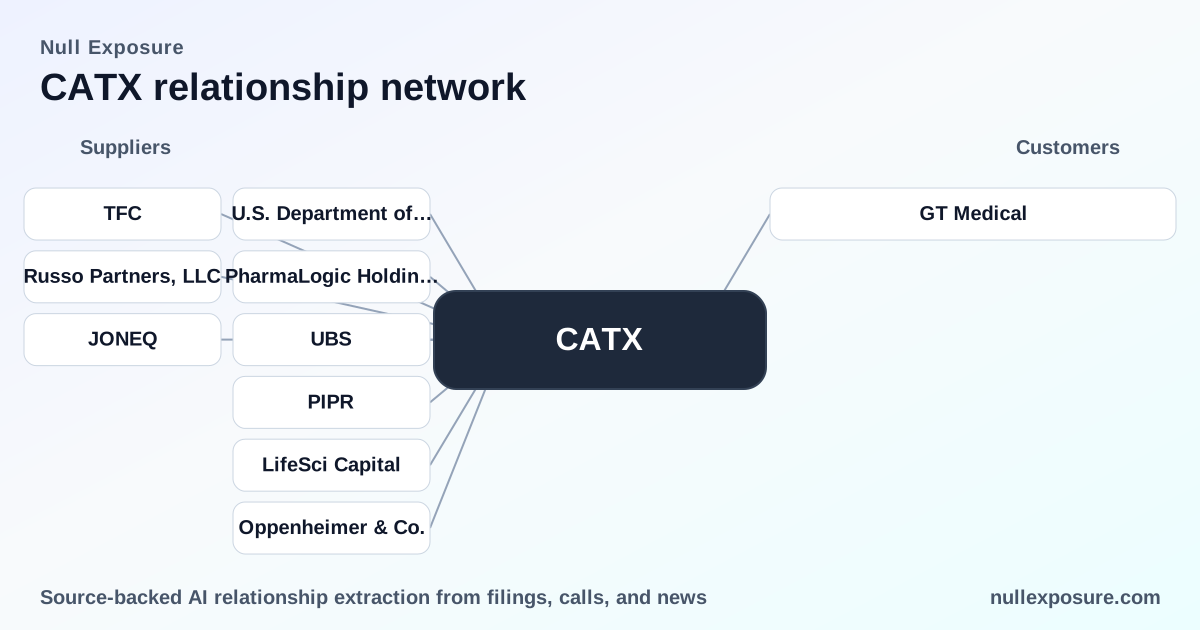
Perspective Therapeutics (CATX): Customer relationships that reshape a nascent commercial profile
Perspective Therapeutics develops targeted radiopharmaceuticals and monetizes through a combination of grant-funded R&D, selective asset divestitures, and the prospective commercialization of therapeutic products. The company’s near-term cash flow profile is dominated by grants and one-off transactions, while long-term upside depends on converting clinical assets into reimbursable therapies and building distribution capacity for regional supply. For investors evaluating CATX customer relationships, the interplay between a strategic divestiture and government-sponsored grant revenue reveals an organization in transition from asset owner to capital-efficient clinical developer.
For a concise view of the firm and its customer signals visit the NullExposure home page: https://nullexposure.com/
A defining corporate action: GT Medical bought the brachytherapy business
Perspective completed the sale of substantially all assets of its Isoray brachytherapy subsidiary to GT Medical Technologies on April 12, 2024, and the proceeds and operations related to that segment were treated as discontinued operations in FY2025 financials. This transaction reduces Perspective’s direct exposure to brachytherapy manufacturing and aligns the company toward focused radiopharmaceutical R&D while generating near-term liquidity. (Source: company business highlights reported via StockTitan / press compilation, noted in March 2026.)
- Why it matters: The GT Medical transaction is an explicit repositioning — CATX relinquished a historically operational manufacturing business in exchange for capital and a narrower clinical development footprint. That changes counterparty dynamics from manufacturers/customers to grantors and future commercial payors.
NIH grants are a material revenue source and a development anchor
Perspective reports that grant revenue is derived from work with the National Institutes of Health, indicating active government-funded programs supporting their research pipeline in FY2026 disclosures. Government-sponsored grants provide non-dilutive funding and technical validation that materially supplements the company’s minimal product revenue to date. (Source: GlobeNewswire press release, March 16, 2026.)
- Why it matters: NIH support reduces near-term financing pressure and signals external validation of specific programs. However, grant funding is project-specific and time-limited, so it supports development rather than sustainable product-level cash flows.
All customer relationships in the public record
This section lists every customer or counterparty relationship surfaced in available reports and gives a plain-English synopsis of the connection.
-
GT Medical: Perspective sold substantially all assets of its wholly owned Isoray Medical, Inc. to GT Medical Technologies, Inc. with the GT Medical closing date recorded as April 12, 2024; the related operations were classified as discontinued operations in the FY2025 financial statements. This is a divestiture transaction that materially alters CATX’s asset base and operating scope. (Source: public business highlights summarized in March 2026 via a StockTitan news post.)
-
National Institutes of Health (NIH): CATX reports that grant revenue is derived from work with the NIH, establishing the NIH as a funding counterparty that directly contributes to reported revenue in FY2026. This is a government grant relationship underpinning R&D spend rather than a commercial supply contract. (Source: GlobeNewswire company release, March 16, 2026.)
Operating model and business-model constraints investors should flag
Beyond the discrete relationships above, the company disclosures surface several firm-level constraints that shape how Perspective will contract, compete, and scale.
-
Counterparty mix leans on government and large payor pathways. The text about commercialization stresses reliance on government healthcare programs (Medicare, Medicaid) and commercial insurers for eventual product reimbursement. That implies Perspective’s commercialization strategy must prioritize payer engagement and regulatory alignment rather than purely transactional sales channels.
-
Geographic focus shows North American supply orientation. Management states an intent to utilize a specified location to supply drug product for the northeastern United States, indicating a regional supply strategy during early commercialization. That raises logistical importance for a limited number of production sites and reinforces regulatory and distribution concentration risk for U.S. payors and hospitals.
-
Contracting posture: asset-light on manufacturing, grant-heavy on development. The GT Medical divestiture transferred an entire brachytherapy manufacturing segment out of Perspective, signaling a deliberate move away from owning broad manufacturing capacity. Grants from federal agencies fill the funding gap for R&D while the company designs a route to commercialization that will depend on external manufacturers or licensing partners.
-
Concentration and criticality: high concentration in funding sources and supply regions. With grant revenue materially visible and supply intent focused regionally, Perspective faces concentration risk both in funding (government grants vs. commercial sales) and in initial delivery footprint, which elevates the strategic importance of securing broader payor coverage and diversified manufacturing channels before large-scale launch.
-
Maturity: pre-commercial with transactional divestitures. Financials show nominal revenue (TTM revenue ~$0.9M) and deep operating losses (negative EBITDA), consistent with an organization transitioning from asset ownership to clinical-stage developer. The NIH relationship and asset sale are consistent with a company sharpening its cost and capital profile for the next phase of clinical advancement.
Note on relationship-level attribution: the constraint that Perspective acted as a seller/buyer in the GT Medical transaction is explicitly referenced to GT Medical in the public excerpt and is therefore attributed to that relationship; other constraints above are company-level signals drawn from general disclosure language rather than specific counterparties.
Investment implications — risks and potential upside
- Near-term cash-flow profile is lumpy and grant-dependent. NIH funding provides runway and validation but is not a substitute for product revenues or durable reimbursement contracts.
- Divestiture reduces operational complexity but shifts execution risk. Selling the Isoray brachytherapy business simplifies operations and likely improved balance-sheet flexibility, but it also removes an existing revenue pathway and places greater emphasis on successful clinical progression and future licensing/commercial deals.
- Concentration risk is material until commercialization expands. Regional supply focus and dependence on public grants/major payors create execution and reimbursement risk that investors should monitor through upcoming regulatory milestones and partnership announcements.
- Valuation will pivot on clinical and reimbursement milestones. With minimal current revenue and negative operating margins, the investment case centers on successful clinical data, commercialization partnerships, or additional non-dilutive funding.
For a concise dashboard of CATX relationship signals and corporate positioning, visit https://nullexposure.com/ to review aggregated relationship evidence and source links.
Bottom line
Perspective Therapeutics is transitioning from a mixed operational company with a brachytherapy manufacturing footprint to a concentrated radiopharmaceutical developer funded in part by NIH grants and shaped by a strategic divestiture to GT Medical. These moves reduce manufacturing exposure and increase reliance on grant funding, partnerships, and favorable payer engagement. Investors should treat near-term financials as funding-driven and evaluate CATX on the cadence of clinical milestones, partnership announcements, and demonstrated payer pathways — the three levers that will convert grant and transactional proceeds into recurring commercial revenue.