CBL & Associates: customer relationships that drive cash flow in a restructured mall portfolio
CBL & Associates is a retail-focused REIT that monetizes real estate through a mix of fixed minimum rents, percentage rents tied to tenant sales, recoveries (CAM, taxes, insurance), and service fees for management and development; sales of non-core properties supplement cash and reduce portfolio risk. For investors, the company’s economics are driven by tenant composition and lease tenor — a portfolio with both long-duration anchor commitments and large numbers of short-term inline leases produces predictable base revenues while exposing the firm to retail churn and bankruptcy-driven vacancies.
If you want a concise map of CBL’s tenant exposures and related news signals, see more at NullExposure.
Portfolio snapshot that matters to investors
CBL reported approximately $578 million in trailing revenues and EBITDA near $320 million (TTM), supporting a market capitalization around $1.34 billion (latest quarter 2025-12-31). Operational leverage is concentrated in malls (70% of revenues) and the top 25 tenants accounted for roughly one-third of revenue in 2024, which creates both scale benefits and concentration risk. The REIT’s occupancy and same-center NOI trends are therefore highly sensitive to national retail bankruptcies and its ability to re-tenant space with strong regional or national chains.
How CBL contracts with customers — a dual tenor model
CBL’s contract profile is mixed but specific: the company operates both long-term leases (anchors with extension options that can span many decades) and a substantial volume of short-term or month-to-month inline leases. Management also signals active renewals — the operating portfolio in a recent period reported materially more renewal square footage than new leasing — which supports rent stability but requires continuous leasing effort and capital to reposition space.
- Long-term anchors provide cash stability: many anchor leases include multiple extension options and historically roll into long-duration occupancy.
- Short-term inline leases generate volatility: a majority of inline agreements are effectively short-duration or month-to-month and are accounted for accordingly, increasing sensitivity to retailer distress.
- Geographic concentration matters: properties are located across 21 U.S. states but are primarily concentrated in the Southeast and Midwest, so regional economic cycles and retail trends in those areas disproportionately affect outcomes.
- Materiality and concentration: malls drive 70% of revenues; inline stores produce the bulk of mall receipts, and the top 25 tenants represented ~33.3% of revenue in 2024 — a meaningful concentration that amplifies counterparty risk.
These characteristics shape CBL’s operating posture: it is a seller/landlord by role, also earning service revenues from property management, leasing and development, and it remains in active portfolio rotation to realize asset value where appropriate.
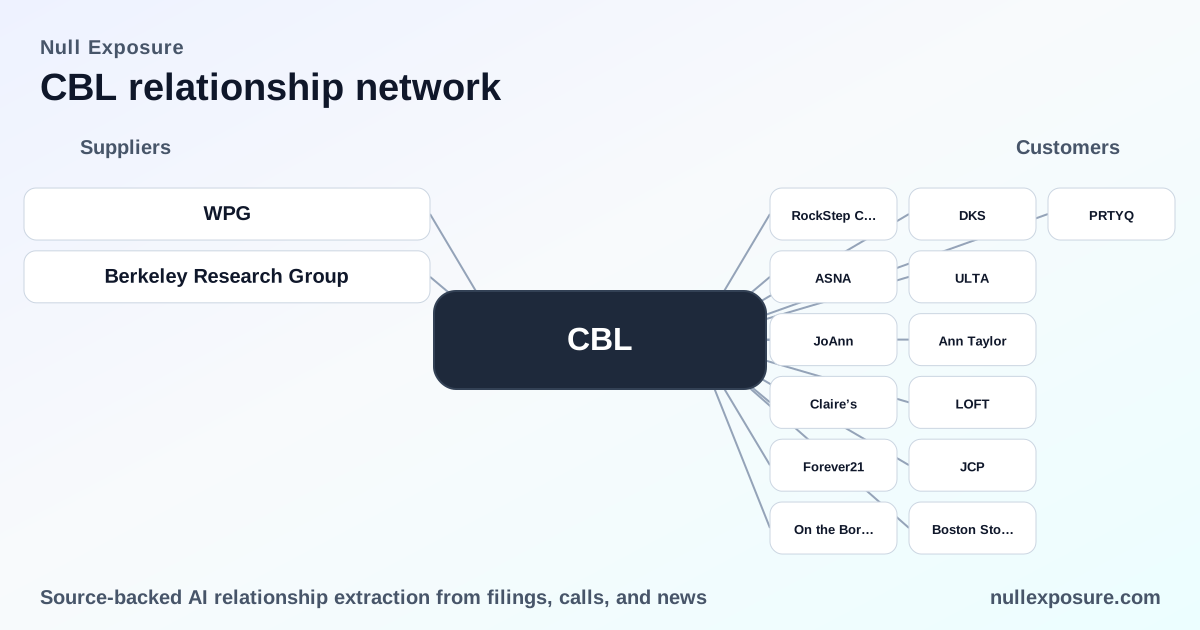
Relationship map: tenant and counterparty signals (all entries from the dataset)
Below are one- to two-sentence plain-English summaries for every relationship record in the source material, each followed by the cited reporting.
-
DEVS (DevvStream Holdings Inc.) — DevvStream announced formal acceptance onto CBL’s spot exchange for environmental commodities, reflecting a new trading channel for carbon and other environmental credits tied to CBL’s marketplace activities. Source: Newsfile press release describing DevvStream’s acceptance onto CBL, May 2026.
-
Ascena (Ascena Retail Group / ASNA) — Reporting from 2020 noted that Ascena was among more than 30 tenants that filed bankruptcy and closed stores, with roughly 100 Ann Taylor/LOFT and other locations historically present in CBL malls, a reminder of how large-format apparel bankruptcies stress mall occupancy. Source: Milwaukee Journal Sentinel, Nov 3, 2020.
-
ASNA (Ascena Retail Group ticker variant) — Same report noted under the ASNA tag: Ascena’s bankruptcies affected store counts within CBL assets and contributed to vacancy pressure during FY2020. Source: Milwaukee Journal Sentinel, Nov 3, 2020.
-
Forever21 — Management commentary in FY2026 identified Forever21’s bankruptcy-related closures as one of several tenant failures that reduced occupancy roughly 75 basis points year-over-year, demonstrating near-term occupancy sensitivity to national apparel chain distress. Source: TradingView summary of Zacks earnings coverage, March 2026.
-
Claire’s — Claire’s store closures were cited by management as a component of bankruptcy-related occupancy declines that chipped away at mall tenancy in the FY2026 commentary. Source: TradingView / Zacks coverage, March 2026.
-
JoAnn — JoAnn closures were called out alongside other bankruptcy-affected tenants in management’s FY2026 remarks, contributing to net occupancy headwinds. Source: TradingView / Zacks coverage, March 2026.
-
RockStep Capital — CBL disclosed a binding contract to sell Janesville Mall to RockStep Capital for $18 million, an example of asset disposition and re-pricing of non-core properties in the company’s capital recycling strategy. Source: Fox47 coverage citing a CBL news release (transaction noted in FY2018 reporting).
-
On the Border (restaurant) — Reporting on Mayfaire Community Center indicated On the Border closed permanently; CBL manages the community center adjacent to Mayfaire Town Center, illustrating how non-retail closures on managed properties affect recoverable revenues. Source: WilmingtonBiz, July 27, 2020.
-
Dick’s Sporting Goods — CBL commentary on asset repositioning noted that Dick’s Sporting Goods was one of the retailers that backfilled space quickly after anchor departures, supporting re-leasing prospects. The company is also listed among top tenants in filings. Source: Fox47 article referencing CBL’s Janesville Mall remarks (FY2018).
-
DKS (Dick’s ticker variant) — Duplicate record flags the same backfill example: Dick’s Sporting Goods helped stabilize tenancy after a major department store closure. Source: Fox47 (FY2018).
-
Ulta Cosmetics — Ulta Cosmetics was cited as a rapid backfill tenant at Janesville, demonstrating demand from specialty beauty chains when department stores vacate. Source: Fox47 referencing CBL transaction commentary (FY2018).
-
Ann Taylor — Ann Taylor locations, part of Ascena’s footprint, were included among the store closures and bankruptcies that affected CBL malls during the 2020 retail insolvency cycle. Source: Milwaukee Journal Sentinel, Nov 3, 2020.
-
LOFT — LOFT closures were documented alongside other Ascena brands in the wave of 2020 bankruptcies that reduced store counts within CBL properties. Source: Milwaukee Journal Sentinel, Nov 3, 2020.
-
J.C. Penney — Local reporting on Janesville Mall highlighted the mall’s resilience after department stores like J.C. Penney left, underlining CBL’s repositioning efforts after anchor departures. Source: Fox47 (FY2018).
-
JCP (J.C. Penney ticker variant) — Duplicate record reiterating the same point that J.C. Penney had exited certain properties, with CBL pursuing backfills. Source: Fox47 (FY2018).
-
Boston Store — Coverage noted Boston Store’s closure contributed to re-tenanting opportunities; this is an example of Department Store shrinkage creating repurposing potential. Source: Fox47 (FY2018).
-
Party City — Management identified Party City as one of several retailers whose bankruptcy-related closures negatively impacted occupancy in FY2026 results commentary. Source: TradingView / Zacks earnings summary, March 2026.
-
PRTYQ (Party City ticker variant) — Duplicate ticker-level entry referencing the same Party City closures called out by management in FY2026 results. Source: TradingView / Zacks, March 2026.
What these relationships imply for valuation and risk
- Bankruptcy exposure is a recurring, measurable risk: multiple national chains (Ascena brands, Forever21, Claire’s, JoAnn, Party City) produced store closures that translated into occupancy and same-center NOI headwinds — management quantified a near-75 bps occupancy hit in FY2026 commentary.
- Re-leasing and retail demand are intact in parts: backfills by specialty and sporting retailers (Dick’s, Ulta) demonstrate that CBL can re-tenant anchor and large inline spaces, which supports mid-cycle recovery of cash flow.
- Asset sales are an active lever: the RockStep sale example shows the REIT executes disposals to crystallize value and reduce exposure to underperforming markets.
- Contracting posture is mixed: the coexistence of long-duration anchor leases and a heavy inline short-term footprint requires ongoing capital allocation to refresh and re-lease space; revenue durability therefore depends on leasing execution and macro retail trends.
For a deeper, transaction-level view of how tenant relationships map to revenue and risk across CBL’s portfolio, visit NullExposure for expanded analytics and investor-ready summaries.
Conclusion: CBL’s model combines the stability of long-term anchor economics with the rotation and volatility of short-term inline leasing; the company’s near-term performance will be decided by re-leasing velocity, the pace of retail bankruptcies, and continued asset rationalization. Investors should weigh the company’s high tenant concentration and regional footprint against management’s demonstrated ability to reposition space and monetize non-core assets.