CryoCell International (CCEL): A compact, recurring-revenue play anchored in cord‑blood storage and services
CryoCell International operates a twofold business model: it charges one‑time processing and testing fees when cord‑blood specimens are collected and processed, and it generates recurring storage revenue through annual or prepaid long‑term storage contracts and license royalties. The company also manufactures the PrepaCyte® CB processing system and supports both family (private) and public cord‑blood inventories, giving it a mix of consumable/service and manufactured‑product economics. With roughly $31.3 million in trailing revenues and a market capitalization near $28.3 million, CryoCell’s cash flows are driven by high‑margin storage annuities and periodic processing activity; investors should value the business as a specialized services firm with embedded long‑dated customer relationships.
For deeper signals and relationship mapping, visit the firm’s profile at NullExposure: nullexposure.com.
Why the business model matters to investors
CryoCell’s monetization is straightforward and predictable: processing is a point‑in‑time sale; storage is recurring and frequently prepaid or contracted for extended terms (annual, 18‑year, 21‑year, or lifetime). That duality produces a revenue mix with front‑loaded recognition on processing and stretched, annuitized income from storage—an attractive profile when customer acquisition costs are controlled and retention is high. The company reported $31.3 million in revenues and $19.9 million in gross profit on a trailing basis, underlining a service‑heavy margin structure consistent with medical cryogenic storage economics.
What the customer relationships reveal about strategy and reach
CryoCell operates across private and public segments and uses partnerships and license channels to extend geographic reach. The firm explicitly stores over 240,000 specimens worldwide in concert with global affiliates, and processes specimens for licensees in several Latin American markets. These relationships signal a hybrid go‑to‑market model: direct‑to‑consumer channels through maternity networks and referral channels, plus B2B licensing and distribution for international expansion.
The National Marrow Donor Program connection
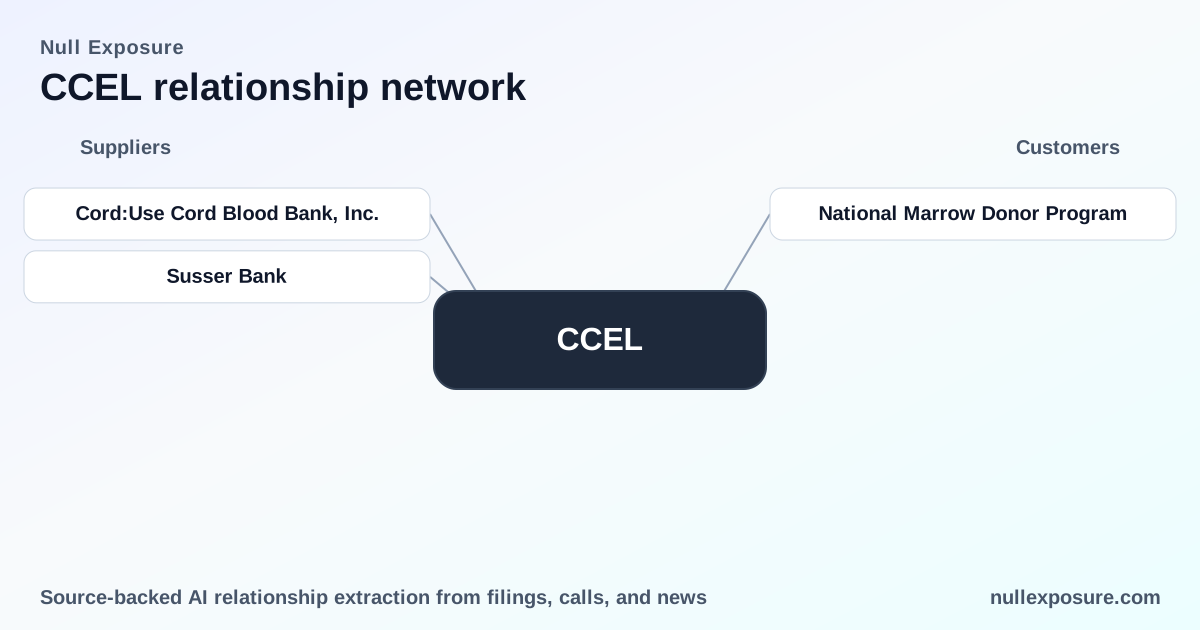
CryoCell acquired assets from Cord:Use Cord Blood Bank, Inc., which expanded its public cord blood inventory; those units are distributed through the National Marrow Donor Program. This places CryoCell as a supplier into the NMDP ecosystem for public‑use specimens, extending the company’s role beyond private family storage into public registry distribution (TradingView coverage of CCEL’s FY2026 SEC filing, March 2026).
Every identified customer relationship (complete inventory)
- National Marrow Donor Program — CryoCell’s public cord blood inventory, bolstered by the purchase of Cord:Use Cord Blood Bank assets, is distributed through the National Marrow Donor Program, aligning the company with the U.S. public‑registry transplant channel (TradingView reporting on CryoCell FY2026 10‑K, March 2026).
Operational constraints that shape the investment case
The company disclosure and related evidence highlight several company‑level operating characteristics that influence valuation and risk.
-
Contracting posture — mixed short‑ and long‑term: CryoCell recognizes processing fees at the point of successful completion and recognizes storage fees ratably over the contractual storage period. Contract lengths vary from annual to long‑dated arrangements (18, 21 years, lifetime), which creates a blend of immediate revenue and persistent annuities. This mix reduces revenue volatility but requires disciplined balance‑sheet management because prepayments and long‑term liabilities must be serviced over decades (company FY2026 filing language).
-
Subscription‑like elements: Annual storage fees (and prepaid multi‑year/lifetime plans) induce subscription economics: low churn and predictable renewal cadence support forward revenue visibility and enhance lifetime customer value. The company explicitly charges annual storage unless customers opt for prepaid 18‑year or lifetime plans.
-
Customer concentration and counterparty type: The business is fundamentally retail‑facing: the primary payors are individual expectant parents reached through obstetric and pediatric referral channels. This reduces counterparty credit risk but increases sensitivity to consumer sentiment, birth rates, and marketing effectiveness.
-
Geographic diversification: CryoCell is effectively global—storing over 240,000 specimens for customers worldwide—and operates in Latin American markets via licensees and specimen processing for countries including El Salvador, Guatemala, Ecuador, Panama, Honduras, Nicaragua, Costa Rica, and Venezuela. This diversification spreads regulatory and demographic risk but introduces operational complexity and FX/collection logistics.
-
Dual role — service provider and manufacturer: CryoCell both manufactures processing units (PrepaCyte® CB) and provides cellular processing and long‑term cryogenic storage services. This vertical scope gives control over a key processing input while exposing the company to manufacturing cadence and product‑quality obligations.
-
Segment profile — services dominated: The reported segments prioritize cellular processing and cryogenic storage for both family and public use, supplemented by PrepaCyte manufacturing. The service segment drives recurring margin and customer lifetime economics.
Key risks and concentration issues for operators and investors
-
Revenue recognition and liability duration. Prepaid long‑term plans create deferred revenue and service obligations lasting decades; capital allocation must address long‑dated storage liabilities alongside near‑term growth investments. This structural liability profile constrains free cash flow flexibility relative to nominal revenue figures.
-
Consumer demand sensitivity. Because most contracts are sold to individuals via healthcare referrals and marketing, revenue growth correlates with effective consumer marketing and referral partnerships, not purely clinical adoption.
-
Regulatory and cross‑border execution. International specimen processing and storage introduce regulatory compliance work and operational overhead that will scale with global ambition.
Investment implications — how to think about valuation and exposure
CryoCell trades at a modest enterprise scale relative to revenues (price‑to‑sales ~0.9x) and shows positive operating margin dynamics but negative trailing EPS. The business should be valued on a hybrid basis: a services annuity multiple for the storage base plus a smaller, growth‑oriented multiple for processing and manufacturing. Investors focused on predictable cash flow should prioritize management’s disclosure around deferred revenue, prepaid contract mix (annual vs. lifetime), and retention metrics tied to the 240,000 specimen base. Senior shareholders and insider ownership are material (insiders ~42%); institutional ownership is limited, which affects liquidity and takeover dynamics.
For an actionable relationship map and signals feed on CryoCell and comparable players, examine the full customer relationship analysis at NullExposure: nullexposure.com.
Bottom line
CryoCell is a niche operator with repeatable, subscription‑style cash flows anchored in long‑term storage contracts and a complementary manufacturing capability. The company’s public‑inventory relationship with the National Marrow Donor Program broadens its clinical footprint and supports optionality in the public‑use transplant channel. Investors should treat CCEL as a service‑heavy healthcare small cap where downside hinges on long‑dated service obligations and execution across international license markets; upside accrues from retention, margin expansion, and monetization of the existing specimen base.