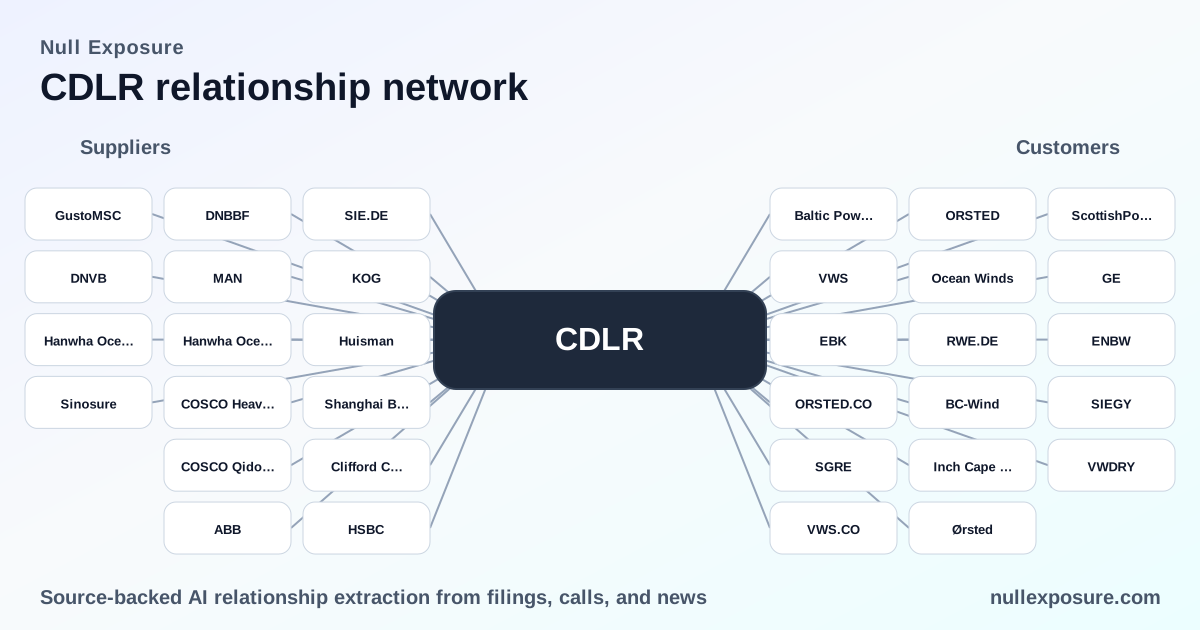
Cadeler (CDLR) — customer map and commercial momentum
Cadeler operates and monetizes as a specialist provider of offshore wind transportation, installation and O&M using a growing fleet of jack‑up vessels. The company converts vessel capacity into predictable revenue through multi‑year vessel contracts, firm T&I awards, and vessel reservation agreements with OEMs and developers, capturing both installation and full-scope transport & install scopes. For investors, the revenue mix is strongly driven by fleet utilization and the cadence of project starts tied to large developers and turbine manufacturers. For a deeper commercial signals scan visit https://nullexposure.com/.
Why customers matter: the commercial anatomy of Cadeler’s business
Cadeler’s contracting posture is project- and time-bound rather than recurring subscription, so backlog visibility and vessel deployment schedules directly translate into near‑term revenue. Customer concentration is notable: the firm works with the major OEMs (Vestas, Siemens Gamesa, GE) and left‑shoring developers (Ørsted, Iberdrola, ScottishPower, RWE), making each large contract critical to utilization and margin. Fleet expansion and newbuild deliveries shift the company from capacity constraint toward market share capture, while the high capital intensity of vessels introduces execution and timing risk when projects slip.
Key operational signals for investors:
- Contract types: long‑term WTIV charters, vessel reservation agreements, and T&I full‑scope contracts.
- Counterparties: turbine OEMs and large utility developers dominate revenue potential and risk.
- Criticality: many customers need Cadeler’s specialized vessels to meet project timelines, enhancing Cadeler’s pricing power on right assets.
- Maturity: fleet modernisation and early deliveries in 2025–2026 move Cadeler toward higher utilization and larger, higher‑value contracts.
Explore Cadeler’s customer relationships and document references at https://nullexposure.com/.
Relationship ledger — every mention in the source set
Below are the relationships pulled from Cadeler’s public mentions and news coverage; each entry is a concise, plain‑English note with the cited source.
-
Baltic Power: Cadeler’s WTIV Wind Osprey executed an O&M campaign for Vestas and is now working on installation at Baltic Power in Poland. Source: Cadeler 2025 Q3 earnings call (fiscal period 2025Q3).
-
Vestas: Cadeler won a three‑year contract with Vestas worth approximately EUR 210 million for a new WTIV, a material long‑term OEM engagement. Source: OffshoreWind.biz, Feb 20, 2026.
-
EnBW: A newly acquired Cadeler vessel was upgraded and allocated to support turbine installation at EnBW’s He Dreiht offshore wind farm in Germany. Source: OffshoreWind.biz, Feb 20, 2026.
-
EBK: The same coverage names EBK in relation to the He Dreiht project where Cadeler’s upgraded vessel will be deployed. Source: OffshoreWind.biz, Feb 20, 2026.
-
VWS: Press reporting references VWS in the context of the Vestas contract and vessel assignments for major projects. Source: OffshoreWind.biz, Feb 20, 2026.
-
Ørsted (ORSTED.CO): Cadeler reported backlog movement after Hornsea 4 removal, and Cadeler’s Scylla and other vessels are engaged on Ørsted projects including Revolution Wind and Greater Changhua. Source: Cadeler 2025 Q2 and Q3 earnings calls (2025Q2 / 2025Q3).
-
Orsted: Company commentary reiterates engagement on Revolution Wind and other Ørsted projects, reflecting multiple vessel deployments for that developer. Source: Cadeler 2025 Q2 earnings call (2025Q2).
-
Wind Keeper / Vestas (VWS.CO): Cadeler disclosed Wind Keeper entering upgrade before starting a long‑term contract with Vestas, indicating a dedicated WTIV commitment. Source: Cadeler 2025 Q3 earnings call (2025Q3).
-
Iberdrola: Cadeler executed the first turbine installation at East Anglia Three using Wind Osprey, performing full transportation and installation scope for a consortium that includes Iberdrola. Source: ProjectCargoJournal, Apr 22, 2026.
-
Ocean Winds: Cadeler signed a Vessel Reservation Agreement to install wind turbine generators at the BC‑Wind project in the Polish Baltic Sea. Source: stocktitan.net reporting (FY2026).
-
ScottishPower Renewables: Cadeler performed full T&I scope on East Anglia Three, a project developed by ScottishPower Renewables alongside partners. Source: ProjectCargoJournal, Apr 22, 2026.
-
Masdar: Masdar is a co‑developer on East Anglia Three where Cadeler’s Wind Osprey performed installations for the consortium. Source: ProjectCargoJournal, Apr 22, 2026.
-
Vestas (additional coverage): Media coverage of Wind Keeper’s start at He Dreiht highlights the long‑term relationship between Cadeler and Vestas for installation to O&M support. Source: Inspenet, Mar 2026.
-
Siemens Gamesa (SGRE): Siemens Gamesa awarded Cadeler a contract worth roughly $90m (€76m) to transport and install SG 14‑22 DD turbines. Source: ReNews and Renews.biz coverage (FY2026).
-
Siemens Gamesa (duplicate entry): Multiple outlets confirm Cadeler’s firm contract to install 60 Siemens Gamesa turbines at Moray West off Scotland. Source: Energie.de reporting (FY2026).
-
RWE (RWE.DE): Cadeler’s Wind Peak is installing turbines on RWE’s Sofia wind farm under an engagement routed through Siemens Gamesa. Source: Cadeler 2025 Q3 earnings call (2025Q3).
-
Nexra: Market commentary references Nexra service contracts in Taiwan as part of Cadeler’s expanded commercial activity after fleet growth. Source: SimplyWall.St article (FY2026).
-
BC‑Wind: Cadeler has a WTG installation project at BC‑Wind in Poland with a contract value to Cadeler up to EUR 58 million. Source: AJOT reporting on Cadeler Q3 results (FY2025).
-
GE: Cadeler’s Wind Pace and Wind Pace‑class vessels are executing O&M and installation campaigns in the U.S. for GE / GE Vernova. Source: Cadeler 2025 Q2 and Q3 earnings calls (2025Q2 / 2025Q3).
-
GE Vernova: The company is identified as the GE affiliate for which Wind Pace has been running an O&M campaign since delivery. Source: Cadeler 2025 Q3 earnings call (2025Q3).
-
EnBW Generation UK: Coverage highlights the Wind Keeper supporting Vestas and EnBW Generation UK in installing V236‑15.0 MW turbines at He Dreiht. Source: Inspenet reporting (FY2026).
-
Northland Power: Reporting on Baltic Power notes Northland Power as a joint owner (with Orlen); Cadeler’s Wind Mover was deployed to Baltic Power. Source: OffshoreWind.biz, Apr 14, 2026.
-
Orlen (PKN): Orlen is named as the Polish partner in Baltic Power where Cadeler’s Wind Mover supports turbine installation. Source: OffshoreWind.biz, Apr 14, 2026.
-
ScottishPower Renewables (additional coverage): OffshoreWind.biz reports Wind Osprey moving to East Anglia Three to install 95 Siemens Gamesa turbines for ScottishPower Renewables and Masdar. Source: OffshoreWind.biz, Apr 14, 2026.
-
Baltic Power (project coverage): Multiple outlets report Wind Mover’s deployment from Port of Rønne to install 15 MW turbines at Baltic Power, underscoring OEM + developer coordination. Source: EnergyGlobal and Energy‑Pedia, Apr–May 2026.
-
BC‑Wind (stocktitan summary): Stocktitan and other press pieces listed BC‑Wind as part of Cadeler’s contract slate, reinforcing BC‑Wind as a discrete revenue opportunity. Source: stocktitan.net reporting (FY2026).
-
Inch Cape Offshore: Aggregate reporting on Cadeler’s contract wins includes a mention of Inch Cape Offshore as a customer for future projects. Source: stocktitan.net (FY2026).
-
VWDRY / Vestas ADR coverage: Secondary market writeups reference early delivery of Wind Keeper and a long‑term contract with Vestas using ADR tickers in press summaries. Source: stocktitan.net coverage (FY2026).
(Each of the items above references the specific earnings call or press article noted in Cadeler’s mentions; fiscal periods range from 2025 Q2/Q3 to FY2026 reporting and the cited outlets include Cadeler earnings transcripts, OffshoreWind.biz, ProjectCargoJournal, ReNews/Renews.biz, EnergyGlobal, Inspenet, AJOT and stocktitan.net.)
Investment implications — what customers signal to the market
-
Backlog and utilization: Multiple firm contracts (Vestas, Siemens Gamesa, Ocean Winds, major developers) translate directly into short‑term revenue visibility and explain strong 2025/2026 utilization metrics reported by the company. This supports near‑term EBITDA leverage.
-
Pricing and leverage: Engagements with OEMs for new, larger turbines (15 MW and 14+ MW classes) imply higher technical complexity and stronger pricing power for suitable WTIV assets. Cadeler’s modern M‑class and O‑class vessels are strategic assets.
-
Concentration risk: Revenue is materially dependent on a small set of OEMs and developers; project delays or developer reprioritization would have an outsized impact on utilization. Portfolio diversification through multi‑project wins partially mitigates this.
-
Execution and timing risk: The fleet expansion plan relies on newbuild deliveries and rapid vessel upgrades; slippage in vessel readiness can compress revenue windows. Operational execution is a key risk/reward lever.
No customer‑level contractual constraints were recorded in the referenced relationship set; absence of explicit constraints is a company‑level signal and should be interpreted alongside contract terms disclosed in filings.
Final take
Cadeler’s commercial footprint shows a clear monetization strategy: align right‑class vessels to high‑value OEM and developer projects and convert backlog into high utilization and margin. For investors focused on operational cadence, the near‑term pipeline (Vestas, Siemens Gamesa, Ørsted, Iberdrola and regional projects like Baltic Power and BC‑Wind) provides measurable revenue levers; the principal risks are schedule slippage and customer concentration. For a structured view of Cadeler’s customer signals and primary source references, visit https://nullexposure.com/.