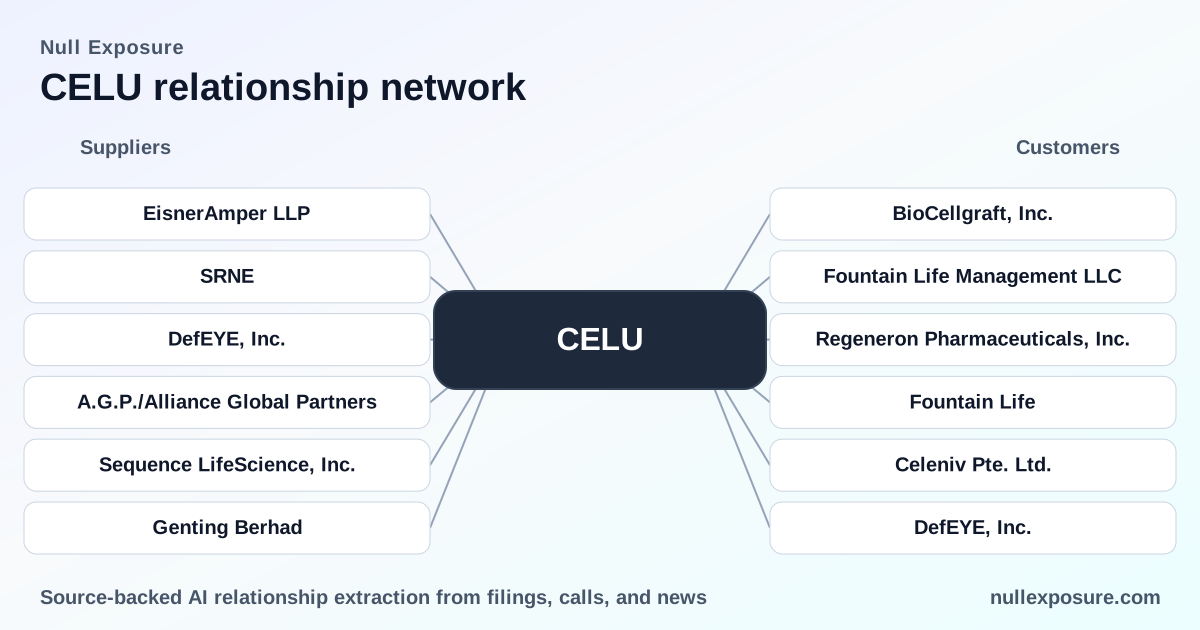
Celularity (CELU): How customer and partner relationships are shaping near‑term cash and commercial runway
Celularity operates a mixed-model regenerative medicine business: it manufactures and sells placental-derived biomaterials and degenerative-disease products, runs a fee-based biobanking service that collects/processes and stores umbilical cord and placental material under long-term contracts, and monetizes intellectual property through licensing and asset transactions. The company also generates services revenue via contract manufacturing and collaborative research agreements. Revenue therefore combines one-time collection/processing fees, long-duration storage fees and product sales, plus episodic license and asset monetizations—a profile that drives both recurring cashflow and lumpy balance-sheet events. For relationship-level tracking and context, see https://nullexposure.com/.
How Celularity contracts, collects cash, and concentrates risk
Celularity’s operating and contracting posture is a hybrid of retail biobanking and B2B life‑science partnerships. The company recognizes collection and processing fees at completion and storage fees ratably over long contractual horizons—typically 18 to 25 years—which creates a durable, annuitized revenue stream from biobanking customers. Trade receivables and product sales are U.S.-centric, and Celularity lists federal and state healthcare programs and private insurers among third‑party payors, indicating exposure to government and payer reimbursement dynamics rather than purely direct consumer pricing.
Functionally, Celularity acts as seller, manufacturer and service provider: it sells HCT/P products and commercial-stage biomaterials, operates a purpose-built manufacturing facility in Florham Park, NJ, and provides contract manufacturing and development services to third parties. Segment reporting confirms two revenue pillars: core product (degenerative disease biomaterials) and services (biobanking and contract manufacturing). These characteristics point to a business that is partly recurring and regulated, partly partnership-driven and partly dependent on discrete licensing/asset transactions to shore up liquidity.
Track relationships and filings at https://nullexposure.com/.
Key commercial and research relationships that matter now
BioCellgraft, Inc.
Celularity granted an exclusive license to BioCellgraft to develop and commercialize certain licensed products in the U.S. dental market, enabling Celularity to monetize IP in a specialized commercial channel while retaining its development focus elsewhere. This agreement is disclosed in Celularity’s 2024 Form 10‑K.
Fountain Life Management LLC (Fountain Life)
Celularity entered a Technology Services Agreement to process and store mononuclear cells collected by Fountain Life, and subsequent press coverage describes a broader strategic partnership to supply stem cell therapy products in Florida following a 2025 state law change. The processing/storage arrangement is documented in Celularity’s 2024 10‑K, with public reporting on the strategic supply partnership in March 2026.
Regeneron Pharmaceuticals, Inc.
Celularity signed a multi‑year research collaboration and services agreement with Regeneron to support research on Regeneron’s allogeneic cell therapy candidates, positioning Celularity as a paid research and manufacturing partner to a major biopharma. This collaboration is disclosed in the company’s 2024 Form 10‑K.
NEXGEL, Inc. (NXGL / NexGel)
In April–May 2026 NexGel completed a license and acquisition of a portfolio of commercial-stage regenerative biomaterial products from Celularity, with multiple press releases and filings describing upfront consideration in the mid‑teens of millions (reported between $15.0M and $15.8M) and potential contingent payments tied to sales milestones. Coverage of the closing and financing (including a $5.5M financing led by Sequence LifeScience) ran across GlobeNewswire, InvestingNews, MarketScreener and other industry outlets in May 2026.
Celeniv Pte. Ltd.
Celularity executed an Asset Purchase Agreement with Celeniv Pte. Ltd. that sold certain intellectual property assets while granting Celularity an exclusive, royalty‑bearing license for a defined period and an option to repurchase, a transaction that company disclosures indicate helped retire senior secured debt. Reporting on this transaction appeared in March 2026 filings and press summaries.
DefEYE, Inc.
Celularity agreed to serve as exclusive contract manufacturer for DefEYE’s ophthalmic biologics portfolio and retains the right to appoint one of five board members, reflecting a manufacturing and governance linkage that both drives facility utilization and gives Celularity equity-like strategic influence. This arrangement is described in March 2026 news reports summarizing the partnership.
What these relationships mean for revenue, balance sheet and execution
- Recurring core: Biobanking contracts (18–25 year storage terms) create predictable, ratable revenue streams that reduce reliance on volatile upfront product sales. Company disclosures emphasize one‑time collection/processing fees plus annual storage fees as a structural revenue driver.
- Lumpy monetization: The NexGel transaction and the Celeniv deal illustrate Celularity’s willingness to monetize commercial-stage assets to improve liquidity or reduce leverage; these are meaningful one‑time inflows but reduce future product revenue unless structured with ongoing royalties.
- Service and validation revenue: The Regeneron collaboration and contract manufacturing arrangements (e.g., DefEYE) convert R&D and facility capacity into fee income and provide external validation of Celularity’s manufacturing capabilities.
- Channel expansion: Fountain Life access to a consumer-facing longevity platform, amplified by regulatory developments in Florida, offers a route to scale volume for biobanking and downstream product distribution.
- Concentration and regulatory exposure: Sales and receivables are U.S.-centered with government payors included; this reduces international diversification while increasing sensitivity to U.S. reimbursement and regulatory dynamics.
Key takeaway: Celularity’s relationship mix balances long-duration, annuity-like biobanking income with strategic asset sales and fee-for-service partnerships—this reduces purely binary clinical‑trial risk but introduces tradeoffs between immediate liquidity and long-term product revenue.
Investor considerations and risk checklist
- Balance-sheet impacts from recent asset sales and license deals — positive near-term liquidity but potential erosion of future product revenue unless coupled with meaningful royalty streams.
- Reliance on U.S. markets and payors — reimbursement policy changes or payer pushback could affect margins on commercial biomaterials and biobanking fee realization.
- Execution on contract manufacturing and collaborations — operational performance at the Florham Park facility is critical to realize services revenue tied to Regeneron and DefEYE engagements.
- Contract tenor limits concentration risk for biobanking (long storage terms) but creates liability and fulfillment obligations that must be provisioned and managed.
Bottom line
Celularity’s customer and partner landscape shows a deliberate strategy to convert technological and manufacturing assets into multiple cash channels: long-term storage annuities, product sales, contract services, and ad hoc asset monetizations. Each relationship reviewed here contributes either recurring revenue, capacity utilization or balance-sheet relief—investors should weigh the stability of the annuity base against the one-time nature of recent asset sales and the operational demands of third‑party manufacturing. For a continuous feed of relationship intelligence and filings, visit https://nullexposure.com/.