CEPS: A sponsor-driven shell with one clear insider signal
Cantor Equity Partners VI, Inc. (CEPS) is a SPAC — a corporate shell that raises capital in public markets to complete a business combination. It monetizes through sponsor alignment, cash in trust, and the economics of a completed merger rather than operating revenue today; equity value is therefore driven by deal flow, sponsor support, and investor confidence in a target transaction. For investors and operators evaluating CEPS’s customer/partner landscape, the only material counterparty event recorded in the customer-scope feed is a sponsor-affiliated share purchase in March 2026 — a direct alignment signal that matters for deal execution and market perception. For deeper coverage and tools, visit https://nullexposure.com/.
How CEPS is structured and why customer signals matter
CEPS is listed on NASDAQ as a shell company whose stated mission is “effecting a merger, share exchange, asset acquisition, share purchase, reorganization or similar business combination.” The balance sheet profile is consistent with that model: zero reported revenue, negative book value per share (-0.022), and market capitalization of roughly $149 million as of the latest profile. The SPAC model concentrates economic and informational power in a small group of sponsors and insiders; therefore sponsor transactions and filings are the most consequential “customer” signals for evaluating execution risk and potential dilution.
Key balance-sheet and market context:
- No operating revenues reported (RevenueTTM = 0).
- EPS and profitability are negative or nil (DilutedEPS TTM = -0.01; ProfitMargin = 0).
- Shares outstanding ~11.8 million with shares float ~10.6 million; insiders hold a small but non-trivial stake (~2.54%) and institutions ~20.07%.
The raw customer/partner signal: sponsor purchase in March 2026
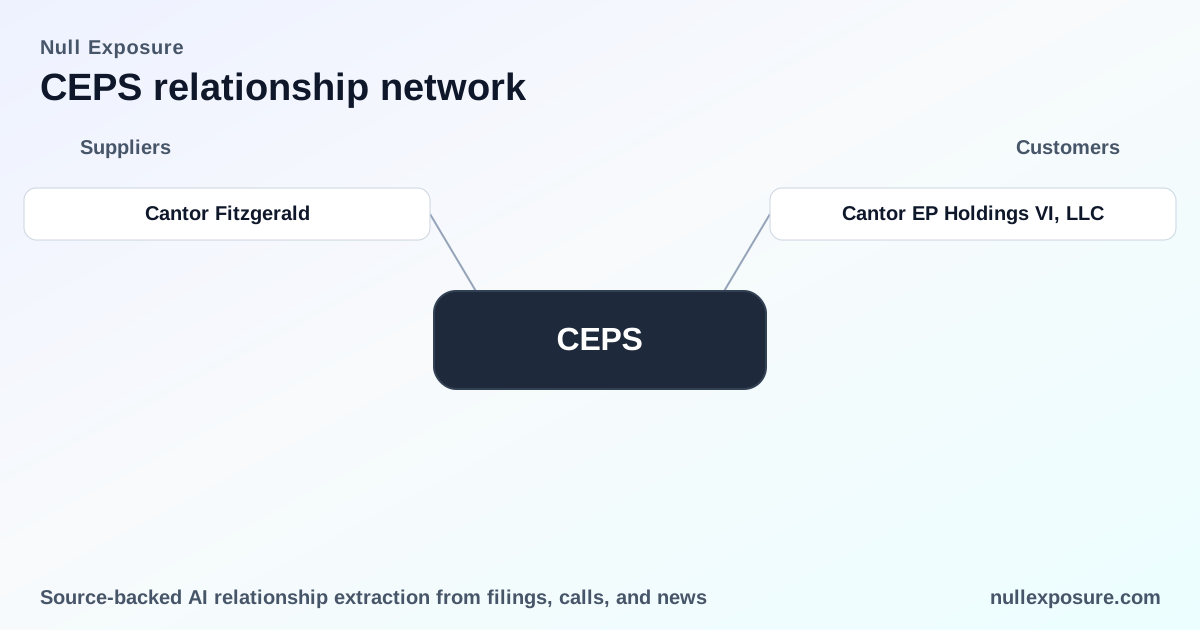
Cantor EP Holdings VI, LLC — an affiliated sponsor entity — purchased 300,000 Class A ordinary shares of CEPS at $10.00 per share in March 2026. This transaction was reported via an SEC Form 4 filing and summarized in a public SEC-filings roundup on March 9, 2026. According to the filing summary, the purchase was executed at the nominal IPO-era price, which signals either secondary accumulation or sponsor capitalization ahead of transaction activity. (Source: StockTitan summary of SEC Form 4, March 9, 2026.)
Why this matters: sponsor purchases at $10 are a direct alignment signal — sponsors increasing their economic stake reduce immediate governance risk for a merged target and signal confidence in deal prospects or willingness to support the post-combination capital structure.
Relationship coverage: every entry in the customer feed
- Cantor EP Holdings VI, LLC bought 300,000 Class A ordinary shares at $10.00 per share in FY2026, reported in a March 2026 SEC filing summary. This is the single customer-scope relationship recorded in the available feed and functions as a sponsor-support signal rather than a commercial customer contract. (Source: StockTitan coverage of the SEC Form 4 filing, March 9, 2026.)
What the absence of other customer relationships implies
There are no additional customer relationships or constraint excerpts captured in the customer-scope feed for CEPS. That is a company-level signal: CEPS operates without commercial customers and without documented contractual customer constraints in available records, consistent with SPAC status. This absence reinforces that sponsor, PIPE investors, and merger counterparties — not traditional customers — are the primary drivers of value and execution risk.
From an operating-model perspective:
- Contracting posture is sponsor-led and transaction-focused; material contracts will be merger agreements, financing commitments, or sponsor support agreements rather than customer sale contracts.
- Concentration is inherently high: a small number of sponsors and institutional investors determine liquidity and deal viability.
- Criticality of relationships: sponsor and PIPE commitments are critical; traditional customer relationships are non-existent until a target operates post-combination.
- Maturity: CEPS is pre-combination and immature as an operating concern, so counterparty signals are sparse and high-salience when they do appear.
Investment implications and risk checklist
For investors assessing CEPS, the sponsor purchase is a positive alignment datapoint but must be evaluated against structural risk factors inherent to SPACs and CEPS’s reported metrics. Key takeaways:
- Sponsor alignment is confirmed by the March 2026 buy, which reduces short-term governance uncertainty and signals sponsor willingness to hold at IPO-price levels.
- No operating revenue and negative book value indicate that equity returns depend entirely on a successful transaction and favorable post-merger performance.
- Concentration risk is elevated: a small group of insiders and institutions control meaningful outcomes; their incentives dictate timing and structure of any deal.
- Liquidity and market trading range are tight (52-week high/low approximately $10.07–$10.24), reflecting limited speculative movement until a business combination is announced.
- Absence of customer constraints in filings means counterparty risk is currently limited to sponsor and financing counterparties rather than commercial counterparties.
Practical checklist for further diligence:
- Confirm sponsor identity, historical transaction track record, and replacement funding paths if a PIPE or sponsor loan is necessary.
- Monitor future SEC filings (Form 4, S-4, 8-K) for PIPE commitments, merger agreements, and sponsor financing actions.
- Track post-combination pro forma capitalization and potential dilution from promote structures.
Bottom line: alignment confirmed, execution risk remains
The single customer-scope signal for CEPS is a sponsor-affiliated purchase of 300,000 shares at $10 in March 2026, a tangible show of alignment that supports deal execution optics. That signal improves governance posture but does not change the fundamental valuation dynamics of a SPAC: outcomes will depend on the quality of the announced target, the financing package, and post-combination execution. For investors focused on counterparty exposure, the relevant counterparties for CEPS remain sponsors and institutional PIPE investors rather than commercial customers.
For active monitoring tools and deeper counterparty intelligence on SPACs and sponsor activity, see https://nullexposure.com/.