Cognex (CGNX): Customer Concentration and Logistics Anchors Shape the Revenue Profile
Cognex builds and sells machine-vision hardware and accompanying software to automate manufacturing and distribution tasks, and monetizes through product sales (cameras, sensors, and vision systems), software licenses, and ancillary services such as maintenance and training. The business is hardware-first, with software and services layered on top, and a meaningful portion of revenue tied to a small number of large customers and global logistics deployments. For a focused customer-risk map and updates, see https://nullexposure.com/.
What investors need to know about how Cognex operates
Cognex’s operating model is defined by a few pragmatic constraints that shape revenue visibility and risk. Contracts are typically short-term (less than one year), which limits multi-year revenue visibility and makes bookings and quarter-to-quarter demand swings the primary drivers of reported results. According to the company’s disclosures for the year ended December 31, 2025, the firm elected practical expedients for short-duration contracts consistent with that profile.
The company sells globally: 67% of revenue in 2025 came from customers outside the U.S., with material contributions from Europe, Greater China and other Asia regions — Europe accounted for roughly $251.6 million and Greater China plus other Asia collectively substantial shares. This geographic diversity reduces single-region macro risk but introduces exposure to international manufacturing cycles and regional capex trends. The firm’s monetization mix is clear: hardware and software generate the majority of sales while services represent less than 10% of revenue, limiting recurring revenue but preserving strong gross margins tied to product sales.
Large e-commerce customers anchor logistics revenue
Cognex’s expansion into logistics over the last decade positioned it as a primary vendor for high-speed sorting and package-tracking automation for large e‑commerce operators. That positioning creates both a growth lever and a concentration risk: logistics orders can be large and lumpy, and a single major customer’s capex cadence materially affects Cognex’s logistics segment.
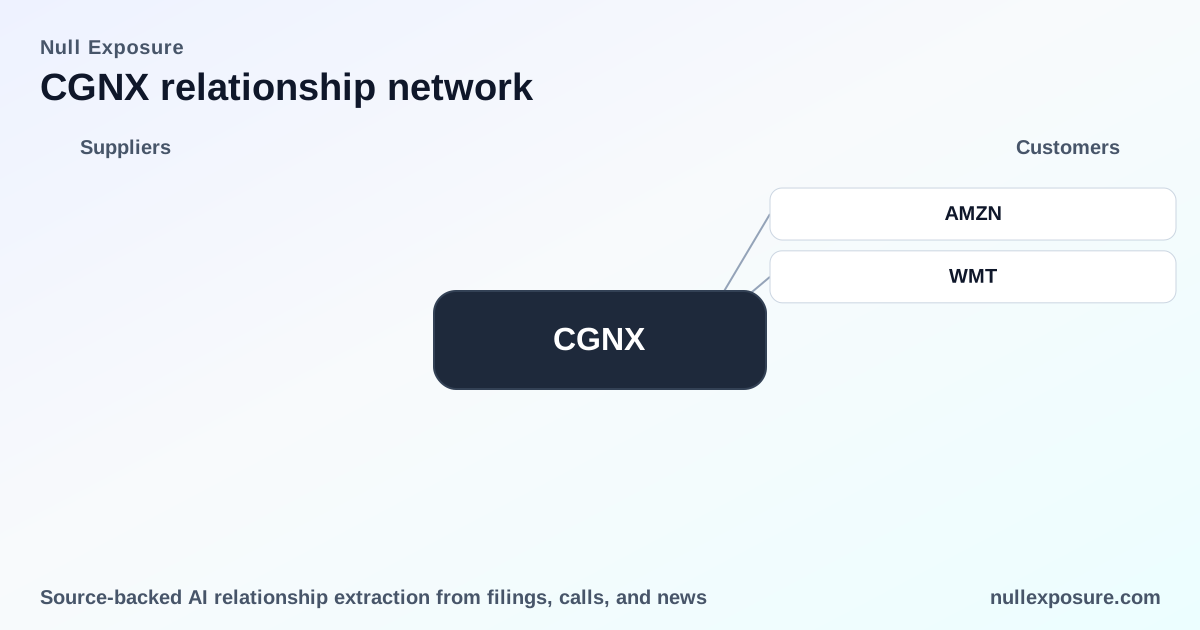
A concise view of the headline relationships follows; the items below cover every customer relationship referenced in public reporting and industry coverage.
Amazon (AMZN)
Amazon is a large logistics customer whose capital spending can meaningfully influence Cognex’s logistics results, according to comments by Cognex’s CFO in March 2026. A Yahoo Finance report on March 9, 2026 captured management’s acknowledgment that Amazon’s spending patterns have an outsized impact on Cognex’s logistics outcomes. FinancialContent coverage (Feb. 12, 2026) also notes Cognex’s historical role helping Amazon automate high-speed sorting and package tracking.
Source: Yahoo Finance (Mar 9, 2026) and FinancialContent feature (Feb 12, 2026).
Walmart (WMT)
Walmart is identified as another major e‑commerce/logistics customer for which Cognex supplies automation solutions that support high-speed sorting and package tracking. FinancialContent’s February 12, 2026 profile highlights Cognex’s logistics expansion and references deployments with Walmart alongside other large retailers.
Source: FinancialContent feature (Feb 12, 2026).
How those relationships translate into investor-relevant risks and opportunities
-
Concentration risk is material. Cognex reported that revenue from a single customer was 15% of total revenue in 2025, up from 10% in 2024, which is a clear signal that a handful of large contracts can swing annual results. This elevates the importance of monitoring customer-specific capex announcements and procurement cycles.
-
Short-duration contracts increase cyclicality. The company’s typical contract life is less than a year, which means revenue inflows are closely tied to current bookings and visible orders rather than long-term contracted revenue streams. That structure amplifies quarter-to-quarter volatility but preserves management flexibility to reprice and reallocate capacity.
-
Geographic diversification is both a stabilizer and a complexity. With roughly two-thirds of revenue from outside the U.S.—including Europe, Greater China and other Asia regions—Cognex benefits from exposure to global manufacturing and e‑commerce expansion, but is also sensitive to regional supply chain and capex cycles.
-
Revenue mix concentrates value in product sales. Hardware and software drive the core economics; services comprise under 10% of revenue, reducing recurring revenue but sustaining higher gross margins on product sales.
Practical implications for due diligence and monitoring
-
Track public capex disclosures and large-site automation announcements from Amazon and major retailers; Cognex’s logistics revenue will move with those spending cycles. The CFO’s March 2026 comments explicitly link Amazon’s spend to Cognex’s logistics performance.
-
Monitor bookings and backlog disclosures as the primary short-term signal of revenue trajectory, since contracts are short and orders translate to revenue relatively quickly.
-
Watch geographic revenue splits and regional bookings for signs of demand shifts; Cognex’s FY2025 breakdown shows Europe and Asia as material contributors.
For more granular customer-tracking and to see how Cognex’s largest relationships evolve over time, visit https://nullexposure.com/.
What to watch in upcoming quarters
- Management commentary on logistics demand and whether e‑commerce capex is resuming an upward trend will be the chief driver of near-term upside or downside.
- Any changes to the single-customer concentration metric are critical: a reduction in the 15% figure would lower headline risk; an increase would raise it.
- Movement in European and Asia bookings will determine whether global exposure proves stabilizing or adds volatility.
Bottom line
Cognex’s value proposition is clear and profitable: high-margin machine-vision hardware and software sold globally to manufacturers and distribution operators, with large e‑commerce customers providing both scale and cyclicality. Investors should treat short contract duration and the material single-customer concentration as central factors in any investment thesis; those realities drive earnings volatility and make order-flow and customer capex the most consequential metrics to monitor.