CHRD: Who Buys Chord Energy’s Production — and What That Means for Investors
Thesis: Chord Energy is an independent oil and gas producer that monetizes its Bakken-focused production predominantly through sales of crude oil, natural gas and NGLs to refiners, marketers and commodity trading firms; the company captures revenue via short-term market-priced contracts for oil and gas and longer-duration contracts for NGLs, producing strong near-term cash flow but exposing the business to customer concentration and market-price cycles. Learn more about the data behind these customer relationships at https://nullexposure.com/.
How Chord monetizes output — straightforward, market-driven commerce
Chord operates as a seller of core hydrocarbon products rather than as a downstream marketer or integrated refiner. Revenue is generated almost entirely from physical sales of crude oil, NGLs and natural gas delivered to third-party purchasers with logistics access (pipelines, rail). According to Chord’s 2024 Form 10‑K, the company sells crude oil and natural gas under short-term, market-based contracts, while NGLs are “generally sold” under longer-term contracts — a commercialization mix that preserves pricing optionality but limits revenue visibility for its largest volume streams.
Customer concentration is real — concentrated volumes, manageable markets
Chord discloses material percentages of product sales to a small set of counterparties across recent years. A handful of refiners and trading houses account for a meaningful share of product sales, which increases near-term cashflow sensitivity to the purchasing behavior of those counterparties. The company explicitly states it believes the loss of a single purchaser would not produce a long-term material adverse impact because replacement buyers are available in its operating regions, which are concentrated in the United States.
Operational constraints and what they tell investors
These contract and geographic signals trace back to Chord’s operating model:
- Contracting posture: The company’s crude oil and gas flows are transacted under predominantly short-term contracts, while NGLs have a higher proportion of long-term arrangements, creating mixed revenue predictability across product lines (Company 2024 Form 10‑K).
- Concentration and criticality: Sales to a few large counterparties have historically represented double-digit shares of product revenues, so commercial relationships are financially significant even if the company views them as replaceable in its regional markets.
- Geographic maturity: All operations and the vast majority of revenue are U.S.-centric, concentrating counterparty exposure in North American markets.
- Relationship role and stage: Chord functions primarily as a seller of core products with active, ongoing commercial dealings with refiners, marketers and trading firms.
These are company-level operating signals drawn from SEC filings and the company’s risk disclosures; they establish the baseline commercial profile investors should weigh when valuing cash flow stability and counterparty risk.
Customer-by-customer: named counterparties and what the filings show
This section covers every relationship surfaced in the company filings and news results.
-
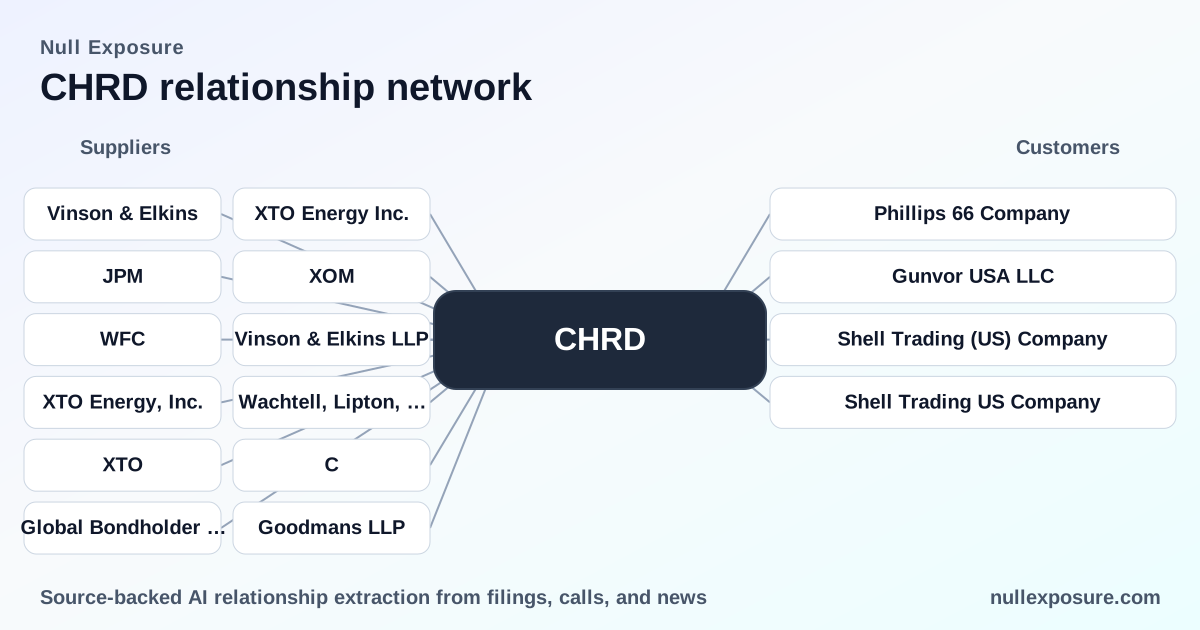
Phillips 66 Company
Phillips 66 has been a top purchaser of Chord’s product streams, accounting for roughly 17% of product sales in 2022, about 20% in 2023, and approximately 19% in 2024, making Phillips 66 Chord’s most consistent single counterparty by volume in the period reported. According to Chord’s 2024 Form 10‑K, Phillips 66 is a large, repeat purchaser of the company’s crude and other products. -
Gunvor USA LLC
Gunvor accounted for approximately 14% of Chord’s product sales in 2023, placing it among the company’s largest trading counterparties for that year, per Chord’s 2024 Form 10‑K disclosure. -
Shell Trading (US) Company
Shell Trading (US) accounted for about 11% of product sales in 2022, making it a material purchaser in that year, as disclosed in Chord’s 2024 Form 10‑K. -
Shell Trading US Company
The filings include a separate line-itemed mention for Shell Trading US Company in 2022 reporting metadata; this mirrors the same commercial relationship described above in Chord’s 2024 Form 10‑K and reflects nomenclature variants used in the filing. -
VTS (Vitesse)
A 2026 media report noted that Vitesse (ticker VTS) holds interests in thousands of wells operated by larger companies, including Chord Energy, positioning Vitesse as a service/lessor counterparty in industry discourse rather than a principal buyer; the reference appears in a March 2026 market article in The Globe and Mail highlighting Vitesse’s asset footprint and operator clients.
Each of the above entries is drawn from Chord’s public disclosures and contemporaneous market reporting: the Phillips 66, Gunvor and Shell relationships are called out in the company’s 2024 Form 10‑K; the Vitesse mention surfaced in a March 2026 news piece. These citations document the who and the relative magnitude of buyer exposure that investors should track.
Commercial implications for valuation and risk
Two commercial facts drive the investment thesis for CHRD:
- Revenue sensitivity to a small set of buyers. Double-digit customer shares over multiple years create concentration risk: changes in buyer strategy, logistics constraints, or regional differentials can move Chord’s realized prices and volumes materially in the near term.
- Price exposure is primary. Because crude and natural gas are largely sold under short-term contracts, Chord’s financial performance will move closely with spot market realizations and regional differentials, while NGLs provide somewhat more contract-backed lift.
At the same time, Chord’s market position in the Bakken and its access to pipeline and rail takeaway options support the company’s assertion that alternative customers are available, tempering the most acute counterparty fears. The company’s disclosures state that the loss of any single purchaser should not cause a long-term material adverse impact, a company-level signal that replacement markets exist in its operating geography.
What investors should watch next
- Quarterly disclosures of product sales by counterparty: watch for any single counterparty share that moves above the historical double-digit range.
- Changes in contract tenure mix: a shift toward shorter term for NGLs would decrease revenue visibility; longer contracts for crude would increase it.
- Pipeline/transportation events and regional differentials in the Bakken, which can change realized pricing faster than production fundamentals.
For a concise, sourced view of these counterparty relationships and their provenance, visit Null Exposure: https://nullexposure.com/.
Bottom line
Chord’s business model is simple and market-exposed: sell hydrocarbons into established regional markets, capture cash flow under mostly short-term pricing for oil and gas and longer-term arrangements for NGLs, and manage concentrated relationships with large refiners and traders. Concentration in a few counterparties is the key commercial risk, offset by the company’s ability to access multiple buyers in the U.S. basin it serves. Investors valuing Chord should price for spot-price volatility and monitor buyer mix and contract tenor as leading indicators of revenue stability.