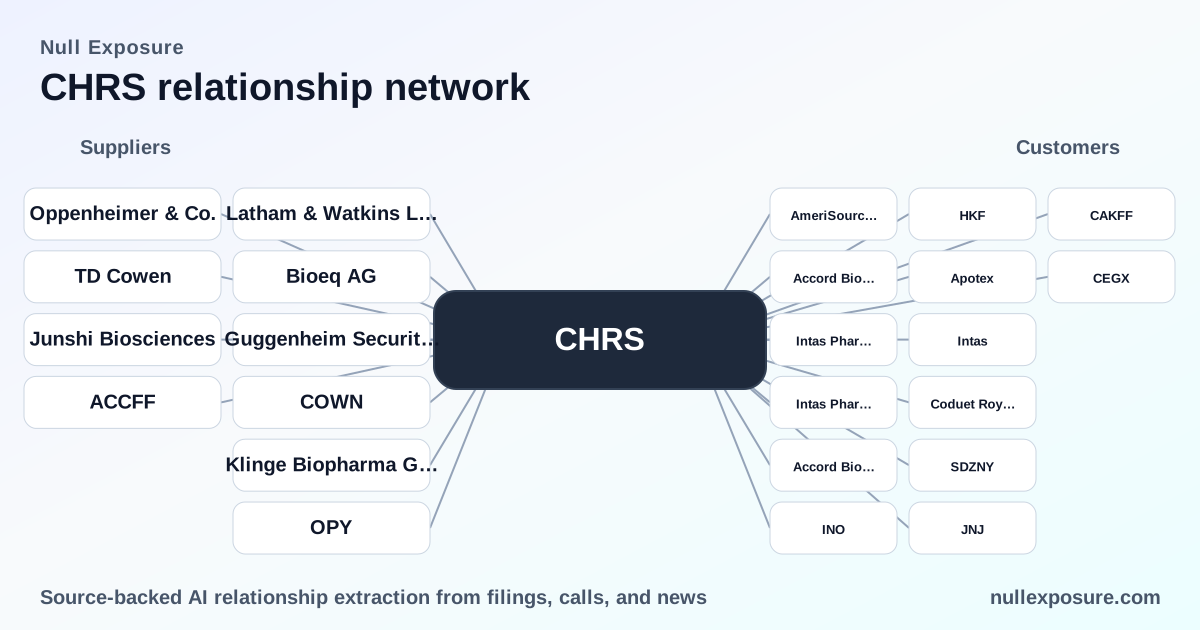
Coherus BioSciences (CHRS): customers, buyers and strategic partners after a year of portfolio exits
Coherus monetizes through a mix of direct product sales to U.S. wholesalers and distributors, strategic asset divestitures, revenue-participation arrangements and targeted supply agreements for clinical programs. The company’s recent strategy prioritizes cash generation and simplification of the commercial portfolio—selling approved biosimilars and monetizing future sales streams—while retaining selective oncology assets and clinical relationships that can convert into development or milestone revenue.
For a concise view of how these customer and counterparty relationships shape commercial risk and upside, visit https://nullexposure.com/.
The new operating model in plain English
Coherus historically sold biosimilars and oncology drugs into the U.S. market through wholesalers and distributors; its 2024 filings and subsequent press releases show a deliberate pivot toward monetizing assets rather than continuing full-scale commercialization. Company-level signals from filings and press coverage describe a contracting posture that includes usage‑based revenue participation, one-off asset sale proceeds, and supply agreements for clinical programs.
- Contracting posture: Coherus sold revenue participation rights that pay a percentage of U.S. net sales (a usage-based payment structure) in exchange for upfront cash, indicating preference for near-term liquidity over long-tail commercialization exposure (see Revenue Purchase and Sale Agreement).
- Counterparty profile: The company sells into the largest U.S. channels—GPOs, IDNs and national wholesalers—so counterparties are large enterprises with negotiating leverage and concentration risk.
- Geographic focus: All net product revenue is U.S.-sourced, simplifying market exposure but concentrating regulatory, reimbursement and competitive risk in a single region.
- Role mix: Coherus acts as seller/distributor to wholesalers while concurrently acting as a seller of franchises to strategic buyers and as a supplier to clinical partners.
- Portfolio focus: The firm now treats UDENYCA and LOQTORZI as core commercial assets in different ways—UDENYCA was divested while LOQTORZI has been subject to revenue participation and clinical supply deals—illustrating a mixed maturity and criticality profile across assets.
Relationship roll call: every partner, buyer and customer investors should track
Below I list each relationship that appears in the public record, with a short plain‑English summary and the primary source reference.
-
AmeriSourceBergen Corp. — Coherus identifies AmerisourceBergen as a customer/wholesaler under its FY2024 customer concentration disclosures, indicating the company sells finished product into national distributor channels. (Coherus 2024 Form 10‑K, FY2024)
-
McKesson (CAKFF) — McKesson is disclosed in Coherus’ FY2024 10‑K as a material customer channel, reflecting standard wholesale distribution of product into hospitals and clinics. (Coherus 2024 Form 10‑K, FY2024)
-
Cardinal (CEGX) — Cardinal Health likewise appears in Coherus’ FY2024 customer concentration disclosure as a wholesaler customer, reinforcing distribution concentration among the Big Three distributors. (Coherus 2024 Form 10‑K, FY2024)
-
Intas Pharmaceuticals / Intas Pharmaceuticals Ltd. — Coherus completed the divestiture of the UDENYCA franchise to Intas in a transaction valued up to $558.4 million according to Coherus’ closing announcement, while coverage of the deal details cites an upfront payment figure of $483.4 million plus potential milestone payments. The purchase included transfer of the U.S. business and related rights. (Coherus press release via GlobeNewswire, April 14, 2025; FierceBiotech and TradingView reporting on transaction economics, Dec 2024–Mar 2025)
-
Accord BioPharma, Inc. — Accord, the U.S. specialty division of Intas, assumed responsibility for the UDENYCA franchise in the U.S. at closing; press releases state Accord will continue commercial supply and distribution in oncology settings. (PR Newswire release on completion; GlobeNewswire, April 14, 2025)
-
INOVIO (INO) — Coherus agreed to provide LOQTORZI (toripalimab‑tpzi) as the supply drug for a Phase 3 clinical trial sponsored by Inovio, a clinical supply relationship that positions Coherus as a materials supplier for late‑stage development. (PR Newswire announcement of clinical collaboration, FY2024)
-
HKF — Coherus completed the sale of its YUSIMRY franchise to an entity referenced as HKF for $40 million, a one‑time cash monetization of a non‑core asset reported in company disclosures and market commentary. (TradingView news citing Coherus’ filings, FY2025)
-
Sandoz Group (SDZNY) — Coherus sold the CIMERLI (ranibizumab‑eqrn) ophthalmology franchise to Sandoz for $170 million in cash, transferring the approved interchangeable biosimilar and associated staff to Sandoz. (Sandoz and Coherus announcements reported in PharmaExec and BiopharmaDive, March 2024–FY2024 filings)
-
TD Cowen (COWN) — Coherus Oncology’s prospectus allows the company to sell shares through or to TD Cowen, identifying the firm’s involvement as a placement or distribution channel for equity capital. (Investing.com coverage of Coherus Oncology prospectus, FY2026)
-
Coduet Royalty Holdings, LLC — Coherus sold a revenue participation right for LOQTORZI to Coduet Royalty Holdings in a Revenue Purchase and Sale Agreement that commenced May 8, 2024; Coherus received an upfront payment (Revenue Purchase Price) in exchange for a percentage of U.S. net sales under specified thresholds, demonstrating a usage‑based monetization structure. (GlobeNewswire / Coherus Q1 2025 business update, May 12, 2025)
-
Janssen Research & Development, LLC (JNJ) — Coherus Oncology announced a clinical supply agreement with Janssen for clinical materials, indicating strategic collaboration with a major pharma for development activities. (MarketScreener reporting on Coherus Oncology announcements, Feb 2026)
-
Apotex — Coherus disclosed an exclusive license agreement with Apotex for commercialization in Canada, showing an international commercialization partner for selected products outside the U.S. (TradingView summary of FY2025 filings)
What these relationships mean for revenue, risk and upside
- Cash today vs. royalties tomorrow: The company has exchanged long‑tail commercial upside for immediate liquidity through asset sales and revenue participation; upfront proceeds reduce balance‑sheet pressure but shrink future direct product revenue streams (GlobeNewswire; TradingView; various press reports).
- Distribution concentration equals negotiation risk: With the Big Three wholesalers appearing in 10‑K disclosures, pricing, payment terms and reorder patterns at AmerisourceBergen, McKesson and Cardinal are material to near‑term sales (Coherus 2024 10‑K).
- Usage‑based contracts create variable upside: The LOQTORZI revenue participation agreement (5.0% below threshold, 0.5% above) signals modest retained upside rather than full commercialization economics; this structure de‑risks the company but caps upside for investors if the product becomes highly successful (Revenue Purchase and Sale Agreement excerpt).
- Clinical supply deals preserve optionality: Agreements with INOVIO and Janssen keep Coherus engaged in oncology development and provide non‑recurring or development‑stage revenue without the costs of a broad commercial organization.
- Single‑market concentration: All net product revenue continues to be U.S.‑centric, concentrating regulatory and reimbursement risk in one jurisdiction (Coherus FY2024 disclosures).
For a tailored view of counterparties and exposure mapping for CHRS, see https://nullexposure.com/.
What to watch next (investor checklist)
- Milestone / earn‑out receipts from the Intas/Accord UDENYCA sale and any contingent consideration. (FierceBiotech; GlobeNewswire)
- Quarterly receipts from the LOQTORZI revenue participation and the underlying U.S. net sales trends that drive those payments. (Coherus disclosures, Revenue Purchase and Sale Agreement)
- Wholesaler ordering patterns and concentration metrics reported in subsequent 10‑Q/10‑K filings. (Coherus filings)
- Clinical progress on trials using Coherus‑supplied material (INOVIO, Janssen) that could convert supply agreements into larger development collaborations or licensing deals. (PR Newswire; MarketScreener)
Conclusion — Coherus has repositioned from owner‑operator of multiple biosimilar franchises toward being a focused oncology developer and monetizer of prior investments: asset sales provide balance‑sheet relief; revenue participation secures modest ongoing cash flow; and supply/partner deals preserve development upside without broad commercialization cost. Investors should track milestone inflows, distributor order behavior and the health of retained clinical programs as key drivers of near‑term valuation.