Cingulate Inc (CING): Customer and capital relationships that underwrite a clinical-stage balance sheet
Cingulate Inc. is a clinical-stage biopharmaceutical company focused on developing therapies for neurobiological and central nervous system disorders. The company currently generates no product revenue and funds operations through equity markets and structured purchase agreements; its economic model is therefore concentrated on clinical progress catalysts and access to incremental financing. Market capitalization stands near $64.3 million, trailing operating losses (negative EBITDA and EPS), and an analyst target price of $28.70, which together frame an investor case driven more by financing and development milestones than by commercial cash flow. For a concise research gateway, see https://nullexposure.com/.
Why customer and capital relationships are the operative lens for Cingulate
Cingulate operates as a development-stage sponsor rather than a commercial seller: its near-term cash flow profile depends on capital relationships and milestone-driven licensing or partnerships, not direct product sales. That operating posture leads to four linked business-model characteristics investors must price:
- Contracting posture: The company negotiates optional, issuer-controlled equity purchase arrangements that provide on-demand liquidity while preserving execution flexibility.
- Concentration: With no product revenue, funding sources are currently concentrated in a small number of counterparty financings and equity subscribers.
- Criticality: These counterparties are functionally critical — they provide runway for trials and regulatory work that determine future valuation.
- Maturity and tenor: Agreements disclosed to date have multi-year terms and structured draw mechanics that shape dilution timing and cash runway.
These characteristics increase sensitivity to capital markets conditions and counterparties’ execution; they also magnify the importance of regulatory and commercial arrangements once a product advances toward approval.
The relationships we located and what each implies
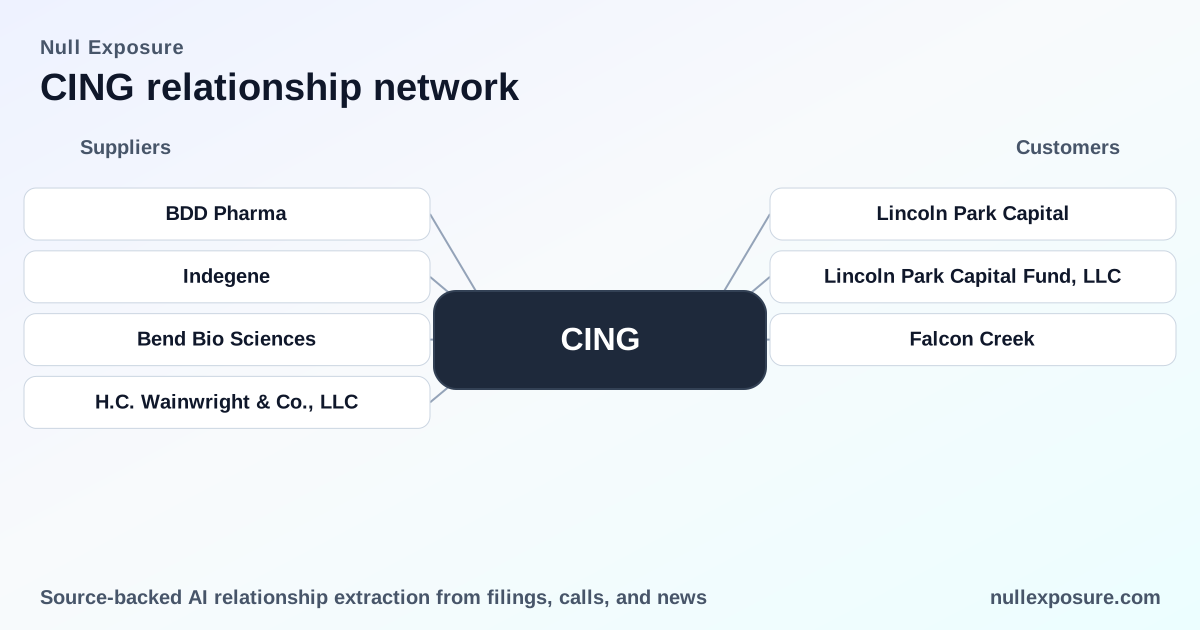
Lincoln Park Capital — optional equity facility up to $25.0 million
Cingulate executed a purchase agreement with Lincoln Park Capital on July 21, 2025 that allows Lincoln Park to purchase up to $25.0 million of common stock over a 36-month term, with purchases at the company’s sole discretion and subject to standard conditions. This structure provides incremental, on-call liquidity while preserving Cingulate’s control over timing and volume of draws. (Source: company press release on GlobeNewswire, Aug 19, 2025.)
Lincoln Park Capital Fund, LLC — press coverage reiterates the same $25M pact
Press outlets echoed the Lincoln Park arrangement, reporting that Lincoln Park Capital Fund, LLC is the counterparty to a 36-month equity purchase agreement for up to $25 million dated July 21, 2025. Multiple public notices confirm the substance of the facility and its role as the primary disclosed capital purchase vehicle in FY2025. (Source: The Globe and Mail press release coverage, 2025.)
Falcon Creek and other purchasers — multiple material agreements referenced in FY2026 reporting
A later filing and market notice characterize a set of material agreements that list “Falcon Creek and Other Purchasers” as counterparties, signaling additional negotiated capital transactions or placements in FY2026. The reference implies supplemental financing activity beyond the Lincoln Park facility and suggests management is broadening its capital counterparties. (Source: TradingView news item, March 2026.)
How the disclosed constraints shape the operating model and risk profile
Cingulate’s public disclosures include a company-level warning that, for any products that achieve regulatory approval and commercial rollout, arrangements with third-party payors and customers expose the company to healthcare laws and regulations that constrain how it sells and distributes therapies. This is a strategic signal, not a relationship-specific note, and it affects the company’s future go-to-market posture rather than current capital flows. (Source: company filing language cited in corporate disclosures.)
Operational implications from that constraint and the relationship set above:
- Regulatory and contractual friction will be material once commercial activities begin. Pricing, reimbursement and distribution contracts will require compliance structures that add cost and complexity.
- Current financing relationships are the immediate operational lifeline. With zero revenue TTM and negative gross profit, the company’s runway and trial funding rest heavily on the purchase agreements and any placements with parties like Falcon Creek.
- Dilution is a direct valuation lever. Equity purchase facilities provide optional cash at a cost: investor dilution when draws occur. The timing of those draws directly affects per-share upside and downside scenarios.
- Counterparty concentration is a credit-of-last-resort risk. The company’s capital plan depends on counterparties’ willingness to execute over multiple years; broadening the investor base reduces execution risk.
What investors should watch next
- Draw activity and usage patterns under the Lincoln Park agreement: frequency and pricing of draws reveal whether management is using the facility opportunistically or out of necessity.
- Terms and size of Falcon Creek and other purchaser arrangements: any material pricing concessions or forward commitments would further define dilution trajectories.
- Progress on clinical milestones that convert financing dependency into licensing, partnership, or eventual product revenue; given the company’s status, these milestones are still the primary de-riskers.
- Regulatory contracting posture: the company’s preparations for payor negotiations, compliance programs, and distribution agreements will determine the ultimate cost of commercialization.
Bottom line — capitalization is the central value driver
Cingulate’s short-term equity is a two-part story: development progress determines long-term upside; capital relationships determine near-term survival and dilution. The disclosed Lincoln Park facility grants management optional liquidity up to $25.0 million across 36 months, while follow-on arrangements referencing Falcon Creek indicate active efforts to diversify funding sources in FY2026. Company filings also flag that future customer/payor contracts will introduce healthcare regulatory constraints affecting commercialization economics. For investors and operators, the primary read is straightforward: track draw activity, new purchaser terms, and clinical milestones — those three variables will move valuation more than any current sales metric.
Explore more customer-relationship intelligence and deal-level signal interpretation at https://nullexposure.com/.