CION Investment Corp: customer relationships and what they mean for investors
CION Investment Corp (CION) is a publicly traded business development company that originates and manages private debt for middle‑market firms, earning returns through interest income, structuring and servicing fees, and yield distributed to shareholders. Its model monetizes long‑dated, secured loans and note financings to U.S. companies while levering capital markets (including note issuances and share repurchase programs) to manage shareholder returns. For a concise gateway to our ongoing coverage, visit https://nullexposure.com/.
Quick investor thesis: how CION makes money and why relationships matter
CION focuses on first‑lien and unitranche financings to middle‑market borrowers, typically targeting companies with EBITDA under $75 million and concentrating at least 70% of assets in U.S. borrowers. Revenue is driven by interest spread, opportunistic fee income on structured transactions, and portfolio yield, while capital structure choices—such as note issuance and share repurchases—shape distributable cash and equity valuation. Customer and counterparty relationships are core to credit performance, fee opportunities, and the stability of distribution coverage.
Relationship inventory: every visible customer connection
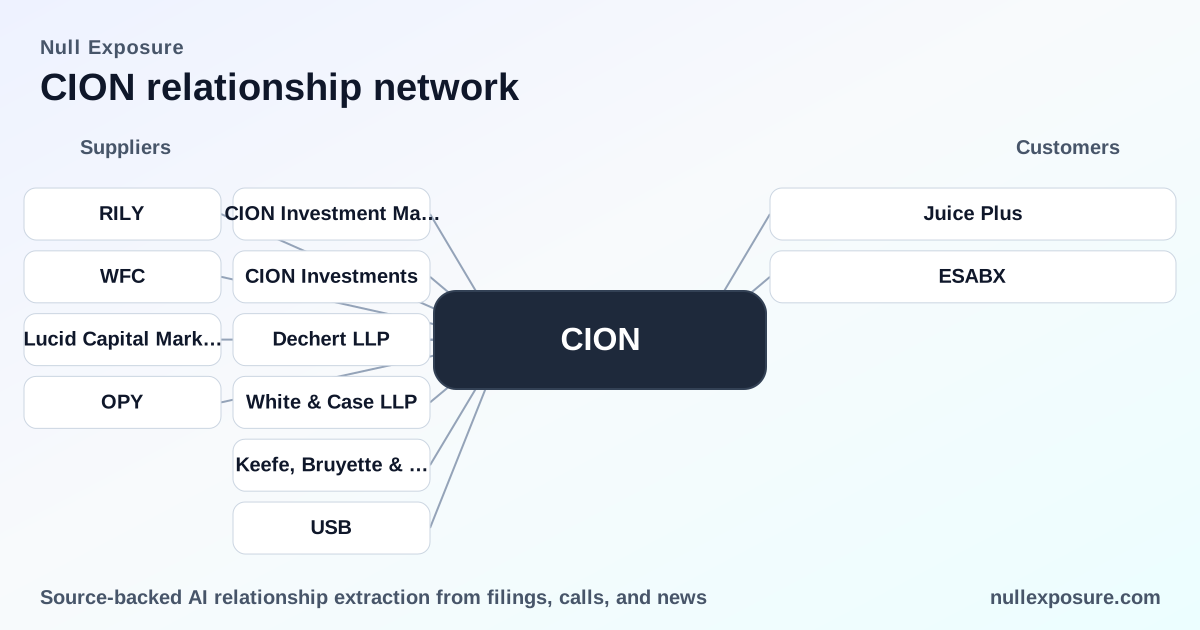
Juice Plus — opportunistic fee activity in FY2026
CION reported that outsized fee activity tied to a Juice Plus opportunistic transaction boosted distribution coverage to 2.06x and contributed to net investment income of $0.74 per share in FY2026, signaling that opportunistic sponsor or borrower deals can materially lift near‑term earnings and coverage metrics. This was reported in a market news item summarizing FY2026 results and transaction effects (Finviz, March 9, 2026).
ESABX — referenced in share repurchase disclosure (FY2024 10‑K)
CION disclosed in its 2024 annual report that, as part of its share repurchase policy, it entered into a Rule 10b5‑1 trading plan on August 19, 2024 with an independent broker; the filing references the plan in the context of historical trading data and repurchase execution. This detail is included in CION’s Form 10‑K for the year ended December 31, 2024 (CION 2024 10‑K).
Wells Fargo — independent broker for repurchase plan (FY2024 10‑K)
The same 2024 Form 10‑K identifies Wells Fargo as the independent broker engaged to execute CION’s 10b5‑1 trading plan, confirming the use of established institutional counterparties to implement capital allocation decisions such as buybacks. See CION’s Form 10‑K for the year ended December 31, 2024.
What these relationships collectively reveal about CION’s operating model
- Contracting posture: long‑term, secured lending. CION structures first‑lien loans with typical maturities of three to six years and references note purchase agreements (for example, the 2027 Notes), which creates a predictable interest income stream but also exposes the firm to mid‑cycle credit risks inherent to multi‑year instruments. The tenor and first‑priority collateral position drive both credit protection and capital allocation cadence.
- Counterparty concentration and focus: middle‑market borrowers. The firm explicitly targets middle‑market companies (generally EBITDA ≤ $75 million), which means relationship origination depends on deal flow from sponsors and private businesses where underwriting complexity and idiosyncratic risk are elevated relative to large corporate lending.
- Geographic concentration: U.S. centric. As a BDC, CION invests at least 70% of total assets in U.S. companies, creating country/regional concentration risk but also alignment with U.S. credit markets and regulatory frameworks that benefit a specialist originator.
- Materiality of customer relationships: sizable to the balance sheet. The firm’s structure—requiring a high share of assets to be U.S. investments—indicates that customer relationships and portfolio credits are material to company performance, and that individual opportunistic transactions (like Juice Plus) can influence distribution coverage and reported NII.
- Relationship role and revenue mix: lender and service provider to sponsor‑backed transactions. CION functions as a direct lender and structured financing partner to private equity and sponsor deals, generating recurring interest plus one‑off structuring and transaction fees that are highly accretive to short‑term earnings metrics when they occur.
- Segment signal: services and fee‑driven upside. Management highlights an increasing trend of middle‑market companies seeking alternative financing sources, which supports durable origination pipelines but also requires active servicing and monitoring resources.
Risk and opportunity framework for investors
CION’s profile contains balanced upside from fee‑accretive opportunities and recurring yield alongside concentrated credit and funding risks:
- Opportunity: Transaction fees can materially boost distribution coverage and NII, as evidenced by the Juice Plus item; this creates visible upside to reported cash‑flow metrics when execution aligns.
- Risk: Concentration in U.S. middle‑market credits and multi‑year loan tenors increases sensitivity to cyclical downturns in private company performance and to sponsor liquidity stress.
- Funding and capital management: engagement with institutional brokers (Wells Fargo) for 10b5‑1 repurchase plans and the existence of publicly issued notes (e.g., 2027 Notes) show active balance sheet management; capital markets access supports distributions but adds interest‑rate and refinancing considerations.
How to read these signals into valuation and monitoring
Investors should treat customer‑level disclosures and the constraints above as operational inputs rather than isolated facts: long maturities support steady coupon income but lengthen credit realization times; fee events are episodic but high impact; and U.S. middle‑market focus both concentrates risk and narrows comparable peer sets. Monitor distribution coverage, fee recognition cadence, and repurchase execution to evaluate whether management can sustain yield while preserving capital.
For continued, structured coverage and relationship monitoring, visit https://nullexposure.com/.
Bottom line
CION’s customer mix and public disclosures show a specialist BDC operating with long‑dated secured credits to middle‑market U.S. companies, supplemented by transactional fee income and active capital management. The firm’s model is strategically coherent—yield plus opportunistic fees—while requiring vigilance on credit concentration, deal cadence, and funding execution. For investors, the key questions are whether fee frequency can offset cyclical credit variability and whether capital markets access remains reliable as maturities and repurchase activity continue.