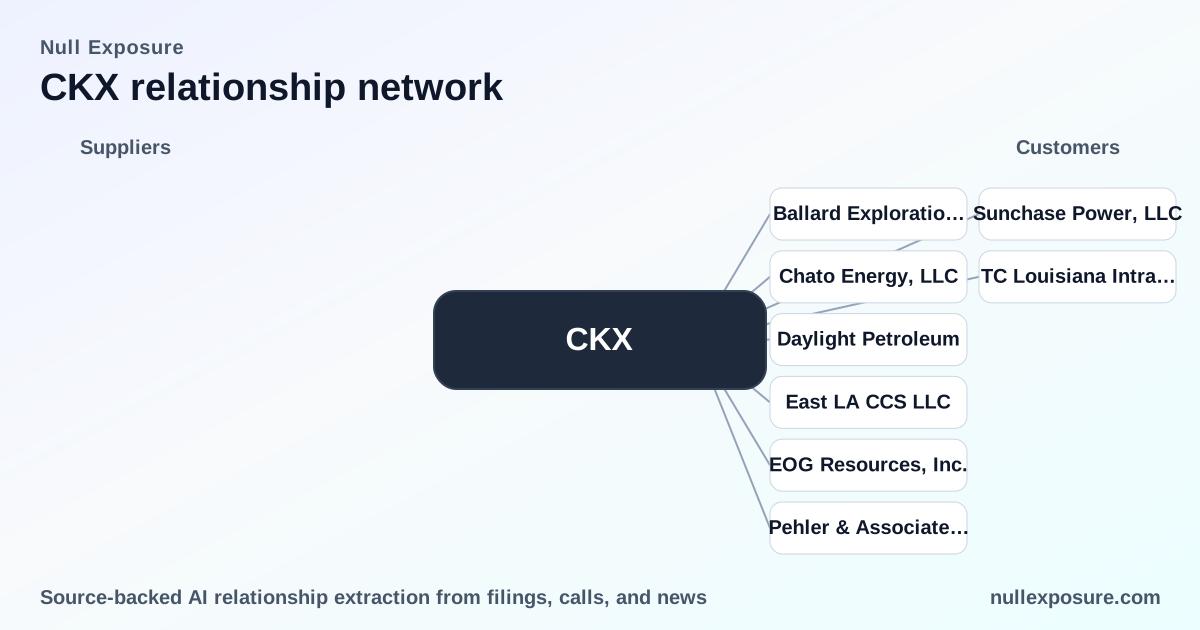
CKX Lands: concentrated landowner cash flows backed by short-term surface and mineral leases
CKX Lands operates as a U.S. landowner and manager that monetizes acreage through mineral leases, oil & gas production royalties, timber sales and annual surface leases. The company collects operating cash from a relatively small set of counterparties—mostly energy operators and a handful of surface lessees—and reported that 77.19% of 2024 revenue was attributable to the named customers below, creating both concentrated upside and concentrated counterparty risk. For a quick company-level view and relationship tracking, visit https://nullexposure.com/.
What CKX does and how the cash flow works
CKX’s business model is straightforward: own land, lease access and sell rights, then collect royalties, lease payments and timber proceeds. Revenues break down into two operational buckets:
- Oil & gas counterparties paying for minerals and production (royalties and take-or-pay style cashflows tied to wells and commodity cycles).
- Surface lessees paying annual fees for farming, hunting, rights-of-way and related uses, with the company recognizing surface revenue evenly over the lease term.
These mechanics create a mix of commodity-exposed and contract-exposed cash. Contracting posture is short-term for surface revenues, since surface leases are recognized on an annual basis, while mineral and production revenues fluctuate with activity and commodity prices. CKX’s financials show modest scale (market capitalization roughly $23.0M and TTM revenue of about $0.84M) and high customer concentration, which elevates counterparty and operational risk despite tangible land value on the balance sheet.
The customer list — who drives revenue in 2024
Below are the customers CKX named in its FY2024 disclosures, each followed by a one- to two-sentence plain-English summary and the source.
Ballard Exploration Company — 10.20% of total revenue
Ballard accounted for 10.20% of CKX’s 2024 revenue through oil & gas activity on company lands, making it one of the larger industry customers driving production-related cash. According to CKX’s 2024 Form 10‑K, Ballard is listed among the customers representing a material portion of revenue in FY2024.
Pehler & Associates, LLC — 35.28% of total revenue (surface lease)
Pehler & Associates supplied the single largest revenue line at 35.28% via surface lease arrangements, reflecting heavy reliance on recurring annual surface payments tied to agricultural/hunting and related surface uses. CKX’s FY2024 10‑K lists Pehler & Associates explicitly as the largest surface lease revenue source.
TC Louisiana Intrastate Pipeline — 15.82% of total revenue (surface lease)
TC Louisiana Intrastate Pipeline contributed 15.82% of 2024 revenue through surface lease payments, representing significant midstream-related surface income on CKX lands. The company’s FY2024 10‑K identifies TC Louisiana Intrastate Pipeline in the customer revenue schedule.
Daylight Petroleum — 4.10% of total revenue
Daylight Petroleum generated 4.10% of CKX’s 2024 revenue through oil & gas activity on the company’s acreage, a modest but non-trivial production counterparty. This allocation is documented in CKX’s FY2024 Form 10‑K.
East LA CCS LLC — 3.58% of total revenue
East LA CCS provided 3.58% of revenue in 2024 from oil & gas related activity; its contribution is part of the broader production customer base disclosed in the 10‑K. CKX lists East LA CCS among the customers composing the 77.19% revenue group for FY2024.
Sunchase Power, LLC — 2.74% of total revenue
Sunchase Power accounted for 2.74% of 2024 revenue, classified under oil & gas revenue in CKX’s disclosure; this reflects minor utility/energy counterpart revenues. The FY2024 10‑K shows Sunchase Power on the customer table.
Chato Energy, LLC — 2.75% of total revenue
Chato Energy supplied 2.75% of CKX’s 2024 revenue from oil & gas activity, another smaller production counterparty named in the company filing. The FY2024 Form 10‑K includes Chato Energy in the revenue breakdown.
EOG Resources, Inc. — 2.73% of total revenue
EOG Resources was responsible for 2.73% of 2024 revenue through oil & gas operations on CKX lands, representing a small but notable operator presence. CKX’s FY2024 10‑K lists EOG among the revenue contributors.
(Each percentage and customer line above is drawn from CKX’s FY2024 Form 10‑K customer revenue schedule.)
Constraints and what they reveal about the operating model
Company-level disclosures and the relationship schedule produce several actionable signals about CKX’s operating posture:
- Short-term contracting for surface revenue: CKX recognizes surface revenue evenly over annual lease terms, which implies limited long-term revenue visibility from surface contracts and frequent renewal or repricing events for a material portion of cash flow.
- Material customer concentration: With 77.19% of revenue tied to the named customers, the company explicitly warns that loss of receipts from any of these counterparties would have a material adverse effect on financial results—this is a top-line vulnerability.
- Seller role and cash collection: CKX functions as the seller of land access and rights (minerals, timber, surface leases), positioning the company to collect royalties and lease payments but also to bear operational and counterparty enforcement costs when disputes over access or environmental obligations arise.
Together, these constraints indicate a business with high counterparty concentration, short-dated revenue contracts for surface income, and direct exposure to operator activity and commodity cycles—factors that should be central to any underwriting or valuation work.
Investment implications and risk summary
For investors and operators, the practical takeaways are clear:
- Concentration is the dominant risk: Two surface lessees (Pehler & Associates and TC Louisiana Intrastate Pipeline) and several oil & gas operators together drive the majority of cash; a loss or renegotiation of any large surface lease would materially compress near-term revenue.
- Revenue visibility is mixed: Mineral royalties and production receipts fluctuate with activity and prices, while surface lease cash is contracted annually—this combination reduces long-range predictability compared with longer-term land-lease models.
- Valuation should reflect operational fragility: CKX’s reported market capitalization (~$23.0M) and modest revenue base mean that small changes in counterparty behavior can have outsized effects on earnings and free cash flow; investors should price for both land value and the operational risk premium.
What to watch next and next steps
Monitor renewal activity and dispute filings for the two largest surface lessees, track production levels from the named oil & gas counterparties, and watch any corporate commentary on diversification of revenue streams. For a relationship-centric view and ongoing updates on counterparties and contract signals, see our platform: https://nullexposure.com/.
Additional research tasks for operators and investors include a lease-by-lease review, stress-testing cashflows under production downturns, and evaluating the legal enforceability and term structure of surface leases. These practical checks will reveal whether CKX’s land assets are being monetized sustainably or whether the revenue mix is overly fragile.
For more relationship-level analysis and to subscribe to continuous updates, visit https://nullexposure.com/.