Colgate‑Palmolive (CL): Customer Concentration, Cash Flow Predictability, and What Walmart Means for Investors
Colgate‑Palmolive manufactures and sells branded household, oral, personal care and pet products globally, monetizing through high-frequency product sales to retailers, wholesalers and distributors under established trade terms. The company's operating model generates steady gross margins and cash flow supported by short payment cycles and broad geographic reach, while customer concentration — notably a sizable exposure to Walmart — is the primary commercial risk to monitor.
For a concise view of client concentration and relationship dynamics, see NullExposure.
How Colgate runs the commercial engine — the operational takeaways investors need
Colgate operates as a high‑volume, branded consumer products manufacturer that sells into retail and wholesale channels rather than directly locking consumers into subscription contracts. Revenue recognition and cash flow are governed by traditional trade terms: goods are produced, shipped to trade customers, and cash collection follows within short windows. The company discloses that there is a short time frame (typically less than 60 days) between shipment of product and cash receipt, which reduces receivables duration and the associated credit uncertainty.
This structure creates a set of predictable financial characteristics:
- High cash conversion quality due to short collection cycles, supporting working capital stability and predictable free cash flow.
- Channel dependency — performance is driven by shelf placement, promotional cadence and retail partner execution rather than bespoke long‑term contracts.
- Geographic diversification — products are marketed in over 200 countries and territories, which lowers single‑market geopolitical exposure but introduces complexity in execution.
Colgate’s public metrics reflect the mix of scale and defensive cash flow: a market capitalization near $68.3B, a gross profit base supporting an operating margin above 20%, and a consistent dividend stream.
The single material customer relationship: Walmart, Inc.
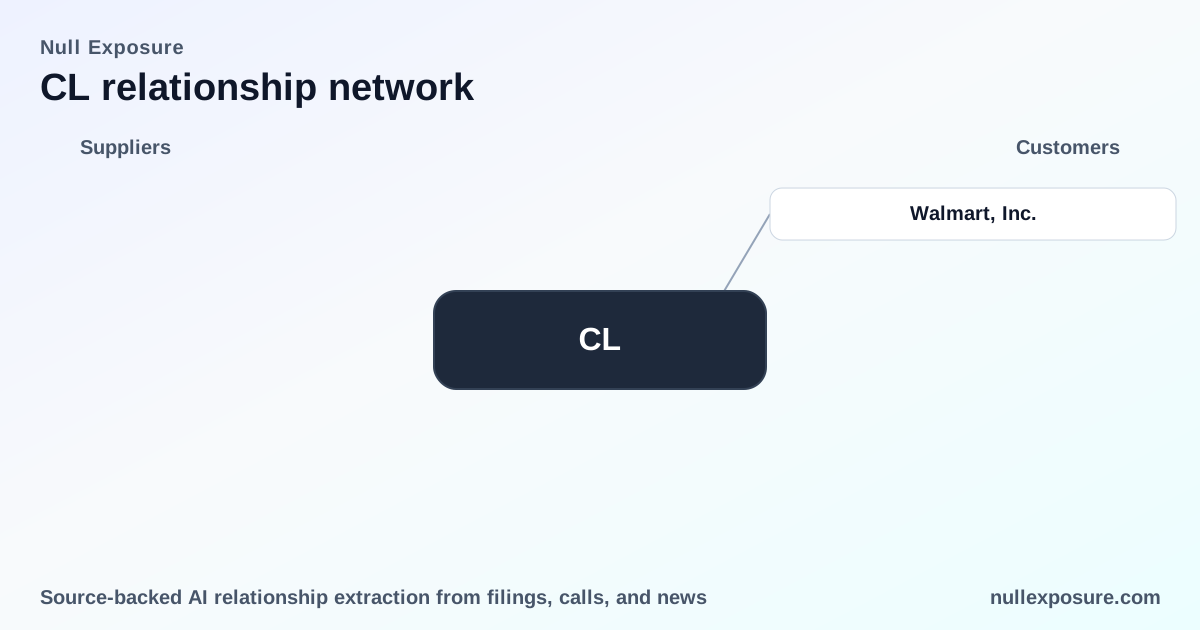
Walmart is the only customer explicitly disclosed at a material level in Colgate’s FY2024 filing. Colgate states that sales to Walmart and its affiliates represented approximately 11% of Net sales in 2024, signaling a significant concentration with a single retail partner. According to Colgate‑Palmolive’s 2024 Form 10‑K filing for the fiscal year ended December 31, 2024, this accounted for the largest single customer exposure and no other customer exceeded 10% of net sales in that year.
This relationship has two practical implications for investors:
- Concentration risk is real but manageable if trading terms and shelf economics stay stable; losing or materially weakening terms with Walmart would have an outsized revenue impact.
- Short payment cycles and established trading terms reduce collection risk, but do not eliminate margin pressure from retail price promotions or placement concessions.
(Source: Colgate‑Palmolive 2024 Form 10‑K, FY2024.)
All other customer signals that shape the investment case
Beyond the Walmart disclosure, Colgate’s filings convey a set of company‑level commercial constraints and characteristics that inform risk and financing profiles:
-
Short‑term contracting posture: The company explicitly notes a short time frame (typically less than 60 days) between shipment and cash receipt, which reduces uncertainty in revenue recognition and underpins steady working capital conversion. This is a structural benefit for creditors or providers of supply‑chain finance because receivables turnover is rapid.
-
Global distribution and market footprint: Colgate reports that its products are marketed in over 200 countries and territories, indicating a geographically diversified revenue base that mitigates country‑level shocks but requires complex logistics and currency management.
-
North American sales importance: The filings disclose Net sales in the U.S. for Oral, Personal and Home Care were $3,640 in 2024, highlighting that the U.S. market remains a material regional contributor to the company’s core segments.
-
Channel roles and go‑to‑market: Colgate describes its channels as retailers, wholesalers, distributors, dentists and, in some geographies, skin health professionals, and notes that pet nutrition products are sold through authorized pet supply retailers, veterinarians and eCommerce retailers. This confirms a reseller/distributor model rather than a direct subscription or captive model, which makes trade relations and shelf economics central to growth.
These items should be read as company‑level signals about Colgate’s contracting, concentration, criticality and commercial maturity, and they collectively explain why the business is attractive to conservative investors: predictable cash flow, broad reach, and entrenched retail relationships — but with exposure to retail negotiation dynamics.
What the relationship map means for financing, premiums and downside
For investors and operators evaluating Colgate’s customer credit profile and potential for premium financing of working capital:
-
Working capital is a strength: short collection windows and stable trade terms reduce the duration and volatility of receivables, improving liquidity and lowering the cost of short‑term financing.
-
Concentration risk elevates counterparty importance: with Walmart representing ~11% of net sales in 2024, the financial health and commercial leverage of that retail partner materially affect Colgate’s topline and negotiating posture. Financing structures that rely on the predictability of collections need to factor in the contract bargain power of large retail partners.
-
Channel economics, not contractual lock‑ins, drive margins: because Colgate sells through resellers and distributors, margin pressure from trade promotions and slotting fees is the primary levers retailers use to influence profitability. That dynamic should be priced into scenario stress tests for revenue and margin forecasts.
Practical investor checklist
- Concentration monitoring: Track quarter‑to‑quarter mentions of major retail partners in Form 10‑Q/10‑K filings and trade announcements; any sequential increases in single‑retailer share signal rising concentration risk.
- Receivables profile: Use reported turnover and the disclosed <60‑day collection window as a baseline—any elongation should be an early warning signal.
- Trade promotion visibility: Assess promotions and on‑shelf changes documented in retail investor presentations and CONSUMER retail reporting to understand near‑term margin pressure.
Learn more about how customer relationships translate into credit and financing outcomes at NullExposure.
Bottom line — what investors should take away
- Colgate’s model delivers high cash quality and operating predictability, supported by short payment cycles and global distribution.
- Walmart is a material retailer exposure (~11% of net sales in 2024); this concentration is the principal commercial risk and must be monitored.
- The reseller/distributor channel structure reduces contractual lock‑in but increases sensitivity to retail pricing and promotional dynamics, which drive margin volatility more than receivables risk.
For investors focusing on premium finance, working capital lending, or covenant design, Colgate’s short cash conversion cycle and entrenched retail relationships make it an attractive, if not concentration‑sensitive, counterparty.