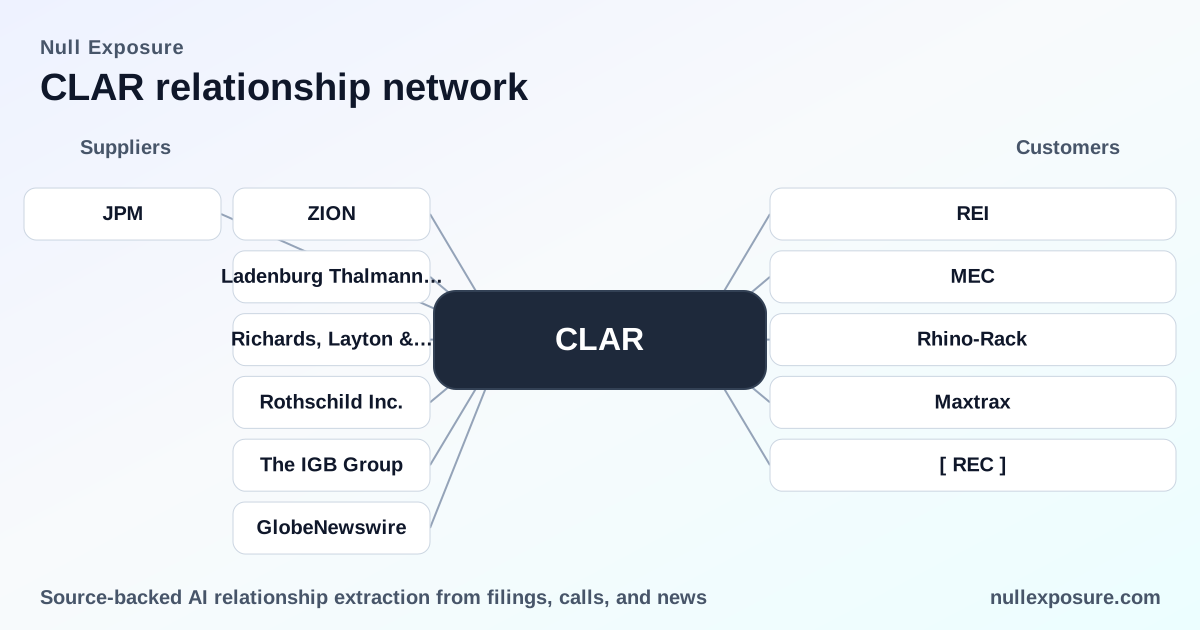
Clarus Corp (CLAR) — customer map and investor implications
Clarus is a branded-hardware company that designs, manufactures and sells outdoor performance equipment under names such as Black Diamond, Rhino‑Rack, MAXTRAX and TRED Outdoors, monetizing primarily through retail and wholesale product sales across direct channels, specialty retailers and distributors. The company’s operating model is transactional and distribution‑centric: short‑term sales, global channel reach, and a mix of wholesale and direct retail monetization make revenue sensitive to retail promotions, regional demand cycles and wholesale account health. For a focused collection of Clarus customer relationships and primary source references, see the relationship briefing below and visit https://nullexposure.com/ for the structured dataset.
Financial backdrop that frames the customer relationships
Clarus reported TTM revenue of $250.44m with negative EBITDA (-$9.7m) and EPS (-$1.15), reflecting slim operating leverage in a retail‑wholesale mix; enterprise multiples are compressed (EV/Revenue ~0.36). Institutional ownership is high (~71%), and the company carries a hardware‑and‑premium‑branding positioning that supports price points but increases exposure to inventory, promotional cadence and channel mix shifts. These financials set the context: customer wins or losses translate quickly to top‑line movement given the short‑term, transactional contracting posture.
How Clarus sells — operating model and contract posture
Company disclosures state that Clarus does not use long‑term contracts and sells on normal short‑term credit or at point‑of‑sale, which establishes a transactional revenue profile and limited revenue visibility beyond near term. Clarus markets and distributes products in over 50 countries, with sales split between domestic and international, and lists manufacturer / reseller / distributor roles in its operating description. Taken together, these signals indicate a global, distributed sales footprint with limited contractual lock‑ins, concentrated dependence on a set of large wholesale accounts and exposure to regional retail cycles (NA and EMEA weakness have been cited in filings).
- Contracting posture: short‑term, transactional — limited forward visibility.
- Channel concentration: mix of specialty retailers, distributors, OEMs and direct retail.
- Geographic exposure: truly global; vulnerability to EMEA and North American retail softness.
- Product focus: premium hardware (Black Diamond) — high brand value but inventory and margin sensitivity.
Customer relationships — what the public record shows
Below are the relationships extracted from public coverage and transcript excerpts. Each line is a plain‑English take with the original source cited.
MEC
Clarus management cited MEC as one of its “big accounts” in wholesale, indicating continued strength in that wholesale channel and core specialty retail relationships. Source: Q4 2025 earnings call transcript (InsiderMonkey / March 9, 2026) — https://www.insidermonkey.com/blog/clarus-corporation-nasdaqclar-q4-2025-earnings-call-transcript-1711384/
REI
REI is identified as a major wholesale customer for Clarus brands such as Black Diamond, and management referenced REI in public comments about wholesale strength and specialty business revitalization. Source: Q4 2025 earnings call transcript (The Globe and Mail / March 9, 2026) — https://www.theglobeandmail.com/investing/markets/stocks/CLAR-Q/pressreleases/596860/clarus-clar-q4-2025-earnings-call-transcript/; also referenced in historical coverage of Black Diamond manufacturing issues (Outside Online, FY2016).
Maxtrax
Maxtrax (a Clarus brand in off‑road recovery products) experienced lower wholesale volume in Australia that was cited as a driver of gross‑margin decline in a quarter, showing how regional demand swings in Australia can affect consolidated margins. The company disclosure also notes MAXTRAX sells to distributors, retailers and government agencies. Source: SGB Online Q1 results coverage (FY2025) — https://sgbonline.com/clarus-posts-q1-loss-on-13-percent-revenue-drop/
Rhino‑Rack
Rhino‑Rack volume in Australia declined in the same quarter and contributed to margin pressure, underlining that multiple Australasia‑focused product lines can move together and compress gross margin. Source: SGB Online Q1 results coverage (FY2025) — https://sgbonline.com/clarus-posts-q1-loss-on-13-percent-revenue-drop/
White Gold (TSXV: WGO)
Clarus Securities acted as lead agent on a brokered private placement for White Gold, issuing premium flow‑through and regular units — an example of the Clarus group engaging in capital markets activities through a securities arm. Source: Mining.com report (May 2, 2026) — https://www.mining.com/white-gold-to-raise-14-5m-for-exploration/
Jackson Hole Mountain Guides
Clarus highlighted a retail partnership at its Jackson Hole store where Jackson Hole Mountain Guides operate a branded corner to sell trips and interact directly with customers, demonstrating a local experiential retail and partnership strategy for the Black Diamond brand. Source: Q1 2025 earnings call transcript (InsiderMonkey) — https://www.insidermonkey.com/blog/clarus-corporation-nasdaqclar-q1-2025-earnings-call-transcript-1530253/
Ranir Mountaineering
Clarus described a partnership with Ranir Mountaineering (a large guide service) that outfits its guides in Black Diamond gear worldwide, showing targeted B2B brand placement with professional end‑users that reinforce product credibility. Source: Q1 2025 earnings call transcript (InsiderMonkey) — https://www.insidermonkey.com/blog/clarus-corporation-nasdaqclar-q1-2025-earnings-call-transcript-1530253/
[ REC ]
Management referenced a large account denoted as “[ REC ]” among its big wholesale relationships, signaling additional major retail/wholesale partners beyond named accounts. This shows Clarus relies on a small number of meaningful wholesale relationships as part of its go‑to‑market. Source: Q4 2025 earnings call transcript (InsiderMonkey / March 9, 2026) — https://www.insidermonkey.com/blog/clarus-corporation-nasdaqclar-q4-2025-earnings-call-transcript-1711384/
(If you want a consolidated, downloadable view of these customer links for modeling and due diligence visit https://nullexposure.com/.)
What this relationship set means for investors
- Revenue visibility is limited. Public disclosures confirm Clarus runs short‑term contracts and point‑of‑sale sales, so earnings are sensitive to retail promo cycles and inventory management. This increases the importance of monitoring weekly/monthly wholesale orders and retailer stocking patterns.
- Wholesale concentration is a critical risk lever. Named accounts like REI and MEC are large contributors to specialty channel reach; any order reduction from a few big wholesalers would materially affect quarterly revenue.
- Regional exposure creates variability. The company has reported NA and EMEA weakness and explicit margin pressure from Australian wholesale declines (Rhino‑Rack, MAXTRAX). Expect quarter‑to‑quarter swings tied to regional retail demand.
- Brand and channel diversification provide mitigation. Direct retail initiatives (store partnerships and guide‑service programs) and distributor channels lessen single‑channel dependence, but these are incremental and slower to scale relative to wholesale flows.
- Non‑core capital markets activity exists. Clarus Securities’ participation as lead agent in a financing (White Gold) is a separate revenue stream signal; monitor disclosure to understand alignment with core operating results.
Bottom line
Clarus’ business model is a global, branded‑hardware merchant model operating with transactional contracts and meaningful wholesale account dependence. For investors and operators, the most actionable signals are: monitor wholesale order flow from REI/MEC, track Australian wholesale volumes for MAXTRAX/Rhino‑Rack, and read quarterly management commentary closely because visibility into future quarters is limited by the short‑term contracting posture. For a structured extraction and versioned audit trail of these customer relationships, consult https://nullexposure.com/ for the underlying references and relationship indexing.