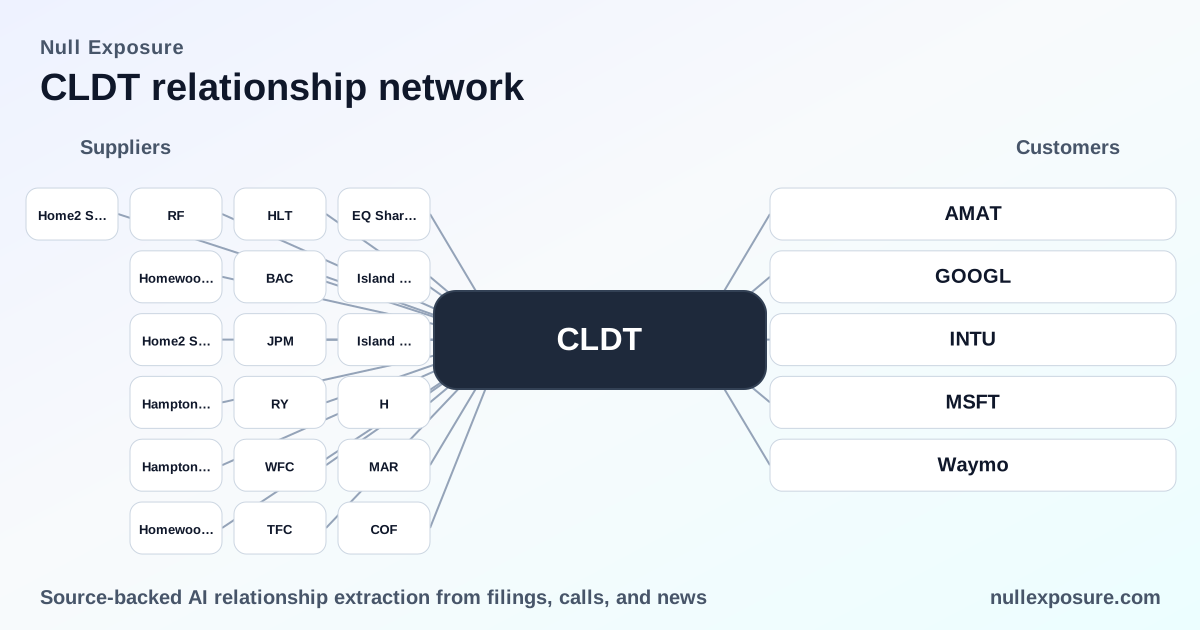
Chatham Lodging Trust (CLDT): customer map and what it means for cash flow
Chatham Lodging Trust is a self-managed, publicly traded REIT that owns and leases upscale extended-stay and premium select-service hotels and monetizes through a combination of fixed base rent and percentage rent tied to hotel revenue via taxable REIT subsidiary (TRS) leases. For investors, the key dynamic is rental revenue that carries a built-in revenue share—which provides upside in recovery cycles but links distributions to room-level operating performance and concentrated corporate demand in select tech nodes. For a deeper view of tenant and demand concentration, visit https://nullexposure.com/.
Why corporate customers matter for a lodging-focused REIT
Chatham’s properties sit in high-demand micro-markets where large corporate projects and tech campuses drive sustained room nights from project staff, contractors, and visiting employees. Management highlighted specific corporate anchors on the Q4 2025 earnings call transcript that clarify where incremental demand originates and how concentrated it is.
AMAT — Applied Materials (entry 1)
Management identified Applied Materials as Chatham’s largest client, noting a $4.0 billion chip facility being built within walking distance of two Sunnyvale hotels; that development directly supports sustained occupancy for those assets. Source: Q4 2025 earnings call transcript (InsiderMonkey, published March 9, 2026).
Applied Materials (entry 2)
The transcript again references Applied Materials’ multi-billion-dollar facility adjacent to Chatham’s Sunnyvale hotels, underlining the same concentration point: a single major industrial expansion is a material demand driver for nearby properties. Source: Q4 2025 earnings call transcript (InsiderMonkey, published March 9, 2026).
GOOGL — Google (entry 3)
Management described Mountain View as anchored by Google (among others), which provides a steady base of corporate travel and short-term stays that support the hotel in that micro-market. Source: Q4 2025 earnings call transcript (InsiderMonkey, published March 9, 2026).
Google (entry 4)
The earnings discussion reiterated that Google anchors demand in Mountain View, a market where proximity to major tech employers sustains weekday occupancy and premium rate capture. Source: Q4 2025 earnings call transcript (InsiderMonkey, published March 9, 2026).
Intuit
Management named Intuit as a local anchor in Mountain View, contributing to the hotel’s stable corporate demand profile and weekday corporate transient stays that drive RevPAR performance. Source: Q4 2025 earnings call transcript (InsiderMonkey, published March 9, 2026).
LinkedIn is highlighted as one of several high-quality corporate tenants in Mountain View, reinforcing the notion that the property’s demand mix skews toward technology and professional services traffic. Source: Q4 2025 earnings call transcript (InsiderMonkey, published March 9, 2026).
Waymo
Waymo was listed alongside other Mountain View anchors, supplying a steady source of enterprise-driven room nights for the hotel serving that micro-market. Source: Q4 2025 earnings call transcript (InsiderMonkey, published March 9, 2026).
How the operating model shapes revenue quality and risks
-
Contracting posture: Chatham leases hotels to TRS lessees under a percentage lease structure that guarantees the greater of a fixed base rent or a percentage of hotel revenue, which produces a two-way exposure: floor protection from base rent and upside tied to occupancy and ADR. This structure aligns landlord returns with operating performance rather than absolute fixed cash rents.
-
Concentration and criticality: Corporate anchors in Silicon Valley and Mountain View produce highly valuable weekday corporate demand, but also concentrate revenue exposure to a handful of large employers and major projects (Applied Materials’ $4.0 billion facility is a clear example drawn from management commentary). That concentration makes certain assets sensitive to local project cycles and corporate site decisions.
-
Geographic diversification: Company filings report 37 hotels with 5,596 rooms across 16 states and the District of Columbia as of December 31, 2024, which provides portfolio diversification at the enterprise level even as individual assets have local demand concentration. Source: company SEC filings (as of Dec 31, 2024).
-
Operational maturity and segment: Chatham is internally managed and focused on upscale extended-stay and premium select-service hotels, which reflects a mature operating model where management retains direct control over asset-level execution and brand relationships. This supports tighter operating oversight and preserves rental mechanics tied to TRS performance.
Investment implications: what to watch next
-
Revenue sensitivity: Because lease revenue is tied to hotel room revenue via percentage rent, occupancy and ADR trends in tech-dominated micro-markets will directly affect distributable cash flow. Investors should track regional construction projects and corporate hiring cycles that underpin weekday demand.
-
Tenant concentration risk: Applied Materials’ proximity to two Sunnyvale hotels is a material demand factor; a slowdown in that project or corporate travel from that client would have immediate local impact. Monitor project timelines, contractor workforce estimates, and corporate travel policies for signs of volatility.
-
Portfolio cushioning: The portfolio-level spread across 16 states and D.C. provides a buffer, but asset-level cash flow remains linked to local market dynamics and a small set of corporate anchors.
-
Balance-sheet leverage and valuation: With a market capitalization of roughly $422 million and trailing revenue near $294 million, Chatham trades with implications for return on capital tied to property-level performance and leasing mechanics; investors should weigh the REIT’s operating leverage against its concentrated demand nodes.
For a consolidated view of how these customer relationships and demand drivers map to revenue exposures, consult the customer relationship hub at https://nullexposure.com/.
Bottom line
Chatham Lodging Trust operates a rent structure that combines downside protection with hotel-performance upside, but the portfolio’s performance is materially influenced by localized corporate demand—most prominently Applied Materials and several Mountain View tech employers. The REIT’s internal management and geographic breadth provide governance and diversification, yet investors must actively monitor local project flows and tech-sector travel patterns because they translate directly into rent variability and distribution stability.
For investment diligence that prioritizes customer and demand transparency, visit https://nullexposure.com/ for tailored relationship analytics and market context.