CollPlant (CLGN): Customer relationships that drive milestone revenue and strategic optionality
CollPlant Biotechnologies develops and sells recombinant human collagen (rhCollagen) and rhCollagen-based BioInk for medical aesthetics, tissue repair and 3D bioprinting; the company monetizes through collaboration agreements that deliver milestone and royalty payments, direct product sales of regenerative medical products, and licensing/manufacturing arrangements with large biopharma and device partners. For investors, the core exposure is milestone-driven cash inflows tied to a small number of strategic partners and the commercial scaling of proprietary graft and implant products. Learn more at https://nullexposure.com/.
Executive summary — why relationships matter now
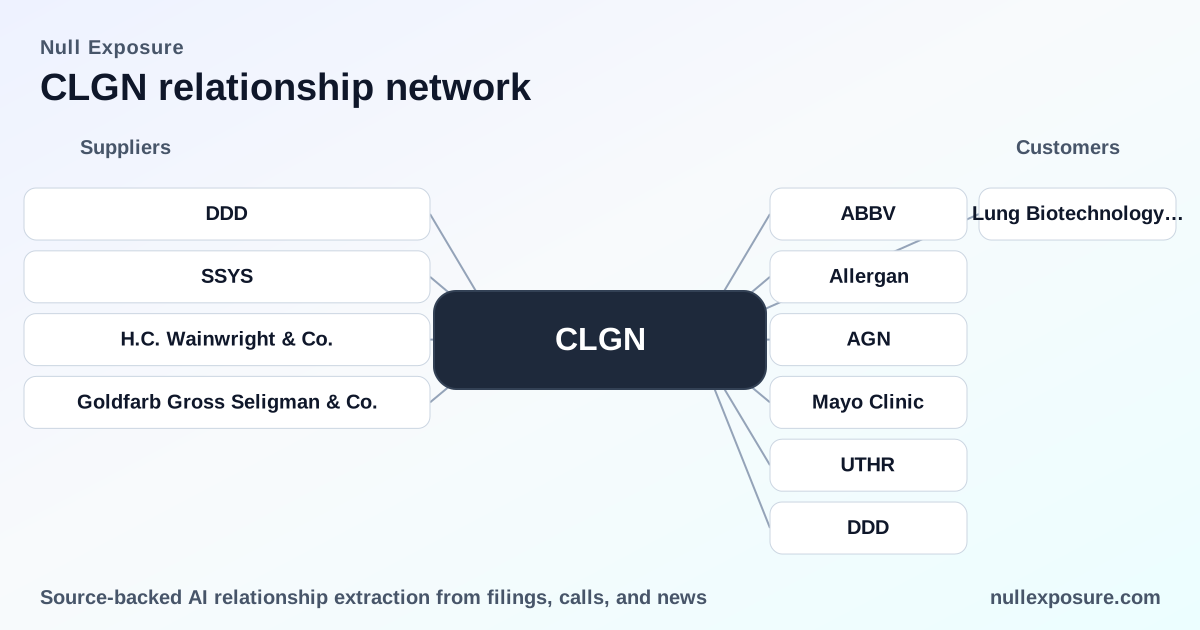
CollPlant’s revenue profile is concentrated and lumpy: a handful of collaboration milestones have produced outsized receipts (notably AbbVie payments in FY2024–FY2026), while product sales remain modest. Its partner list spans multinational pharma (AbbVie/Allergan), organ-focused biomanufacturers (United Therapeutics / Lung Biotechnology PBC), industrial 3D-printing suppliers (3D Systems), and academic research institutions (Mayo Clinic, Technion). That mix gives CollPlant optionality across commercial aesthetics, implants and organ-bioprinting, but also subjects near-term cash flow to partner timelines and development risk. For full relationship analytics and deal detail, visit https://nullexposure.com/.
Mapping CollPlant’s customer and partner relationships
AbbVie / Allergan — the single largest commercial collaborator
CollPlant has a multi-year development and global commercialization agreement with Allergan (an AbbVie company) for dermal and soft tissue fillers; this collaboration has triggered large milestone payments, including a reported $10 million milestone in FY2024 and a $2 million payment in February 2025 that materially moved 9M 2025 revenues. (Sources: PR Newswire corporate releases, FY2024–FY2026; CollPlant FY2025/FY2026 financial updates).
United Therapeutics / UTHR — organ manufacturing license and manufacturing supply
United Therapeutics (and its organ-manufacturing subsidiary Lung Biotechnology PBC) holds exclusive license rights for CollPlant’s rhCollagen-based BioInk for 3D bioprinting of organs, and CollPlant agreed to manufacture and supply BioInk for United Therapeutics’ development needs while providing technical support as the partner sets up U.S. manufacturing. (Source: PR Newswire release announcing option exercise, FY2020).
Lung Biotechnology PBC — the organ-focused sublicensee (subsidiary relationship)
Through United Therapeutics’ subsidiary Lung Biotechnology PBC, CollPlant granted exclusive technology rights for kidney bioprinting and related Organ BioInk uses; that option exercise expands CollPlant’s addressable market into organ transplant manufacturing. (Source: PR Newswire option-exercise announcement, FY2020).
3D Systems (DDD) — integrated bioprinting exploration
CollPlant entered a partnership with 3D Systems to explore integrated bioprinting solutions that combine CollPlant’s biomaterials with 3D Systems’ printing technology, intended for both company products and third-party applications—positioning CollPlant to leverage hardware partners for scale and distribution. (Source: TCT Magazine coverage, FY2020).
Mayo Clinic — independent research validation and preclinical applications
Researchers at Mayo Clinic developed a fully humanized 3D-bioprinted skin model using CollPlant’s rhCollagen-based BioInk, providing independent institutional validation of CollPlant material performance and a use case in non-animal preclinical models. (Source: Finviz/press coverage of Mayo Clinic study announcement, Oct 2025 / FY2025).
Technion – Israel Institute of Technology — comparative performance study
Technion researchers reported a study demonstrating CollPlant’s rhCollagen-based BioInk performing strongly versus Matrigel, contributing academic validation of material properties that support CollPlant’s positioning in research and preclinical markets. (Source: CollPlant corporate disclosure via Finviz news summary, FY2026).
What these relationships say about CollPlant’s operating model
- Contracting posture: CollPlant’s model is collaborator-centric—development and commercialization agreements (rather than pure product sales) are a primary route to meaningful cash. This implies reliance on negotiated milestones and licensing terms over steady recurring revenue.
- Concentration: Revenue is highly concentrated by partner; AbbVie/Allergan produced the largest milestone receipts in recent years, making partnership continuity critical to near-term liquidity and valuation catalysts.
- Criticality and leverage: CollPlant supplies specialized rhCollagen and BioInk that are material inputs to partners’ development programs (e.g., United Therapeutics’ organ efforts), giving CollPlant technical leverage but also binding its upside to partner development success.
- Maturity and trajectory: Relationships span early-stage academic validation, mid-stage development collaborations, and commercialization-focused deals—indicating a hybrid maturity profile: advanced collaborators (AbbVie) provide commercial upside today, while organ-bioprinting partnerships represent longer-term optionality.
Financial and risk implications for investors
- Positive — milestone-driven cash: AbbVie payments (FY2024–FY2026) have delivered material non-recurring cash that reduces near-term financing pressure and validates CollPlant’s IP commercial value. (See CollPlant FY2025/FY2026 disclosures.)
- Negative — revenue volatility and partner dependency: The same milestone structure creates episodic revenue and leaves CollPlant exposed to partner timelines and termination risk. A single large partner failure or program delay would materially depress revenues.
- Strategic optionality: Partnerships with United Therapeutics and hardware partners like 3D Systems expand long-term addressable markets (organs, implants, integrated bioprinting), supporting a multiple-assumption valuation if commercial translations occur.
Bottom line and investor actionables
CollPlant’s value proposition is not a steady SaaS-like revenue stream; it is a collaborator-driven biomanufacturing and licensing play where a few high-quality partners create outsized upside. Investors should price in both milestone volatility and the asymmetric upside of successful partner commercial launches. For detailed partner timelines and deal constructs, review CollPlant’s filings and curated relationship dossiers at https://nullexposure.com/.
Key takeaways:
- AbbVie / Allergan is the dominant commercial relationship and primary source of recent milestone revenue.
- United Therapeutics / Lung Biotechnology PBC provide long-term organ-bioprinting optionality through exclusive licensing and supply arrangements.
- 3D Systems, Mayo Clinic and Technion offer hardware partnerships and academic validation that de-risk material performance but do not substitute for commercial contracts.
This relationship map should be read as a driver framework: CollPlant’s near-term valuation is determined by partner milestones and cash receipts, while its long-term upside depends on successful commercialization of implants, aesthetics products, and organ-bioprinting applications.