Clean Harbors (CLH): Customer relationships that underpin recurring environmental services revenue
Clean Harbors operates and monetizes as North America’s integrated hazardous-waste and industrial services platform, generating revenue through two complementary segments: Environmental Services (hazardous waste management, emergency response, remediation) and Safety-Kleen Sustainability Solutions (SKSS) (used oil recycling, parts cleaning, and related product sales). The business converts long-term master service agreements and repeat project work into high-margin, recurring cash flows while expanding addressable markets via strategic acquisitions and government contracting—delivering a blend of steady services revenue and episodic large contracts tied to environmental remediation and PFAS work. For a concise view of customer exposures and relationship signals, see https://nullexposure.com/.
Why customers matter to a services-first industrial franchise
Clean Harbors’ customer posture is contract-driven, geographically concentrated in North America, and biased toward large, mission-critical counterparties. The company reports that much revenue is delivered under master service agreements that create durable frameworks for short-term projects and emergency work, while its client set spans small businesses to Fortune 500 firms and government agencies. The 2024 disclosures show ~91% of third‑party revenue in the U.S. and 9% in Canada, which makes U.S. regulatory and federal contracting dynamics central to growth and risk. The SKSS business provides product distribution and manufacturing touchpoints—further diversifying revenue mix away from pure services and increasing cross-sell opportunities between remediation projects and recycled oil sales. All of these are company-level signals drawn from Clean Harbors’ 2024 Form 10‑K.
- Contracting posture: Clean Harbors emphasizes long-standing relationships and master service agreements that institutionalize recurring billing and create high switching costs for complex hazardous-waste services.
- Customer mix and concentration: The customer base includes very large enterprises and government entities as well as small businesses; this breadth reduces single-customer concentration but makes the business sensitive to macro industrial activity and federal environmental budgets.
- Geographic focus and operational leverage: North America is the core market, concentrating regulatory risk and opportunity (e.g., EPA PFAS policy actions).
- Service role and criticality: The firm positions itself as a one-stop provider for hazardous waste, emergency response and industrial services—an operational advantage when customers prefer vendor consolidation.
Notable customer relationships and what they imply for revenue and risk
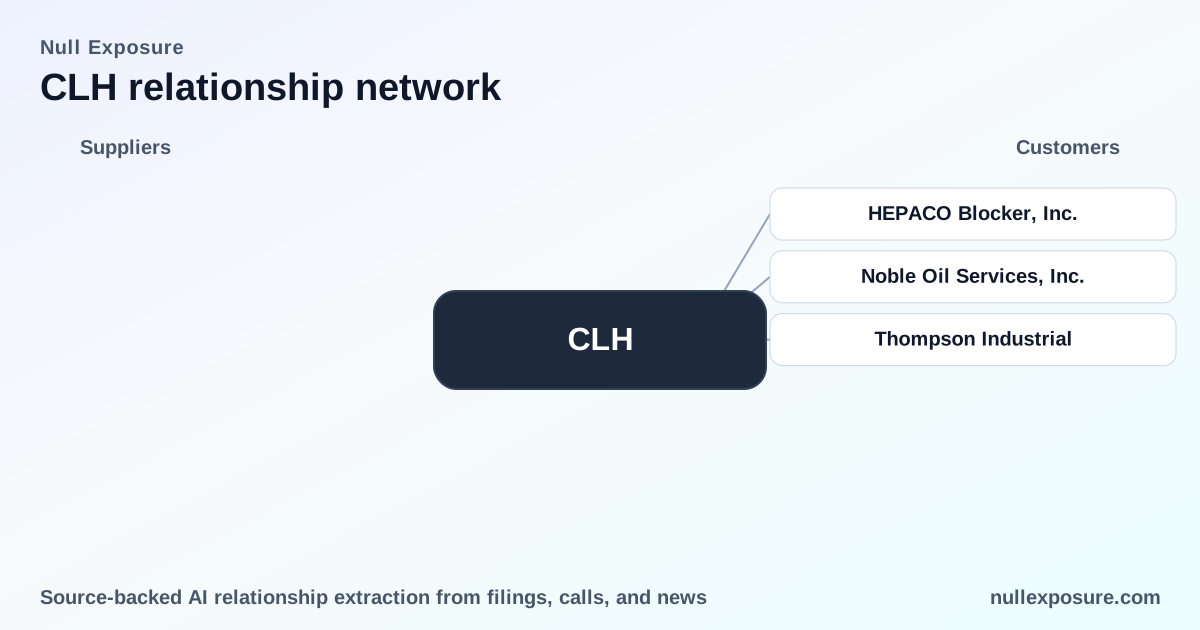
HEPACO Blocker, Inc.
Clean Harbors acquired HEPACO in March 2024 and the company notes that the results and integration of HEPACO’s operations impact segment results for FY2024, signaling that M&A is an active channel for near‑term revenue growth and margin re‑profiling. This is drawn from Clean Harbors’ 2024 Form 10‑K filing for FY2024.
Noble Oil Services, Inc.
The company states that the acquired operations of Noble Oil Services contributed to segment results, indicating continued inorganic expansion into specialty industrial services. The mention is sourced from the Clean Harbors 2024 Form 10‑K (FY2024).
Thompson Industrial
Clean Harbors reports that revenue from industrial services grew by $107.9 million due to contributions from the March 31, 2023 acquisition of Thompson Industrial, underscoring that prior acquisitions already have material revenue impact and that integration success directly affects reported growth. This figure and context are disclosed in the 2024 Form 10‑K.
Joint Base Pearl Harbor‑Hickam (U.S. Government)
A May 2026 equity research note reported that Clean Harbors secured a $110 million contract to expand PFAS water filtration services at Joint Base Pearl Harbor‑Hickam, reflecting the material opportunity that federal and military remediation programs represent for the company. The contract is cited in an AlphaStreet equity research report covering FY2026 developments.
What these relationships collectively tell investors
The company’s customer references and disclosures paint a coherent commercial model: repeatable, contract-anchored services supplemented by strategic acquisitions and large government remediation contracts. Key implications:
- Revenue durability with episodic upside. Master service agreements and long-standing customer relationships create a baseline of recurring revenue; government PFAS contracts and acquired businesses supply step-change growth.
- Integration and execution are central. Several relationships noted in the 2024 filing are acquisitions; therefore, near-term margin trajectory and free cash flow are sensitive to integration effectiveness and operational synergies.
- Regulatory-driven demand is a lever. The public-sector PFAS work (e.g., Pearl Harbor contract) ties revenue to federal remediation funding and EPA policy—this is an upside catalyst that also concentrates execution risk on compliance and performance.
- Geographic and counterparty concentration. With ~91% of third‑party revenue in the U.S. and broad exposure to large enterprises and government, Clean Harbors benefits from scale in North America but is exposed to U.S. industrial cycles and federal budget dynamics.
Operational constraints as company-level signals
Company disclosures signal several structural features investors must price:
- Long-term master agreements are integral to billing mechanics, turning project work into reliably recurring revenue streams across industrial and municipal customers (as stated in the 2024 Form 10‑K).
- Government contracting is material to the book of business, with the company explicitly serving numerous government agencies; this elevates contract length, compliance requirements, and payment reliability while also concentrating regulatory exposure.
- Service-provider and product roles coexist: the 10‑K describes SKSS offering recycled base and blended oil to fleet customers, distributors and manufacturers—indicating that Clean Harbors is both a services provider and a B2B product supplier, which diversifies revenue channels but adds supply‑chain and commodity considerations.
- Active, mature relationships dominate the portfolio, with several customers described as long-standing and the vendor role framed as mission-critical for complex hazardous-waste needs.
For a deeper breakdown of these customer signals and how they map to contractual exposures, explore the Clean Harbors customer intelligence hub at https://nullexposure.com/.
Investment takeaways
- Top-line resilience plus episodic upside: The blend of recurring MSAs and large remediation contracts creates steady cash flow with outsized growth opportunities tied to regulatory enforcement and federal remediation budgets.
- Execution risk from integration and program delivery: Recent acquisitions and large government contracts elevate the importance of on-time, on-spec delivery—operational missteps would economically magnify given the scale of some engagements.
- North America-centric exposure: Investors should treat U.S. regulatory developments (PFAS, incineration policy) and defense spending as primary macro drivers of CLH’s revenue trajectory.
Bold, decisive allocations require monitoring contract awards, integration milestones, and EPA/federal budget signals that will materially influence Clean Harbors’ earnings cadence and valuation multiple. For regular updates on customer exposures and contract-level intelligence, visit https://nullexposure.com/.
Bold takeaway: Clean Harbors converts long-term customer frameworks into steady services revenue while using M&A and government remediation work as the principal levers for above‑trend growth—making execution and regulatory flow the primary investment risk/reward drivers.