Cellectis (CLLS): Partner-driven biotech with licensing and milestone economics
Cellectis is a clinical‑stage immuno‑oncology company that develops TALEN® gene‑edited allogeneic CAR‑T cells and monetizes primarily through out‑licensing, research collaborations, milestone payments and manufacturing services to larger pharma partners. Its business model converts platform IP and manufacturing capability into recurring and milestone revenue rather than product sales today, concentrating commercial and clinical risk with licensees and collaborators. For a direct view of their partner roster and updates, see https://nullexposure.com/.
What investors need to know in one line
Cellectis is effectively a platform licensor and CDMO for gene‑edited cell therapies: value is realized through partner milestones, royalties and collaborative R&D fees, which drives revenue volatility but leverages limited internal commercialization spend.
How the commercial relationships actually look
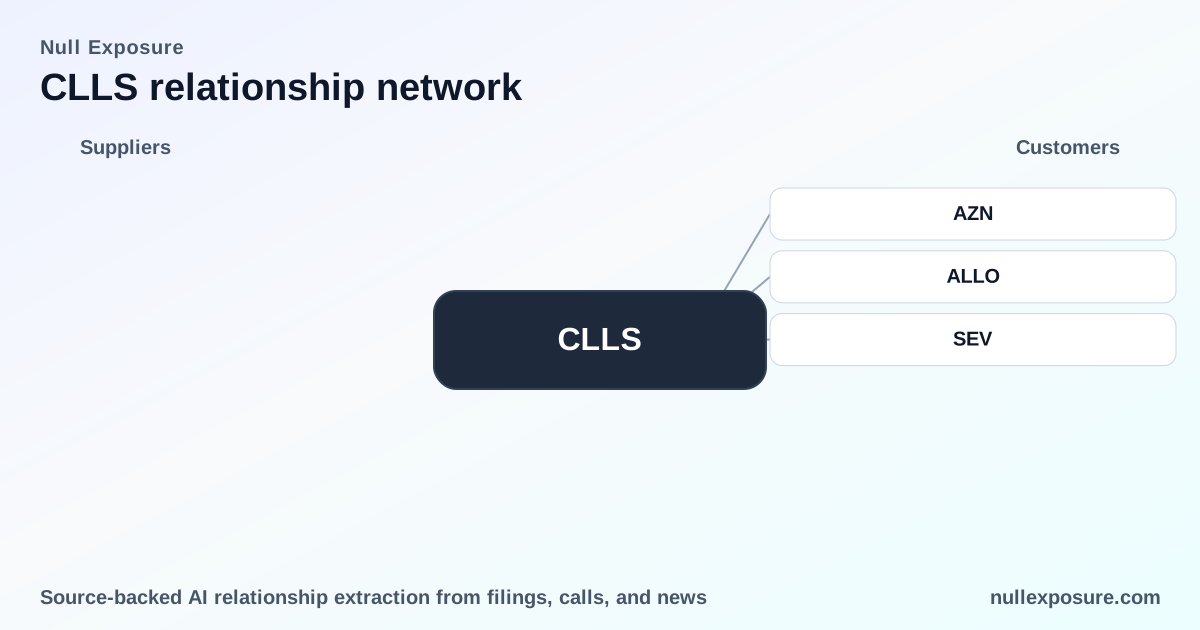
Below I map every partner relationship referenced in the source set and summarize the commercial reality in plain English.
Allogene / ALLO / Allogene Therapeutics, Inc.
Allogene licenses TALEN‑based gene‑editing technology from Cellectis and has global development and commercial rights for multiple AlloCAR T programs (including ALLO‑316 and cema‑cel), with Cellectis named as the underlying technology provider. This relationship has been repeatedly referenced in Allogene press releases and Cellectis disclosures and was the subject of arbitration language and license discussions in late‑2025/early‑2026. According to multiple Allogene and GlobeNewswire filings (2025–2026), Allogene’s AlloCAR T products “utilize Cellectis technologies” and the anti‑CD70 AlloCAR T program is licensed exclusively from Cellectis. (See Allogene press releases and Cellectis announcements, 2025–2026.)
AstraZeneca / AZN
Cellectis and AstraZeneca run a Joint Research and Collaboration Agreement to develop up to 10 cell and gene therapy product candidates, with fees and performance obligations reflected in Cellectis’ revenue growth for 2025. Cellectis reports that a material portion of its revenue growth in 2025 came from the evolution of activities performed under the AstraZeneca collaboration. (See Cellectis financial results and related GlobeNewswire release, March 19, 2026.)
Servier (Les Laboratoires Servier / Institut de Recherches Internationales Servier)
Cellectis has a License, Development and Commercialization Agreement with Servier covering products including cemacabtagene ansegedleucel (cema‑cel); that agreement includes milestone upside (up to $340 million) and low double‑digit royalties, and it was the subject of arbitration with a partial termination ruling affecting UCART19 V1/ALLO‑501. Cellectis’ disclosures and a December 2025 arbitral decision outline the dispute and the tribunal’s partial termination and negotiation requirement for a direct license if requested. (See Cellectis and GlobeNewswire arbitration and strategy releases, Dec 2025–Mar 2026.)
Sanofi / SNY
Sanofi is named among partners contributing milestone revenue to Cellectis’ 2025 consolidated revenue; Cellectis cites milestone payments from partners including Sanofi as a driver of 2025 revenue. This positions Sanofi as a commercial collaborator contributing non‑product milestone receipts rather than a direct buyer of finished therapies from Cellectis. (See Cellectis FY2025 financial commentary reported via third‑party financial press, 2026.)
What the partnership map implies about Cellectis’ operating model
Cellectis runs a partner‑centric licensing and services business rather than a product commercialization model. That operating posture implies:
- Contracting posture: Cellectis acts as licensor and R&D/manufacturing service provider; contracts contain milestone and royalty levers rather than immediate product revenue.
- Revenue concentration: A meaningful share of revenue is tied to a handful of large collaborations and milestones (AstraZeneca, Servier, Allogene and other pharma partners), producing stepwise revenue recognition when milestones occur.
- Criticality of IP and manufacturing: Cellectis’ value proposition is anchored in TALEN® IP and in‑house gene‑editing/manufacturing capabilities that are critical inputs to partner programs.
- Maturity profile: The firm is clinical‑stage—platform value is realized through partner clinical development success, not through broad commercial product sales today.
These are company‑level signals inferred from the relationship set rather than constraints attached to any single partner.
Financial impact and recent signaling
Cellectis reported consolidated revenue of roughly $79.6 million for 2025, with management attributing much of the year‑over‑year increase to milestone and R&D activity under partner agreements—specifically the AstraZeneca collaboration and payments from other partners. The Servier agreement historically included a $5.4 million development milestone recorded in 2024 revenue, and the Servier deal carries potential milestones up to $340 million plus royalties. (See Cellectis FY2025 financial results and accompanying press releases, March 19, 2026; Cellectis Q3 2025 update, Nov 2025; Servier arbitration release, Dec 15, 2025.)
Key risks and upside for investors
- Upside: Clinical or regulatory success by licensees (notably Allogene/Servier) accelerates milestone receipts and potential royalties, leveraging Cellectis’ low fixed commercialization footprint. Positive trial data from Allogene’s cema‑cel programs and other AlloCAR T programs materially de‑risk near‑term cash generation.
- Risk: Revenue volatility from milestone timing and legal disputes; the Servier arbitration and the tribunal’s partial termination underline execution and contractual complexity. A small number of partners drive a large portion of revenue.
- Operational leverage: Cellectis’ IP and manufacturing capabilities are strategic assets that support multiple partners and create recurring service revenue when collaborations scale.
For deeper partner tracking and alerts on milestone recognition or arbitration outcomes, visit https://nullexposure.com/.
Bottom line for investors
Cellectis is best viewed as a platform licensing and CDMO play in allogeneic CAR‑T, where near‑term value realization depends on partner clinical programs and milestone recognition. The company’s reported 2025 revenue growth demonstrates the model working when partners hit development inflection points, but legal complexity and revenue concentration are real risk vectors that investors must monitor alongside clinical newsflow.
For ongoing, partner‑level intelligence and revenue‑event alerts on Cellectis, see https://nullexposure.com/.