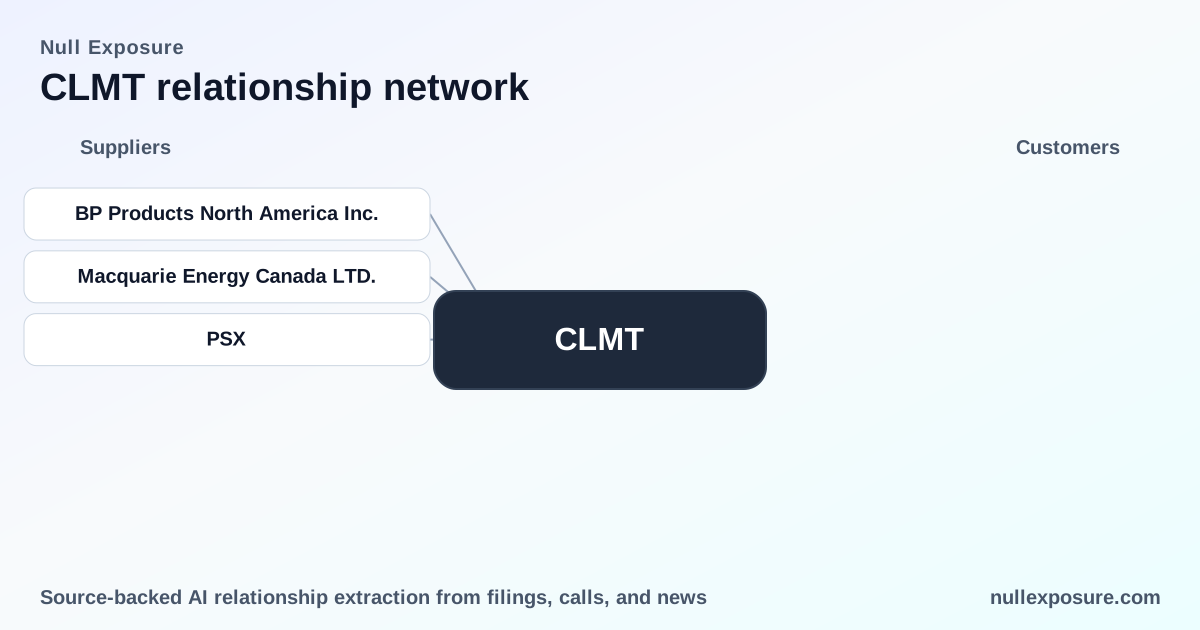
Calumet Specialty Products Partners (CLMT): Customer Relationships and Commercial Posture
Calumet Specialty Products manufactures and sells specialty hydrocarbon products and renewable fuels across North America and internationally, monetizing through a mix of multiyear offtake agreements for renewable fuels, recurring commercial sales of specialty products, and spot-market transactions for fuels and asphalt. The business combines manufacturing scale with differentiated product lines, generating revenue from both contracted, investment‑grade counterparties and shorter‑duration commercial agreements. For a deeper look at underlying datasets and signals, visit https://nullexposure.com/.
Quick investor thesis: how cash flows are created and sustained
Calumet operates as a manufacturing seller with diversified product streams—specialty chemical formulations and renewable fuels—that produce cash under different contracting regimes. Renewable fuels drive higher-contractual stability via multiyear offtakes and tax-credit monetisation, while finished fuels and asphalt provide margin volatility but flexible cash generation through spot sales. This hybrid model limits single-customer concentration and supports steady industrial distribution channels while exposing the company to commodity and demand cycles.
One customer relationship in the public record: Shell
- Shell — Calumet benefits from offtake arrangements with Shell that support the company’s renewable fuels monetisation strategy; reporting links the company’s performance to Shell offtake agreements and associated PTC monetisation. According to a Finviz news note dated May 2, 2026, analyst commentary referenced these Shell offtake agreements as a tangible support for Calumet’s bullish case. (Finviz, May 2, 2026)
How Calumet contracts: mixed posture, purposeful diversification
Calumet’s commercial playbook is deliberately mixed: the company runs both long-term contractual relationships and short-duration/spot sales.
- Long-term: Calumet sells renewable fuels under multiyear offtake agreements to a concentrated set of investment‑grade counterparties, which provides cash-flow visibility and enables effective monetisation of production tax credits. This is a company-level disclosure describing the renewable fuel channel.
- Short-term and spot: Finished fuel and asphalt sales are primarily executed through spot agreements and short-term contracts, which introduce margin volatility but preserve sales flexibility.
- Net effect: This bifurcated contracting approach balances stability (renewable offtakes and PTC capture) with market responsiveness (spot fuel sales).
These are company disclosures describing the mix between multiyear offtakes and short-term sales.
Geography and end markets: North America focus with modest exports
Calumet’s go‑to markets are domestically grounded, with renewable-fuel distribution concentrated in the western half of North America, while its specialty products are sold both domestically and internationally. Company disclosures indicate that international shipments represented less than 10% of consolidated sales in 2024, shipped via rail and truck to ports for onward vessel movement. This structure positions Calumet as primarily a North American operator with limited export exposure.
Concentration and materiality: customer risk is limited
Calumet reports that no single customer accounted for more than 10% of consolidated sales in 2022–2024, signaling low customer concentration at the company level. That disclosure is an important counterweight to headline risk: commercial dependence on a single buyer is not a material lever on near-term cash flow.
Relationship role and maturity: seller with established customer ties
Calumet functions as the seller/manufacturer in its customer relationships and reports having long-standing relationships with many customers, particularly on the renewable fuels side where multiyear agreements are standard. The company also disclosed divestiture activity (for example, the sale of part of its Royal Purple® industrial business in 2025), demonstrating portfolio management that refocuses the seller role toward core, higher‑value lines.
Operational implications for investors
- Cash-flow profile: Expect a baseline of contractual cash flows from renewable offtakes offset by variable cash from the spot fuel and asphalt markets. The interplay of these streams should be central to any valuation or credit analysis.
- Commodity exposure: The spot-heavy portion of sales imposes sensitivity to commodity price swings and demand cycles; integrated risk management and hedging policies will materially influence reported volatility.
- Regulatory / tax-credit sensitivity: The company publicly ties part of its renewable economics to PTC monetisation; policy changes or timing of tax-credit realisation will move near-term free cash flow.
For further analysis of contractual exposures and counterparty detail, explore the research tools at https://nullexposure.com/.
Constraints that shape commercial behavior (company-level signals)
The company disclosures and derived constraints provide a compact view of operating realities:
- Contract length mix: Evidence supports both long-term multiyear offtakes (renewable fuels) and short-term/spot contracts (finished fuels, asphalt), indicating a deliberate dual strategy that balances predictability and flexibility.
- Geographic posture: Primary distribution into western North America for renewable fuels with global shipping capability for specialty products, though exports were under 10% of sales in 2024.
- Materiality of customers: Low single-customer concentration—no client exceeded 10% of consolidated sales across recent reporting years—reducing counterparty risk.
- Relationship maturity and role: Calumet positions itself as a mature seller with long-standing customer links, particularly on contracted renewable volumes.
- Segment focus: The core commercial engine sits in manufacturing and formulation of specialty and renewable hydrocarbon products.
These constraints are pulled from company disclosures and public filings covering FY2022–FY2025 and provide the structural context for customer analysis.
Bottom line for investors
Calumet’s customer footprint is diversified and operationally pragmatic: long-term offtakes provide steadiness for renewable fuels and tax-credit monetisation, while spot channels offer volume flexibility and immediate cash generation. Customer concentration is low, and commercial relationships are mature—factors that reduce single-counterparty risk but leave the company exposed to commodity cycles and policy shifts affecting renewable incentives. For investors evaluating counterparty risk and revenue durability, emphasize contract tenor, PTC realisation cadence, and the proportion of spot vs contracted sales in upcoming quarters.
If you want a structured extraction of these customer signals and how they map to commercial risk, visit https://nullexposure.com/ for tools and deeper relationship modelling.