Clean Energy Fuels (CLNE): How customer relationships underpin RNG growth and margin leverage
Clean Energy Fuels sells renewable natural gas (RNG), CNG and LNG to heavy-duty fleets and public transit agencies while also designing, building and providing operations & maintenance (O&M) services for fueling infrastructure. The company monetizes through per‑gallon fuel sales, fixed or per‑gallon O&M fees, station construction and equipment sales, and the sale of environmental credits (RINs, LCFS), creating a mix of variable and recurring revenue tied to fleet fuel volumes and long‑term service contracts. For a concise platform view of the relationships summarized below, visit https://nullexposure.com/.
What investors need to know up front
- Revenue drivers: fuel volumes (usage-based) and service/O&M contracts that produce recurring fees.
- Customer mix: high-volume refuse, trucking/shipping and public transit fleets — sectors with centralized fueling that accelerate RNG adoption.
- Concentration & scale: CLNE reports one customer accounted for 10% of 2024 revenue, but overall serves over 1,000 fleet customers and operates hundreds of stations in North America.
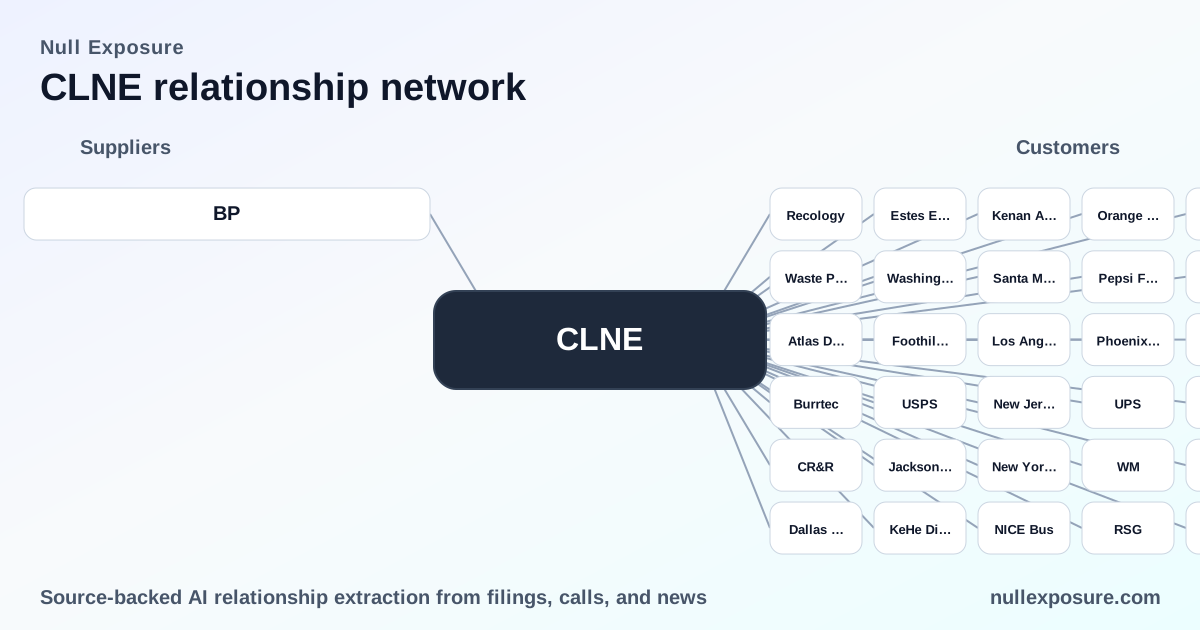
Customer roll call — every named relationship in filings and press
Below are the customers and partners CLNE discloses across its FY2024 10‑K and 2025–2026 press/earnings coverage. Each item is a short, source‑linked summary.
- Los Angeles County Metropolitan Transit Authority (LA Metro) — CLNE lists LA Metro among its public transit customers that refuel with RNG and other alternative fuels. This is disclosed in the company’s FY2024 Form 10‑K.
- New York MTA — The New York Metropolitan Transportation Authority is included among public transit clients CLNE serves, per the FY2024 10‑K.
- Foothill Transit — CLNE’s FY2024 10‑K names Foothill Transit; a March 2026 press note indicates CLNE was awarded work to design, build and maintain a second hydrogen fueling station for Foothill Transit in a project partially grant‑funded and commencing mid‑2026.
- Orange County Transit Authority — CLNE’s FY2024 10‑K includes Orange County Transit Authority among transit customers.
- Santa Monica Big Blue Bus — Listed in CLNE’s FY2024 10‑K as a public transit customer.
- Dallas Area Rapid Transit (DART) — DART is named in the FY2024 10‑K as a CLNE transit customer.
- Phoenix Transit — Included in the FY2024 10‑K list of public transit customers.
- New Jersey Transit — Named among public transit customers in the FY2024 10‑K.
- Jacksonville Transportation Authority — Listed in the FY2024 10‑K as a public transit client.
- NICE Bus (Nassau County, New York) — CLNE’s FY2024 10‑K cites NICE Bus among public transit customers.
- Washington Metro Area Transportation Authority (WMATA) — Appears in the FY2024 10‑K list of transit customers.
- Waste Management (WM) — CLNE’s FY2024 10‑K lists WM among refuse customers; subsequent 2026 press releases and the company’s Q4 2025 earnings call describe an extended partnership where CLNE provides O&M for more than 85 WM RNG stations supporting roughly 8,000 WM refuse trucks.
- Republic Services — Named in the FY2024 10‑K as a refuse customer CLNE fuels.
- Waste Connections (WCN) — Listed in the FY2024 10‑K among refuse customers.
- GFL Environmental — Included in the FY2024 10‑K list of refuse customers.
- Atlas Disposal — Named in the FY2024 10‑K as a refuse customer.
- Burrtec — Cited in the FY2024 10‑K among refuse customers.
- CR&R — Listed in the FY2024 10‑K as a refuse sector customer.
- Recology — Appears in the FY2024 10‑K; 2026 news coverage notes CLNE provides O&M support for recent Recology fueling station upgrades in the Seattle area.
- Waste Pro — Named in the FY2024 10‑K as a refuse customer.
- Amazon (AMZN) — CLNE’s FY2024 10‑K lists Amazon among large shippers that have adopted RNG, and CLNE discloses a bespoke incentive agreement (Amazon Warrant program) tied to Amazon fuel purchases that can vest up to $500 million over time.
- UPS — Included in the FY2024 10‑K as one of the shipper/delivery customers using RNG‑fueled trucks.
- FedEx (FDX) — Named in the FY2024 10‑K as an RNG customer among shippers using the fuel.
- Estes Express — Cited in the FY2024 10‑K list of truck fleet customers using RNG.
- Pepsi Frito‑Lay — Listed in the FY2024 10‑K as a shipper using RNG.
- Anheuser‑Busch (BUD) — Named in the FY2024 10‑K among shippers and manufacturers using RNG.
- Kroger (KR) — Included in the FY2024 10‑K as a retailer adopting RNG for truck fleets.
- KeHe Distributors — Cited in the FY2024 10‑K list of shippers using RNG.
- Kenan Advantage Group — Included in the FY2024 10‑K list of truck fleet relationships.
- Pilot‑Flying J — Press coverage from 2012 noted MicroLNG output being used at Pilot‑Flying J truck stops; CLNE has historical commercial arrangements with truck stop operators that support long‑haul LNG demand.
- Ecology Transportation Services — March 2026 reporting describes a supply agreement where CLNE will provide approximately 2.1 million gallons of RNG annually to Ecology’s 150‑vehicle fleet across California, Arizona and Nevada.
- ABM Facility Services — 2026 coverage reports CLNE signed service agreements with ABM to maintain three Phoenix bus depots that collectively fuel hundreds of buses and dispense several million gallons of RNG annually.
(All transit and refuse customer listings are attributed to CLNE’s FY2024 Form 10‑K unless otherwise noted; the WM, Ecology, ABM and Foothill Transit items reference CLNE press and industry coverage in 2025–2026, including the company’s Q4 2025 earnings commentary and March 2026 releases.)
What the relationship mix implies about CLNE’s operating model
CLNE’s disclosures and recent press flow create a clear picture of how the business is structured and how customer contracts behave.
- Usage‑driven monetization: CLNE charges per‑gallon fuel fees and per‑gallon or fixed O&M fees, which ties revenue directly to fleet utilization and overall miles driven. The company’s O&M language in its 2024 filings specifically describes per‑gallon service fees for maintenance contracts.
- Sector concentration and defensibility: The company targets high‑volume, centralized refueling customers (refuse fleets, transit agencies, large shippers). That positioning creates scale economics at stations and delivers predictable recurring revenue from O&M and fuel throughput. CLNE also reports one customer comprised 10% of 2024 revenue, signaling meaningful but not extreme concentration risk.
- North American footprint: Operations are concentrated in the U.S. and Canada, with 582 stations across 43 U.S. states plus 25 Canadian stations as of December 31, 2024 — a geographic scale that supports national customers and large regional haulers.
- Multiple roles and revenue streams: CLNE is simultaneously seller, service provider and manufacturer/operator — selling fuel, building and operating stations, providing O&M, and operating LNG liquefaction plants — which raises margin diversification but also capital intensity.
- Material partnerships and incentive structures: The Amazon warrant program is an example of a large, structured incentive tied to customer fuel volumes (vesting tranches up to $500 million referenced in company disclosures), which demonstrates both the potential upside from large customer adoption and the contingent nature of certain revenue offsets.
Investment implications and closing view
Clean Energy’s customer roster demonstrates a deliberate playbook: convert centralized, high‑volume fleets to RNG and lock in recurring O&M and station economics. The business captures upside through usage‑based fuel sales and recurring service contracts while monetizing decarbonization credits, but investors must weigh capital intensity, a degree of customer concentration and fuel‑volume sensitivity in the near term. Recent 2025–2026 partnerships with WM, Ecology and Foothill Transit show momentum in both REFUSE and transit segments and expansion into hydrogen infrastructure — progress that supports revenue diversification beyond pure RNG dispensing.
For investors and operators evaluating CLNE relationships, the core decision is whether the company’s scale advantage in station operations and embedded service revenue offsets fuel‑volume cyclicality and capital requirements. For a consolidated view of these customer relationships and source references, see https://nullexposure.com/.