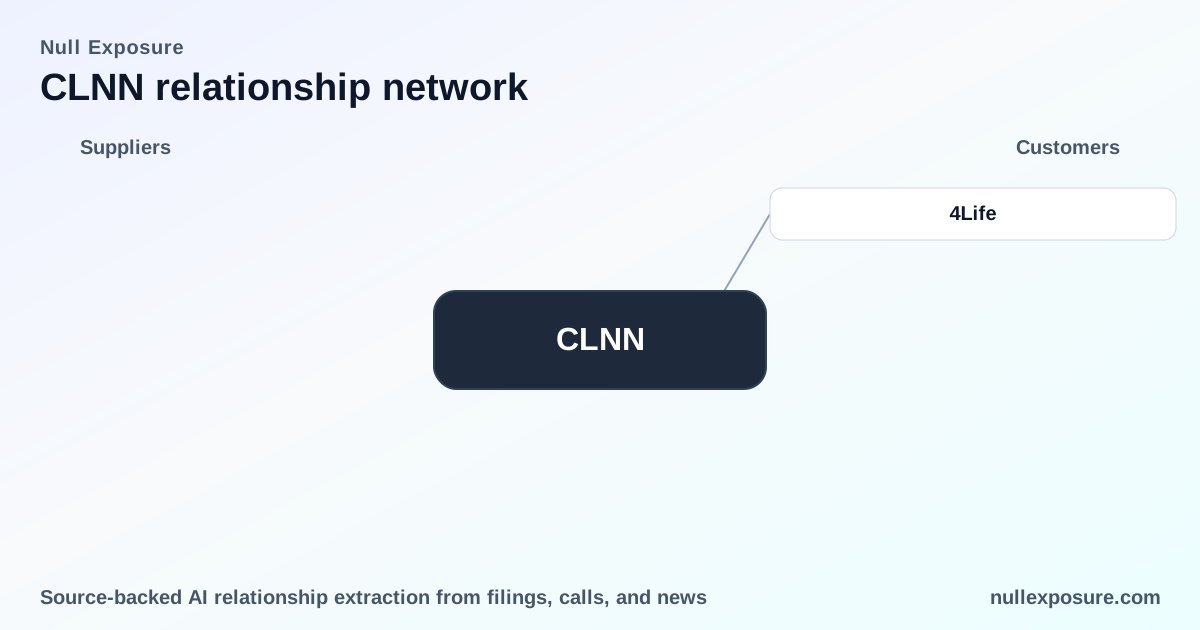
CLNN Customer Landscape: Supplement royalties today, therapeutic upside tomorrow
Clene Inc. (CLNN) monetizes proprietary clean‑surface nanotechnology through a two‑track model: near‑term revenue from dietary supplement supply and royalties, and longer‑term value capture from clinical‑stage therapeutic programs. The company acts both as a supplier and a licensor for low‑concentration nanoparticle mineral supplements while committing the bulk of resources to R&D on therapeutic indications; this dual posture creates a small but material current revenue stream against a capital‑intensive drug development profile. For a focused read on CLNN customer exposures, see https://nullexposure.com/.
How Clene makes money in plain language
Clene’s commercial receipts are concentrated in the United States and stem primarily from sales of dietary supplements and royalty streams tied to licensing arrangements. The balance sheet and operating data show low absolute revenues (roughly $200k trailing‑twelve‑months) alongside a substantial investment runway directed to clinical programs, resulting in a business that is commercial at the periphery but clinical at the core. Market participants value the company on future pipeline success rather than current supplement sales, a dynamic reflected in elevated valuation multiples relative to today’s sales.
- Near‑term monetization: direct product sales of aqueous nanoparticle supplements and royalties under license agreements.
- Long‑term upside: proprietary CSN therapeutics in clinical development that drive potential future revenue streams and re‑rating.
Explore structured customer risk profiles and relationship signals at https://nullexposure.com/.
Who pays CLNN today: the customer list
CLNN’s disclosed customer relationships are narrow and dominated by a small set of dietary supplement partners. The company’s public filings and market commentary identify two counterparties that generate the current revenue cadence.
4Life — licensed supplier and royalty partner
Clene supplies an aqueous zinc‑silver ion dietary supplement to 4Life on a non‑exclusive basis and has granted 4Life an exclusive, royalty‑bearing license for a low‑concentration gold nanoparticle product sold under the tradename Gold Factor. According to Clene’s 2024 Form 10‑K, the Gold Factor license is exclusive and subject to royalties, and the Zinc Factor supply is non‑exclusive (FY2024 10‑K). A TradingView market note in May 2026 highlighted that continued minor product and royalty revenue from the 4Life arrangement persisted while Clene’s primary emphasis remains R&D for therapeutic programs (TradingView, May 2026).
dOrbital — supplemental royalty/sales contributor
dOrbital is identified in market reporting as a partner that contributes minor product and royalty revenue, alongside 4Life, under Clene’s dietary supplement commercialization activities. A TradingView report in May 2026 grouped dOrbital with 4Life when noting continued, limited supplement and royalty income while the company focuses on therapeutic development (TradingView, May 2026).
What the documented constraints tell investors about CLNN’s operating model
Clene’s public disclosures and extracted relationship constraints paint a clear operational profile that investors should internalize when evaluating customer risk.
- Contracting posture: Clene exercises a mix of licensing and direct sales—notably an explicit exclusive, royalty‑bearing license granted to 4Life for the Gold Factor product. This shows Clene is willing to trade ownership and long‑term royalty upside for partner distribution and cash flows when appropriate (evidence in the FY2024 10‑K).
- Revenue concentration: Company‑level disclosures state that revenues were predominantly with a single customer via License and Supply Agreements, signaling high customer concentration that amplifies vendor risk even when absolute dollars are small.
- Geographic concentration: All external customer revenue was generated in the U.S. for 2023–2024, indicating limited geographic diversification of commercial activity.
- Role and criticality: Clene functions as both licensor and seller—it supplies finished supplement product and licenses IP for commercialization—making those partner agreements operationally critical to current cash receipts despite modest scale.
- Relationship maturity and stage: The relationship with 4Life is active and contractual, involving ongoing supply and royalty arrangements; the overall commercial segment sits as a steady but mature peripheral business, while the company’s main strategic focus is advancing clinical assets.
Risk and opportunity checklist for investors
- Concentration risk: A single customer dominates revenues; a loss or contract renegotiation would materially affect current cash flow.
- Limited revenue scale: Trailing revenue is modest (~$200k), so supplement income is material in percentage terms but not in absolute dollars to fund clinical programs.
- Non‑core cash flow: Supplement relationships provide runway and optionality but do not change the company’s clinical development risk profile.
- Valuation disconnect: Market capitalization and analyst target prices reflect pipeline expectations rather than present supplement economics; monitor both royalty flows and clinical milestones for re‑rating events.
Investment implication: what to watch next
Investors should treat CLNN’s customer relationships as supportive cash flows rather than primary value drivers. The supplement partnerships with 4Life and dOrbital reduce near‑term funding pressure through license royalties and product sales, but the company’s valuation and ultimate upside are dependent on successful clinical programs and regulatory progress. Key monitorables include any changes in licensing terms, evidence of revenue diversification beyond the U.S., and the tempo of therapeutic trial milestones tied to value realization.
For detailed, structured customer exposure analysis and monitoring tools, visit https://nullexposure.com/.
Bottom line
Clene operates a hybrid commercial model: small, concentrated supplement revenues today via supplier and licensor roles, and a capital‑intensive therapeutic pipeline that underpins long‑term value. The company’s current customer set is narrowly defined—4Life and dOrbital—whose agreements produce modest royalties and product sales; these arrangements are important for near‑term liquidity but do not mitigate the binary outcome profile of clinical drug development. Investors should price CLNN according to pipeline risk while tracking licensing revenue as a useful but limited de‑risking element.