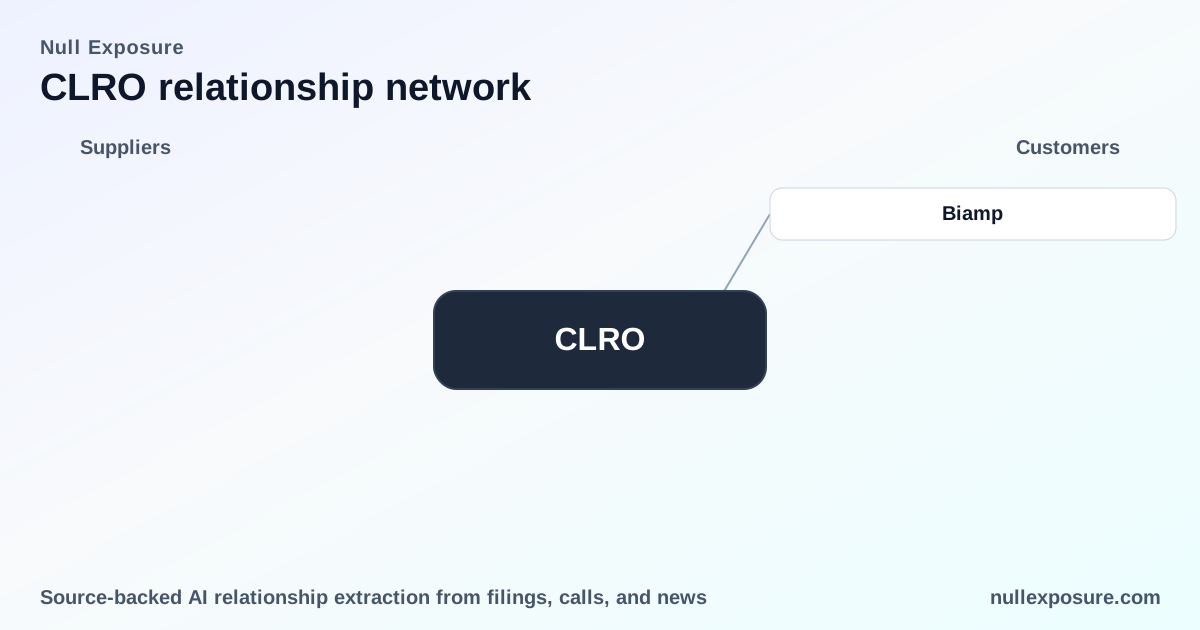
ClearOne (CLRO) — Customer Relationships and Strategic Implications
ClearOne designs and sells conferencing and collaboration hardware and associated software, monetizing primarily through equipment sales to a global network of distributors, resellers and systems integrators, with a small ancillary revenue stream from software and licenses. The company’s economics are driven by hardware volumes sold through independent channels, concentrated distributor accounts, and global reach; software and licensing remain a marginal revenue contributor. For more on ClearOne’s commercial footprint and relationship signals, visit https://nullexposure.com/.
The investment thesis in one paragraph
ClearOne’s business model is distribution-led hardware sales: it earns the bulk of revenue from audio and video conferencing equipment sold through independent distributors and resellers worldwide, while software and licensing provide only a token contribution. This structure creates revenue leverage to product cycles and channel health, coupled with concentration risk from large distributor customers. Recent news around asset transfers and legal outcomes with a competitor introduce a structural change to the company’s IP and brand estate that has immediate commercial and collection implications.
How ClearOne contracts with customers and channels
ClearOne sells primarily through independent distributors and value-added resellers who in turn serve dealers and systems integrators. The company discloses that these agreements are non‑exclusive, generally short‑term and terminable at will, which implies the channel is flexible but also susceptible to churn and price pressure. The firm reports selling through partners in approximately 46 countries, underlining a global footprint. Reported revenue mix shows equipment dominance with disclosed amounts for the twelve months ended December 31, 2024: equipment sales reported as 11,373 and software, licenses, etc. as 13, indicating near-total reliance on hardware sales for top-line performance.
- Contracting posture: non‑exclusive, short‑term distributor agreements favor commercial agility but increase renewal and concentration risk.
- Channel role: independent distributors and resellers are the primary customer-facing partners; direct sales are supplementary.
- Geographic reach: global distribution across ~46 countries supports diversified sales but does not eliminate concentration at the counterparty level.
Material concentration and counterparty profile
ClearOne discloses material customer concentration: one distributor accounted for 17% of total revenue in the year ended December 31, 2024, and trade receivable concentration included a customer representing 30% of receivables as of that date. Counterparties span government, large enterprise, mid‑market, small businesses and individual consumers, so revenue exposure is broad by sector but narrow by account. Licensing revenue is present but immaterial to current revenue dynamics.
Biamp — asset acquisition and legal overlay
Biamp has entered into an agreement to acquire assets of ClearOne, including intellectual property and brands, a transaction covered widely in industry press in March 2026. According to AVNetwork and LiveDesignOnline reporting (March 2026), Biamp agreed to acquire ClearOne’s IP and brands, which transfers core intangible value away from ClearOne and could materially reshape product roadmaps and go‑to‑market options: https://www.avnetwork.com/news/big-acquisition-news-biamp-acquires-assets-of-clearone-intellectual-property-and-brands and https://www.livedesignonline.com/news/biamp-announces-asset-acquisition-clearone-intellectual-property-and-brands.
Separately, industry reporting in May 2026 documented a judgment in favor of ClearOne against Biamp for nearly $10 million, introducing a legal and cash‑collection dimension to the relationship; this outcome affects expected cash flows and counterparty credit dynamics: https://ravepubs.com/clearone-wins-almost-10-million-judgement-against-biamp/. Net effect: Biamp is both a strategic acquirer of ClearOne assets and, through litigation, a material counterparty with financial exposure; investors should track how asset transfers and collections are resolved operationally and on the balance sheet.
NewComm Technologies — regional distribution expansion
ClearOne expanded its distribution footprint in the northeastern United States through NewComm Technologies, which will distribute ClearOne’s COLLABORATE soft‑codec video conferencing solutions to authorized dealers in that territory. Industry coverage in May 2026 described the distribution agreement targeted at the Northeastern U.S. dealer network, reinforcing ClearOne’s channel strategy and regional market access: https://ravepubs.com/clearone-expands-distribution-agreement-with-newcomm-technologies/. This is a classic channel expansion move that supports localized sales but does not materially change concentration metrics.
What these relationships mean for revenue, risk and recovery
- Concentration risk is real and material. One distributor generating 17% of revenue and a single receivable representing 30% of the receivables book are company-level constraints that elevate single-counterparty risk and collection timing sensitivity.
- Channel dependencies are short-term and non-exclusive. The contractual posture increases the likelihood of revenue volatility across product cycles and competitive displacement, especially as IP and brand assets move between firms.
- Hardware-led monetization with marginal software revenue. Equipment accounted for the overwhelming portion of revenue in 2024, while software and licenses were nominal contributors; this constrains margin expansion and recurring revenue growth unless the company successfully repositions its software.
- Legal and strategic events can alter value capture. The Biamp asset acquisition coupled with a litigation judgment creates both upside (monetization of IP through a third party, cash recoveries) and downside (loss of future IP-derived revenue streams for ClearOne).
Investment implications and near-term monitoring checklist
For investors and operators evaluating ClearOne customer relationships, focus on these prioritized items:
- Receivables and collection progress tied to the Biamp judgment and any settlement receipts.
- Revenue trends from the top distributor (the 17% account) and any signs of attrition or concentration shifts.
- Product and brand licensing terms post‑asset acquisition that could affect future revenue capture.
- Channel stability and short‑term contract renewals across key distribution partners in major geographies.
If you need structured, ongoing visibility into how customer relationships and counterparty events change ClearOne’s commercial risk profile, see our platform for continuous monitoring at https://nullexposure.com/.
Final read: clear risks, clear levers
ClearOne is a hardware-centric, distribution-led business with concentrated counterparty exposure and short-term channel contracts. The Biamp asset transaction and related litigation materially change the company’s intangible asset landscape and cash dynamics; NewComm’s distribution arrangement reinforces the existing channel model without reducing concentration. Investors should treat ClearOne as a small‑cap technology play where partner stability, receivable health and the disposition of IP are the principal drivers of near-term valuation.