CleanSpark (CLSKW) — The Foundry-Dependent Miner: customer relationships and operational consequences
CleanSpark operates large-scale bitcoin mining operations in the Americas and monetizes by contributing computing power into a third‑party mining pool and recognizing bitcoin mining rewards distributed by that pool. According to the company's FY2025 Form 10‑K, CleanSpark routes all mined rewards through a single mining pool operator and records daily settlements in bitcoin; this arrangement is the de facto revenue engine for the business. For a concise profile of CleanSpark and related disclosures, visit https://nullexposure.com/.
The short thesis for investors
CleanSpark is effectively a hash‑power provider that delegates block submission and reward distribution to a single external pool operator, receiving variable bitcoin consideration under a daily settlement regime. The company's top‑line is entirely driven by mining rewards routed through that pool, making counterparty concentration and the pool settlement mechanics the primary commercial levers for revenue and cash flow.
Why the single‑pool arrangement matters for valuation and risk
CleanSpark’s FY2025 filing states a single mining pool operator handled all mining pool activity for FY2023–FY2025 and represented 100% of the company's total revenues in each of those years. This creates a revenue profile that is both high‑visibility and high‑single‑point‑risk: visibility because the mechanism of revenue is narrow and observable (daily FPPS payouts), risk because any change in the pool relationship or payout method would immediately affect reported receipts. CleanSpark reported Revenue TTM of $785.2 million and a negative EBITDA (‑$228.9 million), so operating leverage amplifies changes in mining economics or pool terms (CleanSpark FY2025 Form 10‑K).
All disclosed customer relationships (complete)
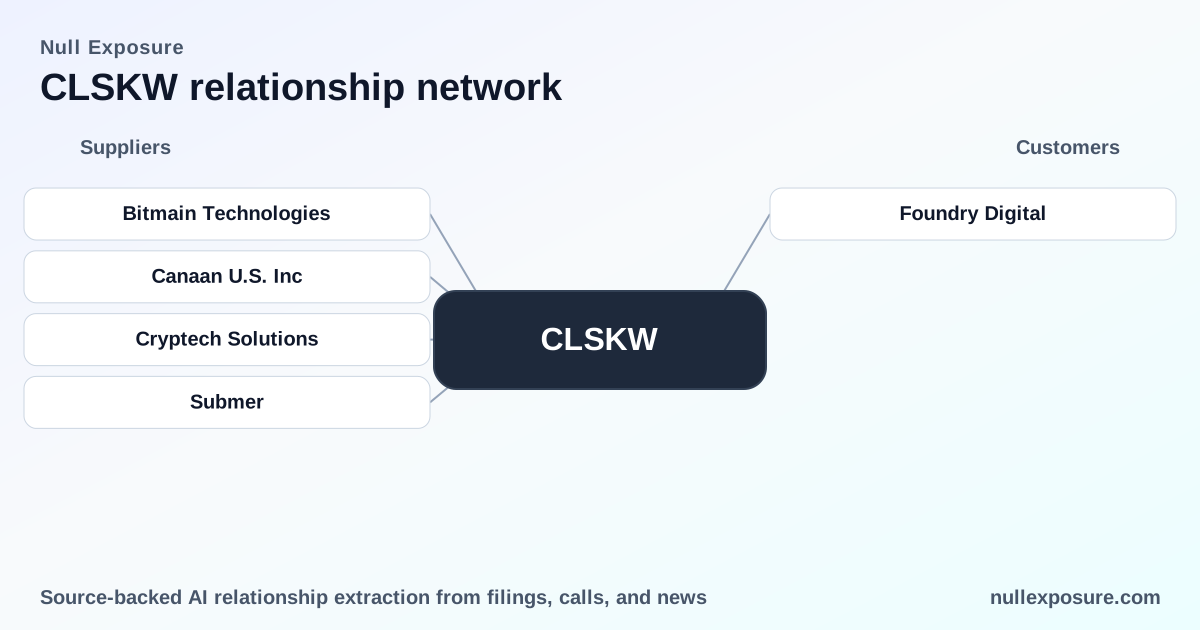
Foundry Digital — CleanSpark’s sole mining pool partner handled 100% of the company’s mining rewards and therefore 100% of reported revenue for FY2023, FY2024 and FY2025; all bitcoin mining rewards are received through the Foundry mining pool, per the company’s FY2025 Form 10‑K. According to the same filing, Foundry Digital is the single mining pool operator used by CleanSpark for those fiscal years (CleanSpark Form 10‑K, FY2025).
How contracts are written and what that implies for operations
Company disclosures characterize the mining pool engagement as terminable at any time by either party, with continuous renewal and daily settlement. The filing explains that settlements are made daily and paid the following day, and that CleanSpark earns bitcoin under the Full‑Pay‑Per‑Share (FPPS) payout method. These contract attributes produce several operational realities:
- Short-term, usage‑based revenue: payouts are calculated on daily hash contributions and delivered in bitcoin, so revenue recognition and received consideration fluctuate with realized hash rates and the pool’s FPPS formula.
- High operational flexibility and low contractual protection: the terminable, daily‑renewal nature limits long‑dated revenue guarantees; CleanSpark retains the ability to switch pools but also faces the risk of losing access abruptly.
- Continuous price and liquidity exposure: because settlements are in bitcoin and valued daily (the company uses the 23:59:59 UTC bitcoin price each day), CleanSpark’s cash and balance sheet exposure track bitcoin market moves closely (CleanSpark FY2025 Form 10‑K).
These are company‑level signals drawn from the FY2025 filing and related disclosures.
Business model characteristics and firm constraints
CleanSpark’s disclosures produce a concise set of operating characteristics that drive investor focus:
- Concentration is extreme: the firm acknowledges that a single pool represented all revenue for multiple fiscal years, making the relationship critical to the company’s survival and growth profile.
- Revenue is usage‑based and variable: payouts depend on hash contributed over 24‑hour periods and are settled daily under FPPS; this yields volatile top‑line cadence tied directly to network dynamics and pool math.
- Contracting posture is short and revocable: engagements are terminable at any time without penalty, implying low contractual lock‑in but higher operational exposure.
- Role is service‑provider and seller of hashing output: CleanSpark supplies hashing services to the pool and receives mined rewards in exchange — effectively selling mining output via a third‑party intermediary.
- Relationship stage is active at the time of FY2025, but historical changes in external data center customer activity are noted: the company discloses that data center services to external customers ceased effective Sept 30, 2023, which is a separate operational shift (CleanSpark FY2025 Form 10‑K).
Each of these characteristics comes directly from the company’s FY2025 reporting.
Investment implications: catalysts and risks
- Catalysts: operational scale and higher realized bitcoin prices increase bitcoin receipts and improve margins quickly; any diversification of pooling arrangements or direct block submission capabilities would reduce single‑counterparty concentration and improve valuation comfort.
- Key risks: 100% revenue dependence on a single pool operator is a material counterparty concentration risk; the terminable, daily‑settlement contract structure gives the pool operator and market price swings immediate leverage over CleanSpark’s revenue stream. Additionally, CleanSpark’s negative EBITDA and operating losses mean the firm relies on operational improvements, asset utilization, or external financing to bridge periods of low bitcoin prices (CleanSpark FY2025 disclosures).
Bottom line: CleanSpark’s economic exposure is straightforward to model — hash contributed × pool payout formula × bitcoin price — but that simplicity translates into binary revenue sensitivity because a single pool and reversible contract determine the entire top line.
For a more detailed profile and to monitor updates to the company’s disclosures, consult the CleanSpark customer relationship overview on NullExposure: https://nullexposure.com/.
Final takeaway for operators and research teams
CleanSpark is a high‑leverage bitcoin miner whose realized revenue and balance‑sheet exposure are concentrated through a single mining pool operator and daily FPPS settlements. Investors should treat the Foundry relationship as a principal value driver and primary counterparty risk; any material changes to pool terms, payout methodology, or access to the pool will have immediate financial consequences. The FY2025 Form 10‑K is the definitive source for these relationship disclosures and operational constraints.