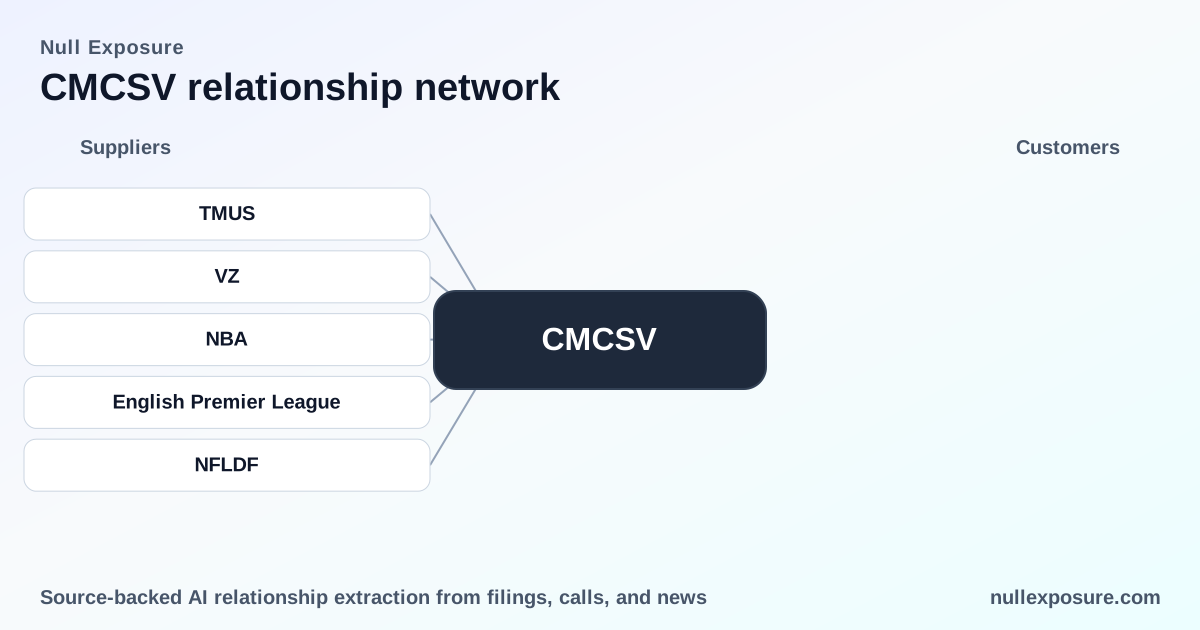
Comcast (CMCSV) — what recent customer signals mean for investors
Comcast operates as a global media and technology integrator that monetizes through subscription services (broadband, pay TV), advertising, and enterprise offerings such as Comcast Business and Comcast Technology Solutions (CTS). The company’s enterprise posture combines large master service agreements with operators and one-off platform deals for video and network services, generating recurring revenue and exposing Comcast to contract enforcement risks and cross-border commercial growth opportunities. For a concise collection of relationship signals and implications, see https://nullexposure.com/.
Lawsuit and commercial friction: a concrete dispute with DISH and EchoStar
Comcast has initiated litigation tied to a master service agreement with DISH’s wireless unit. According to a CordCuttersNews account published in May 2026, Comcast sued DISH’s parent company over performance under a master service agreement between Comcast Business Communications and DISH Wireless, making contract enforcement an active near-term risk for this enterprise relationship. (CordCuttersNews, May 2026: https://cordcuttersnews.com/comcast-is-suing-dishs-parent-company/)
EchoStar (the corporate entity behind DISH’s spectrum transactions) is cited as unable to complete performance under the same agreement due to spectrum-related transactions that disrupted its contractual obligations. CordCuttersNews documents that these spectrum transactions left EchoStar unable to satisfy the master service agreement with Comcast Business Communications, linking spectrum disposition to immediate contractual failure. (CordCuttersNews, May 2026: https://cordcuttersnews.com/comcast-is-suing-dishs-parent-company/)
Platform traction: CTS wins a key Scandinavian operator
Comcast Technology Solutions was selected by Altibox to provide a next-generation centralized video management platform across Norway and Denmark, highlighting CTS’s role as a strategic vendor for pay-TV operators. A PR Newswire release in May 2026 announced that Altibox chose CTS for the Altibox TV platform, signaling commercial momentum for Comcast’s B2B platform offerings in international markets. (PR Newswire, May 2026: https://www.prnewswire.com/news-releases/comcast-technology-solutions-selected-by-altibox-for-centralized-video-management-across-norway-and-denmark-302725472.html)
What these relationships collectively reveal about Comcast’s operating model
-
Contracting posture: Comcast conducts significant business under master service agreements with enterprise customers, which provide recurring revenue when fulfilled but also concentrate counterparty risk into enforceable, litigable instruments. The DISH/EchoStar matter shows Comcast is prepared to litigate to enforce MSAs when performance breaks down.
-
Concentration and diversification: The relationship mix reflects diversified go-to-market channels—from domestic wireless carriers and satellite/vMVPD operators (enterprise) to international pay-TV customers (CTS). This diversification lowers single-market dependence but elevates complexity in contract management and cross-border delivery.
-
Criticality of services: Comcast’s CTS product is mission-critical infrastructure for operator customers (video management, content delivery). Wins like Altibox imply stickiness and long-lived revenue potential, while failures or non-performance from counterparties can have immediate operational and financial consequences.
-
Maturity and enforcement: The company operates at enterprise scale where contracts are long-term and legally robust, and Comcast enforces terms through litigation when necessary. This reduces ambiguity about remedies but increases exposure to legal costs and public disputes.
-
External dependencies: The EchoStar excerpt underscores that third-party events—such as spectrum transactions—can disrupt contract performance, creating risk channels that are not fully controllable by Comcast and that transfer execution risk into legal and commercial remediation.
Relationship-by-relationship view (plain English, source-linked)
-
DISH Wireless — Comcast filed suit in early March 2026 over a master service agreement between Comcast Business Communications and DISH Wireless, asserting that DISH’s parent company breached contractual obligations; the litigation makes recovery and enforcement an active investor-watch item. (CordCuttersNews, May 2026: https://cordcuttersnews.com/comcast-is-suing-dishs-parent-company/)
-
EchoStar Corporation — EchoStar’s spectrum transactions are reported to have left it unable to perform under its master service agreement with Comcast Business Communications, directly tying spectrum strategy to contractual performance and litigation exposure. (CordCuttersNews, May 2026: https://cordcuttersnews.com/comcast-is-suing-dishs-parent-company/)
-
Altibox — Comcast Technology Solutions was selected by Altibox as the centralized video platform provider for Norway and Denmark, representing a strategic international win that strengthens CTS’s recurring platform revenue profile and operator credentials. (PR Newswire, May 2026: https://www.prnewswire.com/news-releases/comcast-technology-solutions-selected-by-altibox-for-centralized-video-management-across-norway-and-denmark-302725472.html)
Investor takeaways and risk checklist
-
Enforceability is a double-edged sword. Comcast’s reliance on MSAs supports predictable revenue but drives litigation when counterparties fail to perform; investors should monitor legal proceedings and potential one-time costs associated with enforcement.
-
CTS is a growth vector with operational stickiness. Platform wins like Altibox validate international expansion and recurring revenue potential; track contract length and service-level commitments to assess long-term margin contribution.
-
External factors can derail contracts. The EchoStar case demonstrates that third-party spectrum transactions and regulatory events can produce contract-level defaults that are operational rather than commercial in nature.
-
Monitor customer mix and concentration. Comcast’s customer relationships span consumer and enterprise channels; investors should watch whether enterprise disputes materially influence service margins or require provisioning for receivables and legal reserves.
For a curated feed of relationship signals and ongoing monitoring for Comcast and peers, visit https://nullexposure.com/.
Bottom line
The recent signals combine a clear commercial win in Europe with active U.S. litigation in the enterprise segment. Altibox underscores CTS’s strategic platform value and recurring revenue upside, while the DISH/EchoStar dispute highlights contract enforcement risk and the impact of third-party transactions on commercial performance. Investors should treat Comcast’s enterprise contracts as both a growth lever and a litigation vector, tracking legal developments, contract terms, and operational dependencies to assess near-term financial impact and longer-term service economics.