CMCT customer relationships: concentration, strategic shifts, and what operators need to know
Creative Media & Community Trust Corporation (CMCT) operates as a niche REIT that owns and leases Class A and creative office properties across U.S. metropolitan markets and historically supplemented property cash flow with an SBA 7(a) lending platform; the company monetizes through rental income, tenant services and historically through loan originations and disposals — most recently crystallizing value with a sale of its lending business to a Peachtree affiliate for roughly $44.9 million. Investors should focus on tenant concentration, long‑term lease structures, and the operational impact of divesting non‑core lending assets. Learn more about our coverage at https://nullexposure.com/.
Executive snapshot: business model drivers and operating posture
CMCT’s core monetization is real estate leasing — office and multifamily — complemented by tenant services such as parking and reimbursements. The company’s disclosures show a mix of long‑term leasing and historically long loan maturities under its SBA program, indicating a contracting posture that favors duration and predictable cash flow. CMCT also ran a national SBA 7(a) lending operation that primarily served small businesses; that lending business was marketed and sold to an affiliate of Peachtree Group in late 2025, producing a near‑term cash inflow and an executive transition. Company signals point to:
- Long‑term contractual exposure (explicit evidence of 11‑year leases and ~25‑year SBA loan maturities).
- National geographic reach across U.S. markets for both real estate and small‑business lending.
- Material tenant concentration risk at the property level (one tenant accounted for 22.9% of annualized rental income in FY2024).
- Strategic de‑risking through divestiture of the lending division to redeploy capital or shore up the balance sheet.
If you are evaluating CMCT as an operator or counterparty, these characteristics frame underwriting, leasing strategy, and portfolio concentration decisions. For a full company overview and further updates, visit https://nullexposure.com/.
Relationship register — every mention in the record, explained
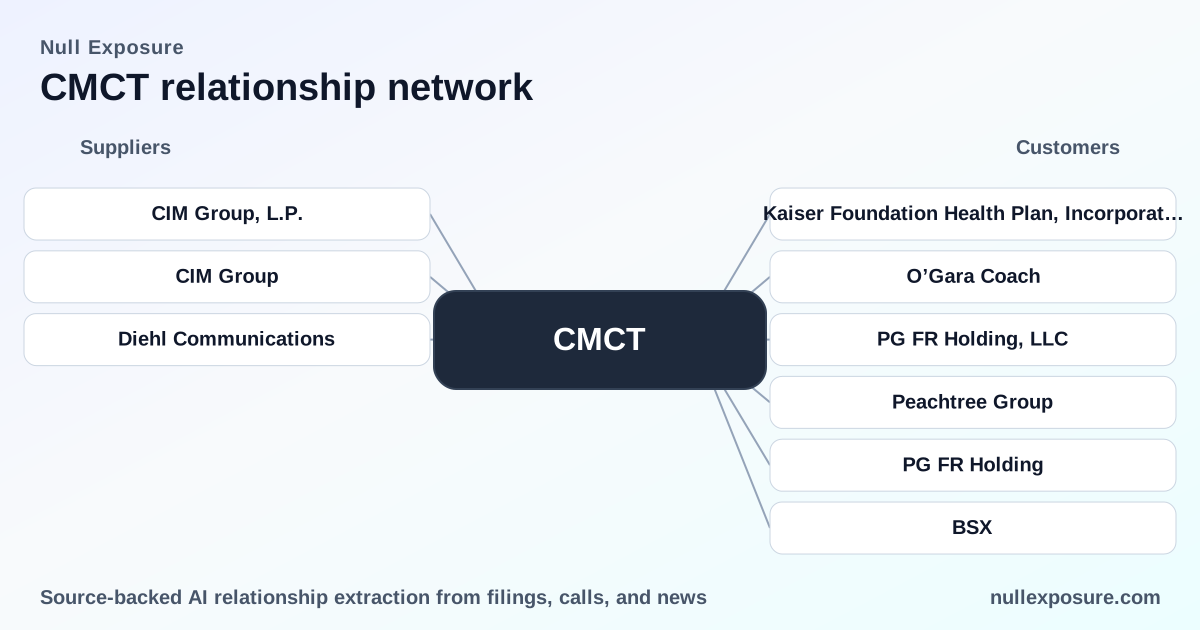
Kaiser Foundation Health Plan, Incorporated — (10‑K, FY2024)
Kaiser occupied space in an Oakland CMCT property and accounted for 22.9% of CMCT’s annualized rental income for the year ended December 31, 2024, making this a top single-tenant exposure in the portfolio. This concentration is disclosed in CMCT’s FY2024 Form 10‑K.
O’Gara Coach — (Beverly Press, Aug 2022)
CMCT signed a long‑term lease with O’Gara Coach for roughly 18,000 square feet of ground‑floor retail at 9460 Wilshire Blvd. in Beverly Hills, representing a high‑profile retail placement in a premium micromarket (reported Aug 15, 2022). The announcement was covered in local press including Beverly Press.
PG FR Holding, LLC — (SahmCapital news coverage, FY2026)
CMCT sold its lending division to PG FR Holding, LLC (a Peachtree affiliate) for approximately $44.9 million net of certain indebtedness, a transaction reported in early 2026 commentary. News coverage highlighted the sale as a material corporate disposition aimed at strategic refocus and capital raising.
Peachtree Group — (Parameter.io, FY2025)
The buyer identity was widely reported as Peachtree Group (whose affiliate will acquire CMCT’s lending unit), and CMCT indicated that a senior executive would join the buyer upon closing — signaling continuity for loan servicing or leadership transfer post‑transaction. The reporting came in December 2025 market write‑ups.
Peachtree Group / PG FR Holding — (TS2.Tech, FY2025)
CMCT publicly announced a definitive agreement on November 12, 2025 to sell its SBA 7(a) lending division to PG FR Holding, LLC, an affiliate of Atlanta‑based Peachtree Group, formalizing the strategic divestiture. Technology and microcap coverage outlets summarized the deal and its implications for CMCT’s capital structure.
Peachtree Group — (Benzinga, FY2025)
Equity market reporters noted CMCT shares spiked after the company disclosed the definitive sale to the Peachtree affiliate, reflecting investor reaction to the cash infusion and narrower business focus. Benzinga covered the immediate market response following the announcement.
PG FR Holding — (Parameter.io, FY2025)
CMCT confirmed entry into a definitive agreement to sell its lending division to a Peachtree Group affiliate, with Parameter.io reporting the confirmation and deal terms in December 2025. The confirmation reiterated the buyer and the nature of the transaction.
Peachtree Group — (StockstoTrade, FY2025)
Market news outlets reported that the definitive agreement to sell the lending division to a Peachtree affiliate cemented CMCT’s strategic pivot away from direct lending, a point emphasized in December 2025 coverage. The coverage underscored intent to redeploy proceeds.
PG FR Holding, LLC — (StockTwits news aggregation, FY2025)
Short‑form market outlets reiterated that Creative Media agreed to divest its lending business to PG FR Holding, LLC, highlighting the transaction across retail and social trading channels. The sell‑side narrative focused on the operational simplification for CMCT.
PG FR Holding, LLC — (Investing.com / SEC filings summary, FY2026)
Public filings summaries in early 2026 reported completion of the sale of CMCT’s lending division to PG FR Holding, LLC for approximately $44.9 million, confirming transaction close and cash realization. Investing.com summarized the SEC filing and corporate actions.
Boston Scientific — (TS2.Tech, FY2025)
Reports note that Boston Scientific leased space at CMCT’s Penn Field campus, helping push that campus toward roughly 93% leased, marking an institutional‑grade tenant placement that improves portfolio occupancy metrics. The detail appeared in coverage of CMCT’s Q3–Q4 2025 results and leasing updates.
BSX (duplicate reporting of Boston Scientific) — (TS2.Tech, FY2025)
A duplicate mention frames Boston Scientific (BSX) as an anchor tenant at Penn Field contributing materially to higher campus occupancy; sector commentary used the BSX ticker when discussing leasing performance in FY2025. This duplicate appeared within the same analysis piece.
PG FR Holding, LLC — (Benzinga duplicate, FY2025)
Benzinga’s trading‑idea piece reiterated the buyer identity (PG FR Holding, LLC) as the counterparty for CMCT’s lending unit sale, which Benzinga flagged as the proximate catalyst for the share move in late 2025. This is a second market note emphasizing the same transaction.
PG FR Holding, LLC — (TS2.Tech, FY2025 duplicate)
TS2.Tech included multiple references to the PG FR Holding transaction in its December 2025 coverage, restating that CMCT entered a definitive agreement to sell its SBA 7(a) division to the Peachtree affiliate. The repeated coverage confirms market attention on the transaction.
PG FR Holding, LLC — (Investing.com SEC filing summary, FY2026 duplicate)
A second Investing.com summary entry documents the sale’s completion in early 2026, reaffirming the transaction’s reported proceeds and closing status as disclosed in CMCT’s filings. This duplicate confirms the deal closed and was reflected in public filings commentary.
Peachtree Group — (TS2.Tech duplicate, FY2025)
TS2.Tech’s analysis further called out Peachtree Group as the parent affiliate for PG FR Holding in its discussion of CMCT’s strategic outlook following the sale of its lending platform. The outlet’s piece connected the buyer identity to expected operational changes.
Peachtree Group — (Investing.com duplicate, FY2026)
Another Investing.com mention repeats that the buyer is an affiliate of Peachtree Group and confirms the closing of the lending unit sale for about $44.9 million, listed in a broader summary of CMCT corporate actions. This reporting consolidates the transaction narrative.
Note: several entries are near‑duplicates from different outlets and filing summaries; each confirms the same underlying tenant leases or the single material disposal of CMCT’s lending division.
What this means for investors and operators
- Concentration is the headline risk: a single tenant contributing 22.9% of annualized rental income in FY2024 creates acute sensitivity to that tenant’s occupancy decisions and rent economics; underwriters must treat that exposure as material to cash flow modelling.
- Contractual duration supports predictability: evidence of long‑term leases and long loan maturities suggests a business structure that favors duration; this is positive for cash flow stability but raises reinvestment and rollover risk when leases expire.
- Strategic simplification is underway: the sale of the SBA lending platform for ~USD 44.9 million reduces operational complexity and concentrates CMCT on property operations and leasing, altering the company’s revenue mix and potentially its risk profile.
- Tenant mix spans luxury retail and institutional office tenants: high‑end retail leases in Beverly Hills and institutional tenants like Boston Scientific point to a diversified tenant base by sector but uneven concentration by account.
Bottom line: CMCT is transitioning to a more focused landlord model, but investors and counterparties must underwrite around material tenant concentration and the timing of lease rollovers. For ongoing monitoring and detailed relationship analytics, visit https://nullexposure.com/.