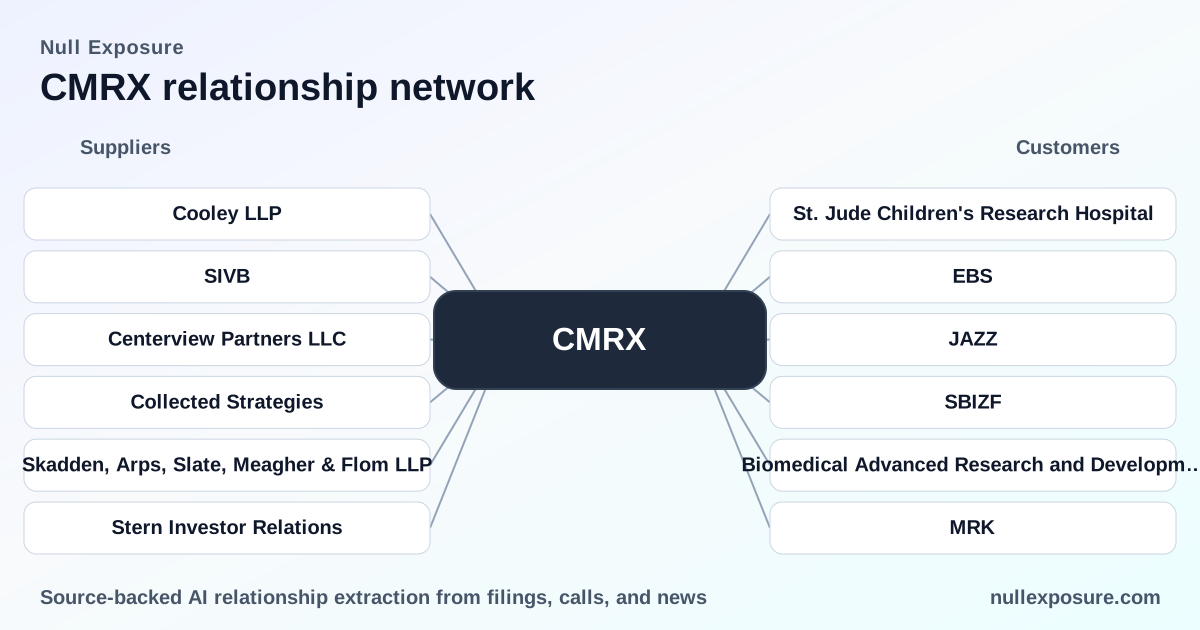
Chimerix (CMRX) — Counterparty map and commercial reality after a transformative M&A cycle
Chimerix builds value as a clinical-stage oncology-focused biopharma that historically monetized through strategic out‑licenses, government procurement sales and asset divestitures rather than recurring product revenue. The company strengthened its balance sheet by selling rights to brincidofovir (TEMBEXA) and executed multiple licensing deals while advancing oncology assets; those commercial and partner transactions powered liquidity events and ultimately culminated in an acquisition by Jazz Pharmaceuticals in 2025. For investors and operators, the relevant conclusion is simple: Chimerix’s commercial footprint has been transaction‑driven, partner‑dependent and concentrated around a small set of counterparties that determined cash runway and asset realization.
Explore the full counterparty record and primary sources at https://nullexposure.com/.
What the counterparty list tells investors about Chimerix’s operating model
Chimerix operated with a distinctly transactional contracting posture: the company systematically out‑licensed, sold and partnered core assets to raise cash and accelerate development of priority oncology programs. That posture produced three operating characteristics important to valuation and risk:
- Concentration: Revenue and cash inflows were heavily dependent on a handful of licensing and procurement deals rather than diversified product sales. Public filings and press releases document large, discrete payments that materially moved the balance sheet.
- Criticality: A small number of assets—most notably brincidofovir/TEMBEXA and the oncology candidate dordaviprone—were critical value drivers; counterparty commitments for those assets determined near‑term liquidity and strategic options.
- Maturity and pathway: The business was development‑stage with limited recurring revenue; commercial outcomes were binary (milestone/licensing receipts or government procurement awards) and corporate value realization came through M&A.
No formal constraints were recorded in the relationship extraction for this review, which is a company‑level signal that public partner constraints are not reported in the dataset used here. For due diligence, treat absence of recorded constraints as absence of captured contractual friction, not as proof of unlimited optionality.
If you want a concise, sourced counterparty dossier for portfolio or operations review, get the full view at https://nullexposure.com/.
Counterparty map — each relationship and what it meant for Chimerix
Emergent BioSolutions (EBS) / Emergent BioSolutions, Inc.
Chimerix sold worldwide rights to brincidofovir (TEMBEXA) to Emergent for $225 million up front plus up to $100 million in contingent milestones, a transaction designed to strengthen Chimerix’s balance sheet and extend runway into 2026. This divestiture removed a biodefense/commercial asset from Chimerix’s hold and converted it into near‑term cash. (Source: Chimerix press release via GlobeNewswire, May 16, 2022; MedCityNews reporting on the $225M upfront figure.)
SymBio Pharmaceuticals (SBIZF / SymBio Pharmaceuticals)
SymBio held development rights to brincidofovir for non‑orthopox indications under a 2019 out‑license, and later public guidance from SymBio identified brincidofovir as a primary revenue driver, implying increased license payments to Chimerix under legacy agreements. This relationship was a multi‑jurisdictional licensing channel that stretched Chimerix’s asset economics beyond North America. (Source: MedCityNews, 2022; ad‑hoc news coverage, 2026.)
Jazz Pharmaceuticals (JAZZ / Jazz Pharmaceuticals plc)
Jazz acquired Chimerix in 2025 for approximately $935 million and quickly launched Modeyso following regulatory approval after the acquisition, converting Chimerix’s lead oncology program into a commercial asset within Jazz’s franchise. Jazz’s acquisition was the ultimate value realization event for investors and consolidated Chimerix assets into a larger commercial operator. (Source: BizJournals reporting, March 2025; Jazz earnings calls Q3 and Q4 2025 noting Modeyso approval and launch; OncoLogyPipeline and MedCityNews coverage.)
Merck (MRK)
Merck received an exclusive worldwide license for CMX157 (an earlier antiviral program) under agreements reported in 2012, transferring development and commercialization responsibility for that candidate to a large pharma partner and reducing Chimerix’s direct development burden for that program. This is an example of Chimerix leveraging out‑licensing to monetize non‑core discoveries. (Source: RTTNews, 2012.)
St. Jude Children’s Research Hospital
In 2014 St. Jude reported contact with Chimerix regarding compassionate use of brincidofovir for a pediatric adenovirus case; press coverage recounts both the company’s initial denial and subsequent notification that the drug would be supplied within 48 hours. This episode illustrates operational friction and reputational sensitivity that can accompany compassionate‑use decisions for small biotechs. (Source: CBS News, 2014.)
U.S. Department of Health and Human Services (HHS)
The U.S. HHS contracted for initial shipments of TEMBEXA, with reporting that $115 million would be paid for the initial distribution of the product—demonstrating that government procurement represented a meaningful, single‑buyer revenue event in Chimerix’s commercial history. (Source: 10News local reporting on HHS purchase, FY2022.)
Biomedical Advanced Research and Development Authority (BARDA)
Chimerix publicly stated it was negotiating terms with BARDA for TEMBEXA procurement, positioning BARDA as a potential source of milestone and procurement revenue that underpinned the Emergent deal structure and government access strategy. BARDA discussions were factored into contingent milestone design in public disclosures. (Source: GlobeNewswire Q1 2022 operational update.)
U.S. SEC / Insider‑trading reporting tied to Jazz acquisition (regulatory context)
After Jazz’s acquisition announcement, regulatory reporting and news coverage recorded settled SEC charges for insider trading related to the acquisition timeline; this context is important for governance and event‑risk assessment around the M&A process. (Source: FXNewsGroup coverage of SEC settled order, FY2026.)
Key takeaways for investors and operators
- Transaction-driven monetization: Chimerix consistently converted development upside into cash through sales and licenses rather than relying on recurring sales, which compressed revenue volatility but extended runways when deals closed.
- Counterparty concentration is a valuation lever: Large one‑time payments from Emergent, government procurement, and licensing receipts from SymBio/Merck materially changed balance sheet outlooks; those counterparties determined liquidity and exit timing.
- Operational and reputational risks matter: Compassionate‑use episodes and regulatory/insider‑trading headlines during the acquisition process highlight execution and governance vectors that acquirers and investors price into deals.
- Exit achieved through M&A: The Jazz acquisition in 2025 crystallized value for shareholders and eliminated Chimerix’s standalone commercial execution risk while transferring product commercialization to a larger organization.
For a deeper counterparty risk matrix and source‑level access to the underlying press coverage and earnings transcripts, visit https://nullexposure.com/.
Bold final thought: Chimerix’s commercial history is a textbook case of a development‑stage biotech that monetized discrete assets through licensing and government procurement pathways and realized full value via strategic sale—investors evaluating similar companies should prioritize counterparty concentration, milestone structure and government contract exposure when assessing runway and exit probability.