CMS Energy Preferred (CMS-P-B): What the Consumers Energy–Confluence Hydro deals mean for investors
CMS Energy operates principally as a regulated Michigan utility through its Consumers Energy subsidiary; it monetizes via regulated rate base returns, recurring retail and wholesale electricity sales, and long-term contracts that stabilize supply costs. For holders of CMS-P-B preferred shares, the relevant lens is how Consumers’ asset transfers and long-duration purchase commitments reallocate operational risk and influence cash-flow stability for the parent—particularly when utility strategy shifts trade asset ownership for long-term supply agreements. For more background on counterparty exposure and documentation of relationships, visit our homepage: https://nullexposure.com/
Strategic repositioning: selling dams but buying the power for 30 years
Consumers Energy’s decision to sell 13 hydroelectric dams to Confluence Hydro while simultaneously signing a 30-year contract to purchase the power those dams produce is a decisive operational shift. This structure transfers capital ownership and certain asset risks off Consumers’ balance sheet in exchange for a long-term supply contract that locks in energy procurement from the same physical assets. A Michigan Public Radio report in September 2025 described the transaction as a sale of dams for $1 apiece with the long-term purchase contract governing energy flows (https://www.michiganpublic.org/environment-climate-change/2025-09-09/consumers-energy-plans-to-sell-its-13-michigan-dams-for-1-each).
Key takeaway: Consumers is moving toward an asset-light model for hydropower while retaining long-term supply certainty through contracting—this alters capital intensity and shifts certain operational and regulatory exposures.
The counterparties described in public reporting
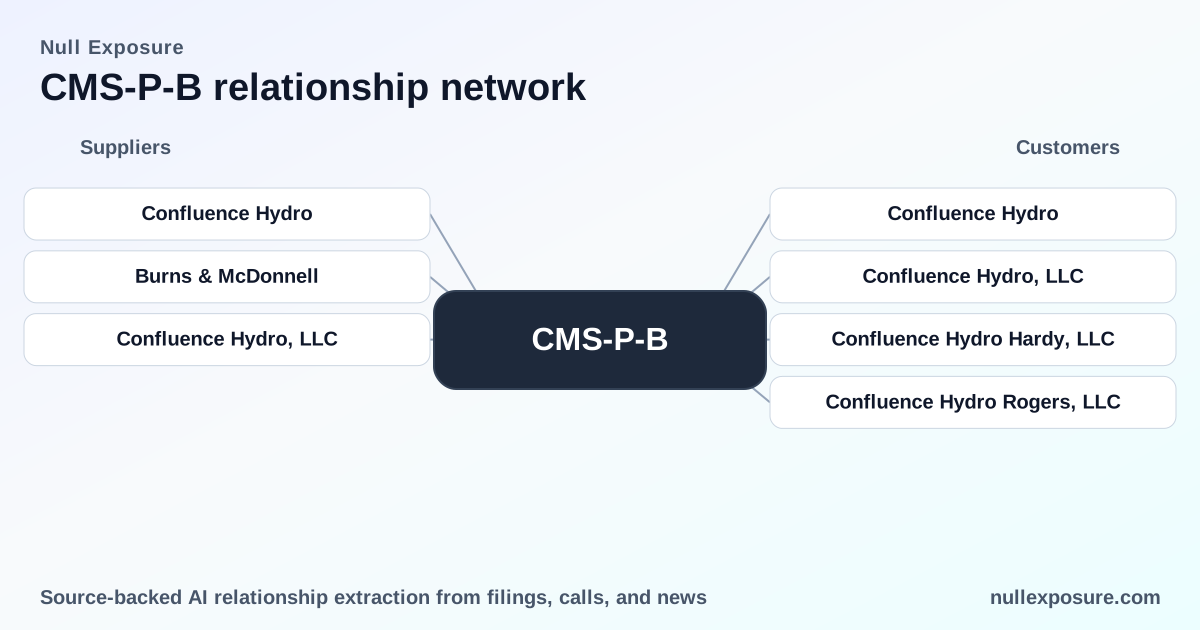
Confluence Hydro
Confluence Hydro is the buyer of Consumers’ 13 hydroelectric dams and the counterparty for the 30-year power purchase agreement. Michigan Public Radio reported in September 2025 that Consumers will sell the dams to Confluence Hydro while entering the long-term purchase contract for the dams’ output (Michigan Public Radio, Sep 2025; https://www.michiganpublic.org/environment-climate-change/2025-09-09/consumers-energy-plans-to-sell-its-13-michigan-dams-for-1-each).
Confluence Hydro, LLC
Public filings and press reporting identify the buyer alternatively as Confluence Hydro, LLC and link it to Hull Street Energy, a private equity owner; Detroit News coverage in November 2025 described Confluence Hydro, LLC as a subsidiary of Hull Street Energy acquiring hydropower assets for $1 per dam as part of Consumers’ plan (Detroit News, Nov 2025; https://www.detroitnews.com/story/business/2025/11/07/consumers-energys-plan-to-sell-hydropower-dams-mpsc/87084862007/).
Confluence Hydro Hardy, LLC
Confluence Hydro Hardy, LLC is identified as the specific entity that will own and operate the Hardy Dam on the Muskegon River under the sale structure. The Detroit News article (Nov 2025) details that ownership will be parcelled to separate Confluence Hydro affiliates for individual dams (Detroit News, Nov 2025; https://www.detroitnews.com/story/business/2025/11/07/consumers-energys-plan-to-sell-hydropower-dams-mpsc/87084862007/).
Confluence Hydro Rogers, LLC
Confluence Hydro Rogers, LLC will own and operate the Rogers Dam under the same transaction framework, according to the same Detroit News reporting, which lists distinct Confluence Hydro entities tied to specific dams (Detroit News, Nov 2025; https://www.detroitnews.com/story/business/2025/11/07/consumers-energys-plan-to-sell-hydropower-dams-mpsc/87084862007/).
A follow-up regional report in April 2026 by WKAR reiterated that Consumers chose Confluence Hydro, a subsidiary of a larger private equity firm, as the buyer and captured community and regulatory concerns tied to the sale (WKAR, Apr 2026; https://www.wkar.org/wkar-news/2026-04-07/proposed-consumers-energy-dams-sale-draws-concerns-from-neighbors-dnr?_amp=true).
How these relationships change the operating model and risk profile
Several company-level signals arise from the transaction set that are material to investors assessing CMS-P-B exposure:
- Contracting posture: Consumers is shifting from owner-operator to long-term buyer for hydropower, evidenced by the 30-year purchase contract. That creates a long-dated contractual cash-flow commitment whose terms will govern future procurement costs and volatility exposure.
- Concentration and counterparty exposure: The buyer is a single commercial group—Confluence Hydro and affiliated LLCs tied to Hull Street Energy—creating counterparty concentration for these specific generation assets. The corporate-family arrangement (single buyer with multiple special-purpose affiliates) centralizes counterparty risk.
- Criticality to supply mix: Hydropower is a non-dispatchable but stable renewable source; retaining the output via a long-term contract preserves supply reliability while transferring asset operation to a private owner. This preserves grid function but changes operational oversight and long-term maintenance incentives.
- Maturity and duration risk: A 30-year contract introduces long-term price and regulatory risk. For rate-regulated utilities, long contract duration can interact with future regulatory decisions on cost recovery and rate base treatment.
- Regulatory overlay: Reports indicate the Michigan Public Service Commission and local stakeholders are engaged; regulatory scrutiny and community concerns are present, which can affect timing and contractual adjustments (Detroit News and WKAR coverage, 2025–2026).
What investors in CMS-P-B should watch next
- Monitor regulatory filings and MPSC decisions for any changes to cost-recovery treatment; rate treatment of long-term purchase costs is the primary channel for preferred-holder cash-flow impact.
- Watch the counterparty’s operational track record and any early notices under the 30-year agreement; counterparty performance affects actual supply and any replacement procurement costs.
- Track public statements and remediations around environmental and community concerns; regulatory or remediation costs can have pass-through or non-pass-through consequences depending on commission rulings.
For a focused analysis of counterparties and contract structures that matter to capital providers, see our research hub: https://nullexposure.com/
Bottom line: an asset-light pivot with long-duration commitments
Consumers Energy’s sale of hydro assets to Confluence Hydro and its suite of affiliate buyers, coupled with a 30‑year power purchase obligation, represent an explicit pivot from capital ownership to long-term contracting. This reduces direct capital exposure on the utility balance sheet but replaces it with durable procurement commitments whose regulatory treatment and counterparty concentration are the critical variables for preferred-stock investors. The transaction preserves supply stability while shifting performance and maintenance risk to private owners—investors must watch regulatory outcomes and counterparty performance to assess net cash‑flow and risk transfer effects.
Questions about how these relationships intersect with preferred-security payout priority or credit protection? Reach out via our homepage for tailored intelligence: https://nullexposure.com/