CMS-P-C: How a Consumers Energy asset sale reshapes customer relationships for CMS Energy preferred holders
CMS Energy (through its principal operating unit Consumers Energy) operates as a regulated electric and gas utility in Michigan, monetizing via regulated tariffs, long-term customer contracts, and capital asset deployment across generation and delivery. The company's balance between owning generation assets and outsourcing or divesting them directly affects cash flow volatility, counterparty exposure, and the regulatory narrative that underpins preferred securities like CMS-P-C. For investors and operators, the recent hydroelectric sale is a discrete customer/contracting event that signals a modest but meaningful shift in asset ownership and third-party operational dependency. Read more about how we track these customer and counterparty moves at https://nullexposure.com/.
The investor thesis in one paragraph
CMS Energy generates predictable utility cash flow under rate-regulated structures; however, its decision to sell generation assets to specialized buyers reallocates operational responsibility and credit exposure away from the utility’s balance sheet. Preferred holders should view asset divestitures as a tradeoff: reduced capital and operating intensity for CMS in exchange for new counterparty and contract concentrations that can influence regulatory outcomes and long-term cash yield stability.
What happened: a concise description investors need
A March 2026 news report detailed that Consumers Energy signed a purchase agreement to sell 13 hydroelectric dams across five Michigan rivers to Confluence Hydro, an affiliate of Hull Street Energy, LLC. The transaction transfers ownership of discrete, small-scale generation assets to a private operator, shifting asset-level operational risk and any incremental generation value to a third party while CMS retains its regulated delivery franchise and customer base. According to a Yahoo Finance article published March 9, 2026, Consumers Energy announced the deal publicly and characterized it as an executed purchase agreement.
All customer relationships disclosed in the data (one line per relationship)
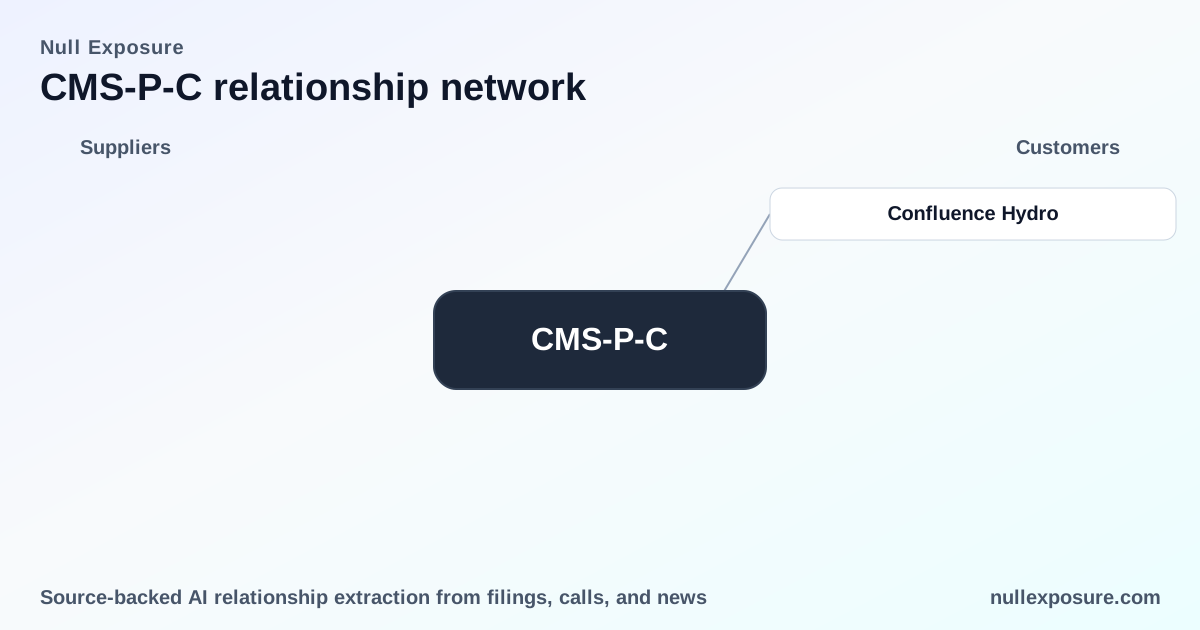
- Confluence Hydro — Consumers Energy agreed to sell 13 hydroelectric dams to Confluence Hydro, an affiliate of Hull Street Energy; this moves ownership and operating duties for those dams off Consumers Energy’s balance sheet and creates a new counterparty relationship for any continuing service or interconnection issues. A news report on Yahoo Finance on March 9, 2026 covered the announcement.
Why this single transaction is material to CMS-P-C holders
The sale of generation assets is not merely an operational housekeeping item; it changes the configuration of CMS’s customer, contractor, and regulatory relationships in ways that affect preferred security credit characteristics:
- Contracting posture shifts from asset owner to counterparty manager. By selling generation units, CMS reduces the need to maintain direct generation operations and instead becomes more dependent on contractual terms (interconnection agreements, purchase/backup power terms) with third-party owners.
- Concentration risk migrates to new counterparty(s). Bringing in Confluence Hydro as the owner/operator introduces counterparty concentration that investors should monitor—particularly for outage recovery, environmental compliance, and shared infrastructure obligations.
- Regulatory criticality remains concentrated in Michigan. Consumers Energy continues to serve the Michigan utility franchise; selling generation does not dilute the geographic concentration or regulatory dependency that underpins tariff-setting and cash flow stability.
- Business maturity and predictability increase modestly. Divestiture reduces operational complexity and capital intensity, increasing the utility’s predictability of maintenance and capex profiles—beneficial for fixed-income and preferred security holders seeking steady distributions.
Operational implications for asset and customer management
This transaction creates a clear delineation: Consumers Energy focuses on regulated delivery, while Confluence Hydro assumes ownership and operational responsibility for hydro assets. For operators and procurement teams, that means negotiating robust service-level agreements, interconnection standards, and contingency arrangements to protect both reliability and rate-base perceptions in front of regulators. For investors, the key questions are whether the sale improves CMS’s credit metrics through lower capex burdens and whether the new counterparty arrangements preserve system reliability without creating hidden contingent liabilities.
Constraints and company-level signals investors should note
The provided data does not list explicit contractual constraints tied to relationships, which itself is a signal: there were no documented contractual caveats or conditional constraints delivered with the disclosed customer relationship in our data set. From a company-level perspective, however, the following operating model characteristics are evident and relevant to CMS-P-C holders:
- Regulated revenue base: CMS’s primary monetization is via regulated tariffs and utilities operations in Michigan, implying stable cash generation but exposure to regulatory reviews.
- Geographic concentration: The business is concentrated in Michigan, concentrating political and weather-related operational risk.
- Maturity of operations: As a long-established utility, CMS operates in a mature industry with predictable maintenance cycles and capital planning horizons.
- Contracting evolution: Asset divestitures signal a contracting posture that favors third-party operation over retained ownership for certain generation assets, increasing contract-management importance.
These are company-level features that shape how sales like the Confluence Hydro transaction affect credit and operational risk, not constraints tied to a single counterparty in the provided data.
Risk and opportunity checklist for investors and operators
- Risk: New counterparty performance or environmental liabilities could create operational interruptions that are harder to control from a non-owner position.
- Opportunity: Reduced capex commitments and simpler operating scope strengthen near-term cash flow predictability and can support preferred distributions.
- Regulatory eye: Regulators will scrutinize whether the divestiture preserves service quality and whether transaction economics were favorable to ratepayers—outcomes that can affect allowed returns.
- Liquidity and credit: Preferred holders should monitor whether proceeds from sales are used to deleverage the balance sheet or returned to equity holders; the choice materially influences preferred security protection.
Bottom line and recommended investor actions
The sale to Confluence Hydro is a targeted move that aligns with a broader utility playbook: monetize non-core generation, focus on regulated delivery, and transfer operational responsibilities. For CMS-P-C investors, the immediate impact is neutral-to-positive for cash-flow predictability but introduces a counterparty monitoring obligation that was previously unnecessary when assets were utility-owned.
If you track CMS counterparty exposures or model regulatory outcomes for preferred securities, incorporate this change into your scenario work: update cash-flow sensitivity to capex and operational incidents, and add Confluence Hydro to your counterparty watchlist.
Learn more about how we surface and interpret customer-level transactions for preferred securities at https://nullexposure.com/.
Authoritative monitoring of counterparty shifts is essential for income-focused investors; the Confluence Hydro deal is a clear example of how asset sales alter the risk map without changing the underlying utility franchise.