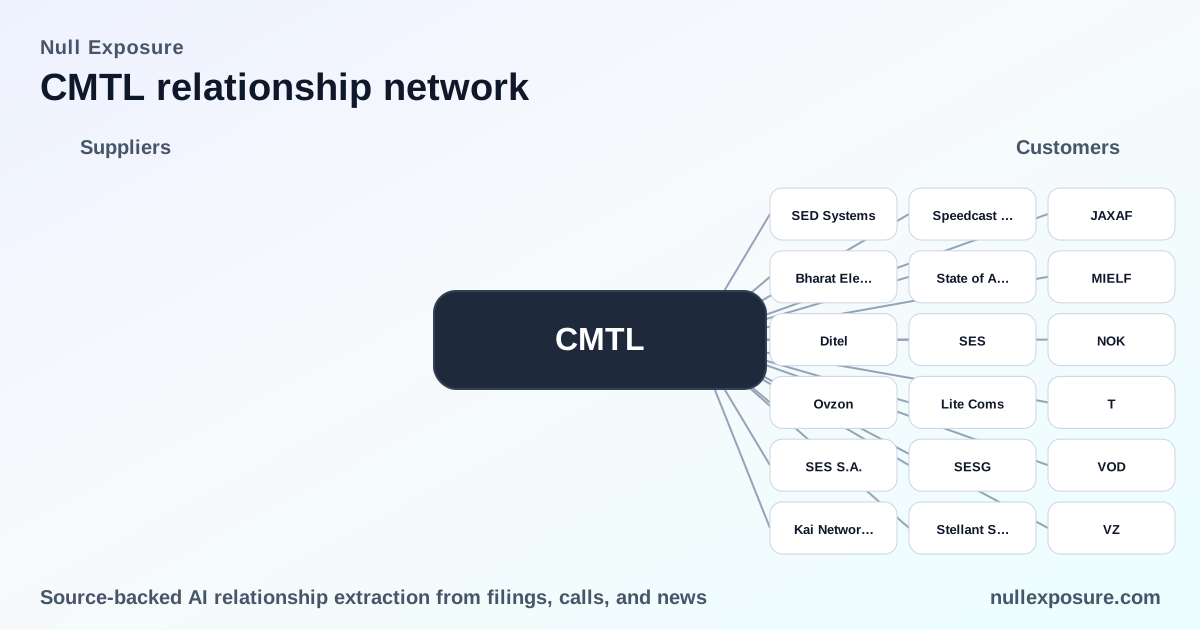
Comtech (CMTL) — Customer Map and What It Means for Revenue, Risk, and Growth
Comtech Telecommunications designs and sells satellite-ground hardware and software, emergency‑services communications (Allerium), and specialist services to governments, defense agencies and large carriers; it monetizes via multi‑year equipment sales, subscription fees from carrier services, and government contracts and services revenue. The revenue mix is driven by mission‑critical buyers (U.S. government and major telcos) and a blend of long‑term contracts, recurring subscriptions and project deliveries, creating revenue visibility but concentrated counterparty risk. Learn more at https://nullexposure.com/.
How Comtech wins business and where contractual leverage lives
Comtech’s operating model combines product sales (satellite modems, amplifiers, EDIM/DCG modems), software and managed/service layers (NG9‑1‑1, location/messaging, call handling), and government/defense services. Contracting posture is hybrid: material multi‑year awards coexist with routine short‑term services while negotiations proceed, and the company recognizes long‑term program revenue over time for bespoke systems. Revenue concentration is significant — the company reports a heavy U.S. footprint (roughly 79% domestic sales in FY2025) and a large government weight within segments (one segment cited ~55% U.S. government sales), which increases political/appropriations sensitivity but supports recurring program income and margins through specialized hardware and integration work. The product mix also signals maturity: established technologies for satellite and public‑safety customers, plus an incumbent position with several major telecom carriers and emergency services providers.
For deeper company coverage and relationship analytics, visit https://nullexposure.com/.
Every named customer and what each relationship signals
Bharat Electronics
Bharat Electronics is listed among Comtech’s commercial end‑customers in the FY2025 10‑K, reflecting international government or defense channel relationships for satellite/communications equipment (FY2025 10‑K).
Ditel
Ditel is named as a commercial end‑customer in Comtech’s FY2025 10‑K, indicating reseller or integrator use of Comtech products in commercial satellite or communications projects (FY2025 10‑K).
Kai Networks
Kai Networks appears in the FY2025 10‑K customer list, suggesting a commercial systems partner or operator using Comtech modems and ground equipment (FY2025 10‑K).
Ovzon
Ovzon is named as a commercial end‑customer in the FY2025 10‑K, consistent with satellite terminal and modem deployments to satellite service providers (FY2025 10‑K).
JAXA (JAXAF)
Japan Aerospace Exploration Agency (JAXA) is listed among commercial end‑customers in the FY2025 10‑K, confirming space program engagements and supply to national space agencies (FY2025 10‑K).
Mitsubishi Electric
Mitsubishi Electric is included in Comtech’s FY2025 10‑K customer roster, indicating OEM or systems‑level relationships for space/defense electronics and ground infrastructure (FY2025 10‑K).
SED Systems (division of Calian Ltd.)
SED Systems is cited in the FY2025 10‑K customer list, reflecting collaboration with another ground‑segment supplier for satellite communications and systems integration (FY2025 10‑K).
SES S.A. / SESG
SES is a strategic commercial partner and customer: Comtech’s SLM‑5650B and WGS/SLM modems have been certified to operate on SES’s O3b mPOWER constellation and SES placed orders for next‑gen modems, signaling both product validation and recurring OEM orders (Comtech featured news Oct 2025; SatNews Mar 2026).
Speedcast International Limited
Speedcast is listed among commercial end‑customers in the FY2025 10‑K, reflecting use of Comtech ground equipment or services by global VSAT and remote communications operators (FY2025 10‑K).
Nokia
Nokia is named as a customer in the FY2025 10‑K, indicating engagements with large telecommunications equipment vendors and integration partners for carrier solutions (FY2025 10‑K).
AT&T
AT&T is listed among the largest telecommunications customers in Comtech’s FY2025 10‑K, underscoring exposure to major U.S. wireless carriers and attendant commercial contract concentration risk (FY2025 10‑K).
Vodafone
Vodafone appears in the FY2025 10‑K customer list, confirming European carrier relationships and commercial modem/ground‑segment engagements (FY2025 10‑K).
Verizon (VZ)
Verizon is named among major telecom customers in the FY2025 10‑K, reinforcing Comtech’s connectivity to top U.S. carriers and associated revenue concentration risk (FY2025 10‑K).
Lite Coms
Lite Coms has received Comtech’s DCG‑7000 modems for integration and industry testing, referenced in multiple Comtech press releases and industry outlets, showing product adoption and early commercial testing for next‑gen small‑form modems (Comtech press releases Mar 2026; Cyprus Shipping News Mar 2026; Investing.com transcript Mar 2026).
State of Arizona
The State of Arizona renewed its contract with Comtech’s Allerium segment to continue NG9‑1‑1 services, demonstrating state‑level recurring revenue and the public‑safety position of the Allerium business (State of Arizona renewal reported via StockTitan/press coverage Mar 2026).
U.S. Navy
Comtech received funded orders from the U.S. Navy (over $1.8 million in Q2 FY2026 for non‑recurring engineering), evidencing ongoing defense program work and small but meaningful NRE contract flows (Comtech press release Mar 16, 2026).
U.S. Army
Comtech announced delivery of the first EDIM modems to the U.S. Army, signaling program execution on defense prime workstreams and product acceptance for tactical/enterprise warfighter communications (Comtech press release Mar 18, 2026).
NASA
Comtech supports supply chain requirements for NASA across orbital regimes and won a follow‑on order for lunar exploration components (~$5m), indicating participation in civil space hardware supply (SatNews Jan 20, 2026).
Department of Defense
Comtech supports DoD supply chain needs across various orbital regimes, consistent with multiple defense contracts and classified program participation noted in company commentary (SatNews Jan 20, 2026).
911 Association of Central Oklahoma Governments (911 ACOG)
911 ACOG selected Allerium to deliver NG911 call‑routing services, demonstrating regional municipal wins and recurring public‑safety service contracts for Allerium (01net.it press release Mar 25, 2026).
Stellant Systems Inc.
Comtech sold its power systems technology business, including a factory, to Stellant Systems Inc. for $32.5 million — a divestiture that repositions Comtech’s portfolio and simplifies its product footprint (Newsday coverage Mar 2026).
What the relationship map tells investors: risks and upside
- Concentration and criticality: A high share of domestic and government revenue plus major carrier customers creates both stability (repeatable program work) and downside if a carrier or public‑sector budget shifts; Comtech explicitly warns that changes with large wireless carriers could be material (company filings).
- Contract mix: Evidence supports a blend of long‑term, multi‑year contracts and shorter task‑order work, plus subscription fees from carrier services — this drives predictable revenue streams for services while preserving project revenue cadence for hardware.
- Product/service balance: Comtech’s portfolio spans hardware (modems, amplifiers), software (NG9‑1‑1, CPaaS‑style services) and services (systems integration, cyber training), which diversifies margin profiles and customer touchpoints.
- Defense and space upside: Recent EDIM deliveries to the U.S. Army, Navy NRE orders, and NASA follow‑on work validate Comtech’s positioning in defense and civil space supply chains and underpin near‑term growth catalysts.
Bottom line: Comtech’s customer base combines mission‑critical government programs and large carrier relationships that support recurring revenue and product validation, while concentration and contract renegotiation provisions introduce downside risk if major buyers reprice or terminate. For a granular relationship map and to track ongoing updates, visit https://nullexposure.com/.