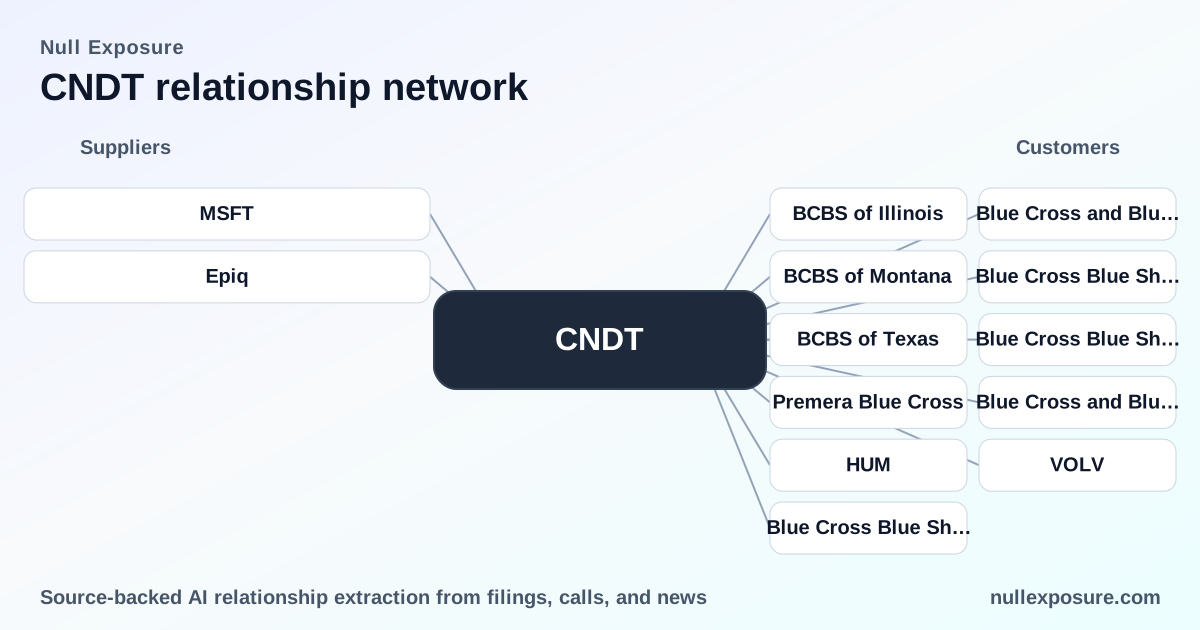
Conduent (CNDT) — Customer Relationships and What They Mean for Risk and Revenue
Conduent operates as a transaction‑intensive business process outsourcer and software provider, monetizing through a mix of long‑term services contracts, usage‑based processing fees, and subscription SaaS (notably the Conduent Medicaid Suite). Its revenue base is a blend of government and large commercial clients, with services that are operationally critical — payments, claims processing, EBT administration — which produce stable cash flows but concentrate operational and regulatory risk in a small set of counterparty verticals. For investors, the core thesis is straightforward: stable, mission‑critical contracting supports predictable revenue, while data‑security and contract funding risks create asymmetric downside.
Learn more background research at https://nullexposure.com/.
How Conduent actually sells and where the risk comes from
Conduent’s operating model is a hybrid of three monetization modes that investors must weigh together:
- Contracting posture: The company signs multi‑year, long‑term deals, especially with government entities, which underpins predictable revenue but carries the standard public‑sector termination and funding‑risk clauses included in state contracts. Company disclosures identify recurring contracts longer than one year and note government customers reserve funding‑based termination rights.
- Revenue mix: Conduent earns through fixed fees, per‑transaction/usage pricing, and subscription SaaS (the Conduent Medicaid Suite is explicitly presented as a cloud native modular SaaS). Usage volume drives throughput revenue in government healthcare channels, while SaaS brings higher margin, recurring cash flow.
- Customer profile and concentration: The business serves state/federal governments and large enterprises, with commercial revenue representing roughly half of pre‑divestiture revenue and government roughly a third, which establishes materiality for the largest clients.
- Operational criticality and maturity: Services are mission‑critical (payments, enrollment, benefits distribution), and the company reports long tenures: average tenure for the top 20 clients is ~20 years, indicating deep operational integration but also concentrated exposure if those contracts erode.
Key takeaway: Conduent’s model gives revenue stability but concentrates operational and reputational risk — particularly cybersecurity and funding disruptions — across a defined set of large public and enterprise customers.
Client roster and recently reported exposures (complete list)
The following entries reproduce every relationship item surfaced in the corpus and summarize the reporting in plain language. Each item includes the original reporting source for verification.
BCBS of Illinois
BCBS of Illinois was reported among state Blue Cross Blue Shield plans confirmed as impacted in the Conduent incident, with confirmation occurring in October–November 2025 according to SC Magazine’s coverage of the unfolding case (SC Magazine, March 2026).
Source: SC Magazine reporting on the Conduent incident (first seen March 9, 2026).
BCBS of Montana
BCBS of Montana was listed alongside other state BCBS branches as confirmed impacted during the October–November 2025 timeframe in SC Magazine’s review of the breach timeline (SC Magazine, March 2026).
Source: SC Magazine reporting (first seen March 9, 2026).
BCBS of Texas
BCBS of Texas was reported by multiple outlets as a client affected by the Conduent event; SC Magazine included it in its compilation of impacted state branches (SC Magazine, March 2026).
Source: SC Magazine reporting (first seen March 9, 2026).
Premera Blue Cross
Premera Blue Cross confirmed impact in October 2025 and was identified in the SC Magazine synthesis of cases that preceded broader reporting on the Volvo‑linked disclosure (SC Magazine, March 2026).
Source: SC Magazine (first seen March 9, 2026).
Humana (HUM)
National insurer Humana is cited repeatedly as a Conduent client in press reports discussing the breach, with Mashable referencing NJ.com’s listing of Humana among affected clients (Mashable, March 2026).
Source: Mashable article summarizing reporting (first seen March 9, 2026).
HUM (duplicate reference via Mashable)
The entry labeled HUM (ticker HUM) is the same client mention captured in Mashable’s coverage; the reporting names Humana among large commercial clients supported by Conduent (Mashable, March 2026).
Source: Mashable (first seen March 9, 2026).
HUM (FindArticles)
FindArticles also reported that Conduent supports clients such as Humana, citing its role in services like mailing and payment processing as part of the tally of affected customers (FindArticles, March 2026).
Source: FindArticles coverage (first seen March 9, 2026).
Humana (FindArticles duplicate)
A second FindArticles entry reiterates Humana’s inclusion in Conduent’s client list for services that include claims and payment handling, as captured in the broader reporting on the incident (FindArticles, March 2026).
Source: FindArticles (first seen March 9, 2026).
Alabama Department of Human Resources (DHR)
Conduent publicly announced a collaboration with the Alabama Department of Human Resources to deploy chip‑enabled EBT cards intended to reduce fraud, reflecting a continuing government services footprint and recent contract activity (Conduent corporate news release, May 2026).
Source: Conduent press release (news.conduent.com, May 2, 2026).
Blue Cross (generic reference)
PCWorld described Blue Cross as a client whose work with Conduent covers mailing and payment processing, highlighting the operational services Conduent provides to large private insurers (PCWorld, May 2026).
Source: PCWorld article (first seen May 2, 2026).
Blue Cross Blue Shield of Texas (local reporting)
Local reporting named Blue Cross Blue Shield of Texas among major corporate clients affected in the breach narrative, underlining significant member impact in that state (WRDW local news, February–March 2026).
Source: WRDW coverage (first seen March 9, 2026).
Blue Cross and Blue Shield of Texas (Mashable reference)
Mashable’s reporting, which aggregated NJ.com’s reporting, included Blue Cross and Blue Shield of Texas on the list of Conduent clients, reinforcing national coverage of the impact (Mashable, March 2026).
Source: Mashable (first seen March 9, 2026).
Blue Cross Blue Shield of Illinois (Mashable reference)
Mashable aggregated reporting that named Blue Cross Blue Shield of Illinois as a Conduent client impacted in the incident timeline (Mashable, March 2026).
Source: Mashable (first seen March 9, 2026).
Blue Cross Blue Shield plans (generic)
FindArticles summarized that Conduent supports multiple Blue Cross Blue Shield plans across states including Illinois, New Mexico, and Texas, indicating a multi‑state BCBS footprint (FindArticles, March 2026).
Source: FindArticles (first seen March 9, 2026).
Blue Cross and Blue Shield of New Mexico
Blue Cross and Blue Shield of New Mexico was listed in aggregated press coverage as a client served by Conduent and included in the incident tally in late 2025 (Mashable/NJ.com aggregation, March 2026).
Source: Mashable (first seen March 9, 2026).
Volvo Group North America (VOLV)
Volvo Group North America publicly reported that it was compromised as part of the Conduent ransomware incident, making Volvo one of the higher‑profile commercial customers cited in SC Magazine’s reporting (SC Magazine, March 2026).
Source: SC Magazine reporting (first seen March 9, 2026).
VOLV (duplicate)
A second capture of the Volvo reference (listed under the ticker VOLV) reflects the same public disclosure of compromise by Volvo Group North America in the SC Magazine timeline (SC Magazine, March 2026).
Source: SC Magazine (first seen March 9, 2026).
Investment implications: what this customer map means
- Revenue defensibility vs. operational concentration: The mix of government and large insurers creates defensible, mission‑critical revenue streams, but that same profile concentrates reputational, regulatory, and cybersecurity exposure in a small set of counterparty verticals. Company filings flag both the legal/credit protections of public customers and their funding termination rights.
- Contract structure cushions and constrains upside: Long‑term and usage‑based contracts provide predictability; subscription SaaS introduces recurring margins. However, government contract clauses that permit termination for lack of approved funding are a meaningful constraint on downside protection.
- Breach exposure is a direct earnings risk: Recent reporting tying Conduent to large exposures among Blue Cross plans, Humana, and Volvo underscores both potential remediation costs and client retention risk — an operational loss that translates quickly into financial and reputational headwinds.
Final read and next action
For active investors, the decision hinges on balancing steady, contractual cash flow against concentrated operational risk. Monitor contract renewals with major state clients, remediation spend disclosures, and any litigation/regulatory developments tied to the recently reported incidents. For deeper, ongoing tracking of Conduent’s customer relationships and incident timelines, visit https://nullexposure.com/.
Bold takeaway: Conduent’s customer base is financially valuable and operationally critical, but recent incident reporting converts that concentration into a primary investment risk vector.