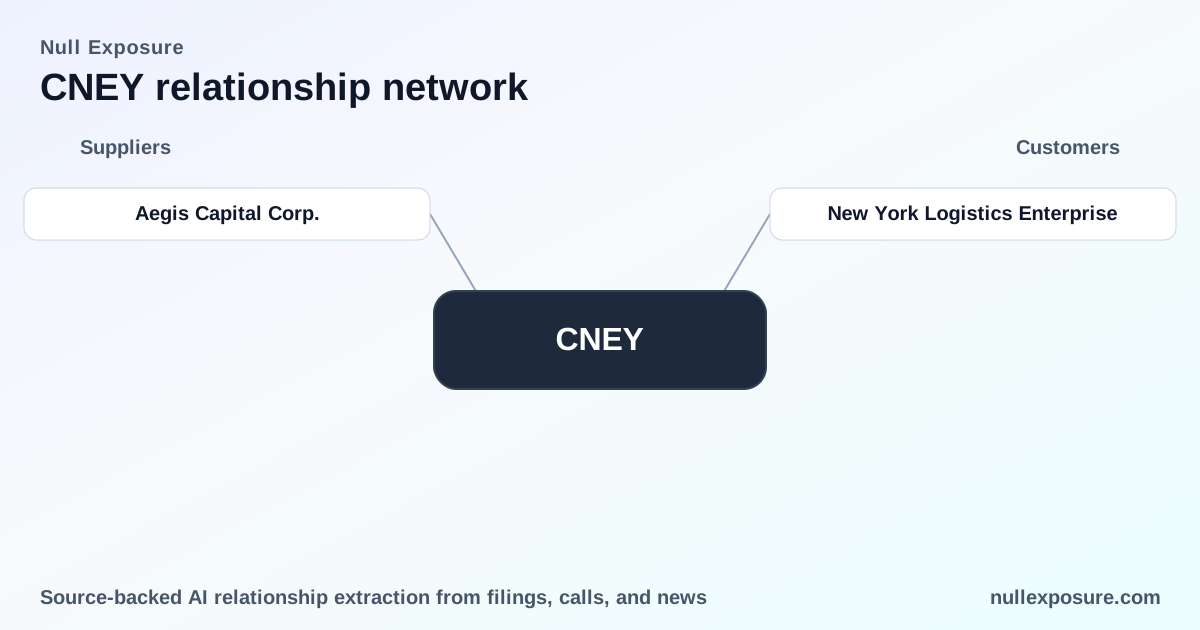
CN Energy Group (CNEY) — Customer Relationships and Commercial Signals
CN Energy Group operates as a small-cap specialty chemicals company headquartered in Lishui, China, and monetizes through the sale of chemical products and related industrial solutions supplemented by subsidiary activity in industrial automation. Revenue generation is concentrated at a modest scale (TTM revenue ~$35.6M) with negative operating and net margins, and commercial traction is currently driven by discrete product orders and subsidiary-level contracts rather than large recurring enterprise agreements. For investors evaluating customer relationships, the recent disclosed order activity provides direct evidence of product-led sales execution and downstream customer adoption of an automation offering from CN Energy’s subsidiary, Pathenbot.
If you want a concise catalog of verified customer touches and how they move the business needle, see our broader coverage at https://nullexposure.com/.
Executive takeaway: commercial signals in one sentence
The company sells chemicals while incubating automation capabilities through Pathenbot; recent order announcements indicate transactional, one-off customer wins rather than broad enterprise contracts, consistent with CN Energy’s small scale and negative profitability profile.
How CN Energy actually makes money and why customer relationships matter
CN Energy’s financials show TTM revenue of approximately $35.6 million, but the firm reports negative EBITDA and material losses, which makes each new commercial win important for cash flow and margin recovery. The business model combines traditional specialty-chemicals sales with subsidiary-driven product orders (automation equipment and solutions), creating a bifurcated monetization path: commodity/volume sales on one hand and higher-margin equipment or systems orders on the other. Given the low institutional ownership and micro market capitalization, customer wins are both financially meaningful and strategically visible to the market.
Customer disclosures: every reported relationship in the record
Below are the explicit customer relationships captured in available filings and press releases. Each entry is presented exactly as reported.
New York Logistics Enterprise — FY2026 (Pathenbot automation order)
CN Energy’s subsidiary Pathenbot signed an order for automation products with New York Logistics Enterprise, recorded in a filing dated January 29, 2026; the communication was included in a current report (Form 6‑K) and distributed via third-party filings aggregators. This transaction is a supplier–customer product sale through Pathenbot rather than a corporate-level supply contract for chemical products. Source: CN Energy Form 6‑K / press release reported Jan 29, 2026 (filed and distributed via StockTitan).
New York Logistics Enterprise — FY2025 (market reporting of the same order)
Market reporting captured the same Pathenbot automation order and reflected promotional coverage on January 29, 2026, which is indexed to FY2025 commentary in some aggregations; the coverage highlighted a single order announcement and a positive short-term market reaction to the news. Source: Stock market news coverage summarizing CN Energy’s Pathenbot order announcement, January 29, 2026 (StockTitan overview).
What the relationship list implies about CN Energy’s go‑to‑market
- Transactional, product-level sales: The published relationships are discrete orders rather than multi-year supply agreements, indicating a sales motion that relies on individual product transactions and pilot deployments—particularly for the Pathenbot subsidiary offering.
- Subsidiary-driven diversification: Pathenbot’s automation product order demonstrates CN Energy’s strategy of diversifying beyond chemicals into automation systems, providing a potential route to higher-margin revenue if scaled.
- Low overall contract concentration visibility: The public record shows a small number of named customers; this is consistent with the company’s limited disclosure footprint and micro-cap status.
Company-level constraints and operating posture
There are no explicit contractual constraints disclosed in the customer relationship feed. As a company-level assessment based on available financials and disclosure behavior:
- Contracting posture: The firm’s public disclosures reflect transactional announcements rather than standard-form enterprise contracts or multi-year commitments, suggesting CN Energy executes on a project/order-by-order basis.
- Concentration: Publicly visible customer mentions are sparse; concentration risk is a company-level signal—a small number of reported customers increases revenue volatility for a company with already negative margins.
- Criticality to customers: The relationships reported (automation order) position CN Energy/Pathenbot as a supplier of equipment rather than an indispensable commodity producer for the buyer; this reduces contract stickiness but provides upsell potential if performance proves differentiating.
- Maturity of commercial relationships: Disclosed activity is early-stage; customer interactions recorded are initial orders rather than established repeatable streams, indicating commercial maturity is nascent.
Investment implications and risk factors
- Positive leverage: If Pathenbot converts early customers into repeat buyers and secures larger logistics or industrial clients, CN Energy can lift margins above its current negative profile. The automation angle is a credible route to product differentiation beyond commodity chemicals.
- Execution and scale risk: With a market capitalization in the single-digit millions and negative EBITDA, CN Energy requires consistent new orders or capital infusions to move toward profitability; isolated customer wins will not on their own fix structural margin issues.
- Disclosure and governance: Sparse public relationship disclosures and low institutional ownership create transparency and liquidity risks for investors, making each announced customer contract a material event relative to company size.
What to watch next
- Future Form 6‑K filings and press releases for additional Pathenbot orders or recurring contracts with logistics and industrial customers.
- Quarterly filings for revenue mix changes—evidence of recurring automation revenue versus one-off equipment sales will materially alter valuation dynamics.
- Cash flow trajectory and any capital raises given negative EBITDA and limited market capitalization.
For a direct feed of verified, actionable customer relationship signals relevant to CN Energy and other micro-cap issuers, visit our research hub at https://nullexposure.com/ — it’s the quickest way to track changes that matter to valuation and credit exposure.
Sources and disclosure
Primary public disclosures for the customer relationships above were drawn from CN Energy Group filings and market coverage published January 29, 2026, and disseminated via stock filing aggregators (Form 6‑K / StockTitan reporting). Company financials referenced are the most recently reported TTM and balance-sheet metrics from public filings and market data.