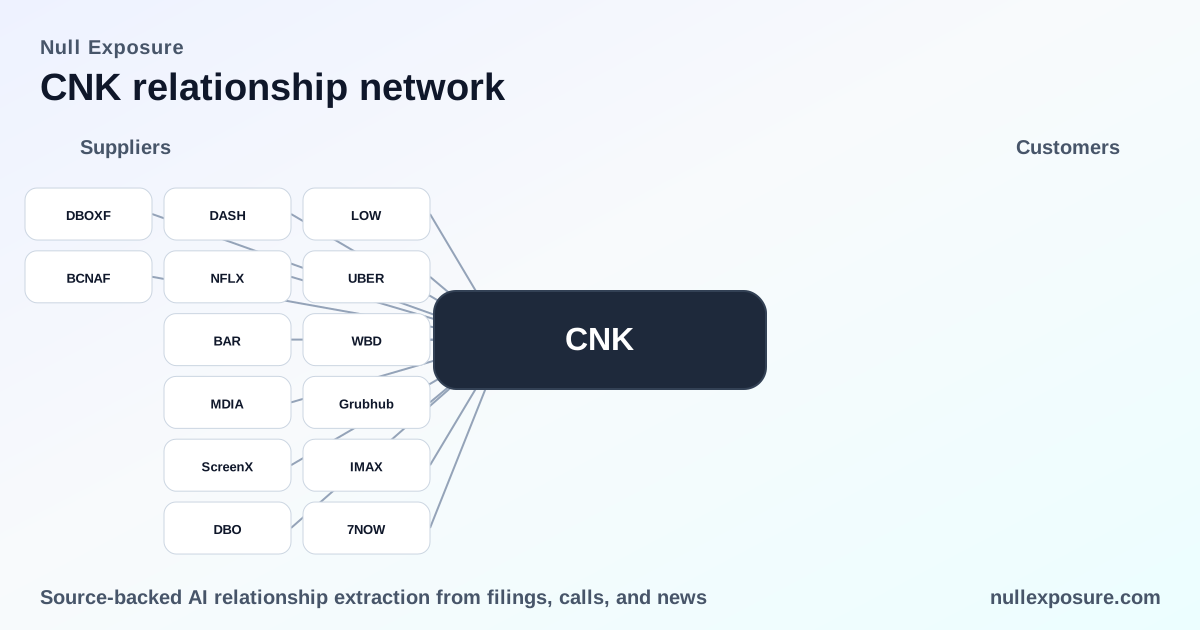
Cinemark (CNK) — Studio Partnerships and the Revenue Levers That Drive Box Office Economics
Cinemark is a global motion-picture exhibitor that monetizes through box office admissions, concessions, subscription memberships, screen advertising, and ancillary rentals. The company operates a large footprint of theaters across North America and Latin America, runs a paid Movie Club subscription that supplies recurring ticket revenue, and licenses content from studios whose release slates directly drive foot traffic and in-theater spend. For investors, the key thesis is simple: Cinemark’s profitability is levered to hit-driven content and membership-driven ticketing stability; advertising and short-term licensing create variable upside but increase revenue volatility.
If you want a consolidated view of Cinemark’s customer-facing relationships and operating constraints, visit https://nullexposure.com/ for comparative research and signal tracking.
Why studio and promotional relationships matter to the P&L
Cinemark is a distribution channel for studio content and a retail operator to consumers. Studio partnerships and promotional sponsorships—such as family title tie-ins—have two direct financial effects: they determine attendance volumes (box office), and they shape concession and membership monetization. Sponsorships for program blocks like family summer offerings increase weekday and off-peak utilization, while first-run tentpoles concentrate revenue into limited windows. Cinemark’s Movie Club subscription converts a material portion of box office into recurring revenue and mitigates some of the hit-driven variance in admissions.
Observed customer relationships in the public record
DreamWorks Animation — family programming sponsor and content partner
Cinemark’s Summer Movie Clubhouse programming lists family titles linked to DreamWorks Animation releases, signaling a promotional relationship that drives family attendance and concession spend during the summer program. A Celluloid Junkie article covering Cinemark’s Summer Movie Clubhouse noted DreamWorks Animation’s Forgotten Island as part of the program slate (May 2, 2026).
Source: Celluloid Junkie, “Cinemark’s Summer Movie Clubhouse…” (May 2, 2026).
Illumination — title sponsorship and cross-promotion for family audiences
Illumination’s Minions & Monsters is named among the films sponsoring Cinemark’s family programming, demonstrating direct promotional alignment between studio release timing and Cinemark’s curated ticket packages for families. The same Celluloid Junkie piece cites Illumination’s involvement with the Summer Movie Clubhouse lineup and highlights the studios’ role in supporting discounted ticket initiatives (May 2, 2026).
Source: Celluloid Junkie, “Cinemark’s Summer Movie Clubhouse…” (May 2, 2026).
Operating and business-model constraints that shape relationships
The available disclosures and excerpts present a consistent operating posture for Cinemark. These signals are company-level characteristics that determine how Cinemark structures commercial relationships with studios, advertisers, and consumers:
- Subscription-first monetization: Cinemark operates a domestic subscription program, Movie Club, that provides a monthly ticket credit, waived online fees, companion pricing, concessions discounts, and predictable recurring revenue; subscriptions account for a meaningful share of domestic box office (company filings, FY2024).
- Short-term, usage-driven advertising contracts: Screen advertising is sold on short-term schedules (weekly or nonconsecutive periods) and often includes variable payments tied to attendance, making advertising revenue usage-based and correlated to foot traffic, not fixed fee schedules.
- Customer base skew toward individuals and memberships: The company serves individual patrons directly—over 24 million members participate in global loyalty programs with over one million paid Movie Club subscribers—so relationship management is consumer-centric and volume-driven.
- Geographic concentration with regional nuance: Cinemark operates 497 theaters and 5,653 screens worldwide as of December 31, 2024, with meaningful exposures to North America and 13 Latin American markets; content seasonality and release cadence vary by market, creating regional revenue drivers and operational complexity.
- Dual role in the value chain: Cinemark acts both as a seller (box office and concessions retailer) and a service provider/licensor (theater screens licensed for advertising and studio screenings), which forces contract flexibility and multiplatform negotiation tactics.
These constraints together make Cinemark’s revenue mix part subscription-stable, part hit-driven, and part variable advertising income, producing both downside protection from recurring subscriptions and upside volatility tied to studio box-office success.
What this means for investors: concentration, predictability, and growth levers
- Hit dependency remains the primary top-line risk. Studio release schedules and promotional tie-ins directly determine attendance spikes; by extension, box office and concession margins concentrate around a few successful titles each year.
- Subscriptions reduce volatility but not exposure to slate quality. Movie Club converts some admissions into recurring cash flow and supports baseline attendance; the program is a stabilizer that supplies roughly 25% of domestic box office from paid members (company disclosure).
- Advertising and short-term leases add revenue optionality but increase operating cyclicality. Variable ad payments that scale with attendance lift upside when films perform, but they compound downside when headliners underperform.
- Geographic diversification introduces both opportunity and execution risk. Latin American markets extend growth runway and scale benefits but require nuanced release timing and local execution that can compress margins relative to U.S. operations.
- Operational leverage is meaningful. With a market capitalization around $3.18 billion, trailing EBITDA of roughly $596 million, and revenue near $3.2 billion (TTM), incremental box-office lift from successful titles and better subscription monetization can meaningfully flow to the bottom line given the fixed-cost nature of theater operations.
Actionable observations for investors and operators
- Monitor studio slates and promotional partnerships for family and tentpole films; early announcements of sponsored programming (e.g., Illumination, DreamWorks) are leading indicators of attendance initiatives and concession promotions.
- Track Movie Club subscription growth and retention as a direct lever on revenue durability—membership metrics are predictive of baseline admissions and wallet share for concessions.
- Watch advertising sales cadence and variable-payment clauses, because these line items amplify quarterly volatility in line with attendance trends.
- Evaluate regional release timing risk for Latin America; asynchronous releases and local seasonality can distort quarter-to-quarter results and operating margins.
- Benchmark margin sensitivity: small percentage changes in attendance drive outsized EBITDA movement due to high operating leverage in exhibition.
For a concise, comparative view of customer signals across theatrical operators and studio relationships, visit https://nullexposure.com/.
Bottom line
Cinemark sits at the intersection of consumer retail and studio distribution: subscriptions provide a stabilizing backbone, but box-office outcomes and short-term advertising contracts determine the swing in profitability. Studio partnerships such as those with DreamWorks Animation and Illumination are tactical levers that fill family programming slots and stimulate non-peak attendance. Investors should value Cinemark on a dual axis—subscription durability and slate-driven upside—while monitoring advertising exposure and Latin American execution for both risk and growth.