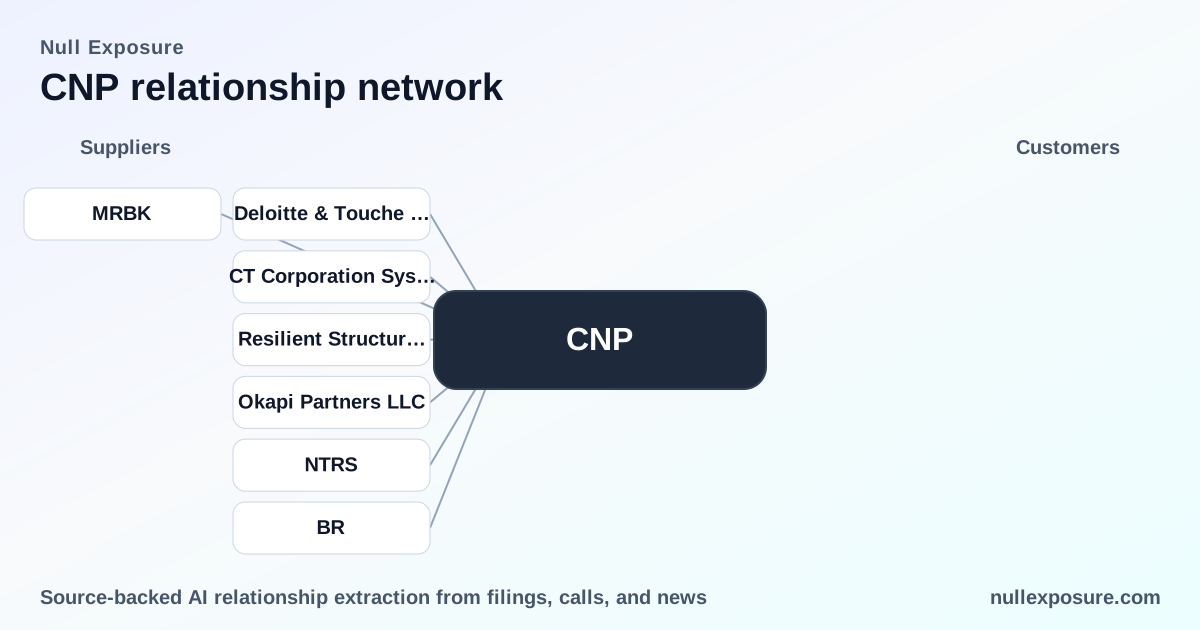
CenterPoint Energy (CNP): Customer Relationships, Constraints, and What Investors Should Know
CenterPoint Energy is a vertically integrated regulated utility that monetizes through recurring delivery and distribution charges for electricity and natural gas across several U.S. states, supplemented by limited competitive services (home repair plans, wholesale power operations). Its core revenue streams are tariffed distribution rates and volumetric/peak-based charges collected from retail energy providers (REPs) and millions of residential, commercial and industrial end customers. For diligence and monitoring, explore primary disclosures and curated analysis at https://nullexposure.com/.
Investment thesis — simple and durable cashflows
CenterPoint operates as a rate-regulated distribution and transmission business with stable, usage-linked revenue and predictable billings that support a dividend-oriented equity profile. Regulatory rate mechanisms and the geographic concentration of assets (Texas Gulf Coast plus several Midwestern and Southern states) create both resilience and regulatory risk that investors must weigh against steady cash generation.
What the public signals show about customer relationships
Below I summarize every customer-related signal surfaced in the recent crawl and transcripts.
ULTA — an outlier brand mention in retail cosmetics coverage
A Simply Wall St. news piece dated March 10, 2026 noted that CNP (in this context a brand name among skincare and wellness labels) expanded onto Ulta Beauty’s online and in-store platforms alongside other brands, widening Ulta’s assortment. This mention does not reflect CenterPoint Energy’s utility customers; it is a retail product placement cited by Simply Wall St on March 10, 2026.
Source: Simply Wall St. coverage of Ulta Beauty assortment updates (March 10, 2026).
NFG — National Fuel Gas referenced CenterPoint divestiture in an earnings call
National Fuel Gas’s 2025 Q4 earnings call transcript included a statement that the company has entered into a definitive agreement to acquire CenterPoint’s Ohio gas local distribution company (LDC), signaling an ongoing corporate divestiture process. The transcript references the deal as a near-term transaction expected to close in calendar 2026.
Source: National Fuel Gas 2025 Q4 earnings call transcript (first reported March 8, 2026).
NFG — corroborating commentary in earnings coverage
Independent coverage of the National Fuel Gas call published March 10, 2026 reiterated that the acquisition of CenterPoint’s Ohio LDC is progressing and remains on track for closing in the fourth quarter of calendar 2026, confirming management’s public timeline and transaction status.
Source: Earnings coverage on InsiderMonkey summarizing National Fuel Gas remarks (March 10, 2026).
How these signals fit into CenterPoint’s customer map
- The Ulta mention is a non-utility brand coincidence and does not affect CenterPoint Energy’s regulated customer base or billing mechanics.
- The National Fuel Gas items reflect a corporate-level transaction: the sale of CenterPoint’s Ohio gas distribution assets reduces the company’s footprint in that state and will change customer composition and associated regulated revenues once closed.
- The NFG disclosures are direct evidence of an active divestiture process with an announced timetable and expected economic transfer in calendar 2026.
Operating model and business-model constraints investors should internalize
Company filings and segment disclosures set the context for how CenterPoint interacts with customers and how that drives earnings quality:
-
Contracting posture: short-term, usage-linked billing. Houston Electric’s distribution relationships are not under long-term contracts; the utility bills REPs continuously with meter readings and daily invoices, and rates for most customers are fundamentally usage or peak-demand based. This creates predictable revenue tied to consumption patterns, seasonality, and economic activity. (Source: company regulatory filings and segment disclosures, referencing Houston Electric billing practices.)
-
Revenue concentration and counterparty diversity. The firm serves millions of individual residential and commercial customers across several states, and also contracts with REPs and municipal buyers, reducing counterparty concentration risk though exposing the business to regional demand cycles. (Source: CenterPoint Energy Natural Gas segment disclosures.)
-
Role and criticality: seller and distributor of essential services. CenterPoint operates as the regulated seller/distributor of electricity and natural gas and as a service provider for energy delivery and ancillary services; this critical infrastructure role supports high customer stickiness and utility-like regulated cashflows. (Source: segment descriptions of Houston Electric and CERC operations.)
-
Geographic footprint: primarily North America (state-level concentration). All operations are U.S.-centric with heavy exposure to Texas plus Indiana, Louisiana, Minnesota, Mississippi, Ohio and others, which concentrates regulatory and weather risk regionally. (Source: company segment disclosures.)
-
Maturity and scale: established distribution segment with material receivables. The Electric distribution business and the Natural Gas reportable segment are mature, rate-regulated operations. Aggregate billed receivables from REPs were material (hundreds of millions), reflecting both scale and working-capital dynamics in the business. (Source: December 31, 2024 disclosures noting Houston Electric’s billed receivables.)
Together these constraints frame CenterPoint as a regulation-exposed distributor with predictable, usage-driven cashflows, but with measurable sensitivity to regulatory rulings, weather-driven demand, and asset sales that shift earnings mix.
Risks and opportunities for investors
- Risk — regulatory and regional concentration: Rate cases and state-level regulatory decisions can materially alter authorized returns; heavy Texas exposure exacerbates risk from ERCOT dynamics.
- Risk — asset reconfiguration from divestitures: The planned Ohio LDC sale transfers rate base and cashflows; investors should model one-time proceeds against the lost long-run revenues and regulatory capital. (Source: National Fuel Gas public remarks and CenterPoint transaction disclosures.)
- Opportunity — steady, defensive cashflow: Distribution and transmission of essential energy services generate recession-resistant revenues and support dividend policy.
- Opportunity — portfolio optimization: Divestitures can sharpen geographic focus and redeploy capital to higher-return projects within regulated frameworks.
Key takeaways for operators and analysts
- CenterPoint’s customer revenues are primarily usage- and peak-driven rather than long-term contractual, producing predictable but demand-exposed cashflows.
- The company is a seller/distributor of essential energy services with high customer stickiness and public-rate oversight.
- A material corporate action — the sale of the Ohio gas LDC — is progressing and will reshape the company’s geographic and revenue profile upon closing in 2026.
- Receivables and billing mechanics are large and operationally significant; short-term billing cycles create working-capital sensitivity.
For a deeper view into customer relationships, regulatory filings and transaction documents provide the definitive detail; for curated monitoring and alerts on changes to these relationships, visit https://nullexposure.com/.
If you want a focused monitoring report on how the Ohio LDC divestiture will affect CenterPoint’s regulated rate base and cashflow profile, request a tailored update at https://nullexposure.com/.