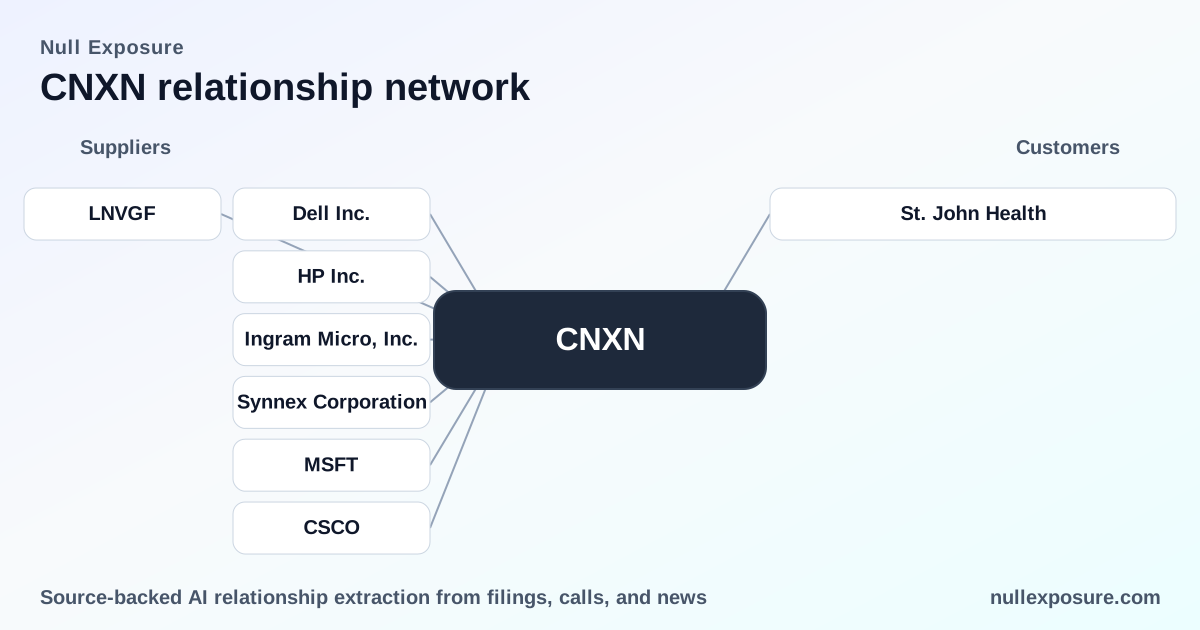
CNXN Customer Landscape: How PC Connection Converts IT Relationships into Revenue
PC Connection, Inc. (CNXN) operates as a value-added distributor and solutions integrator that monetizes through product resale margins, recurring software subscriptions and managed services, and professional services fees. The company acts as the principal on product sales while also delivering time‑based service revenue, selling into a diversified base of SMBs, medium‑to‑large enterprises, and government/education accounts across the United States. For investors assessing customer relationships, the critical axes are contracting posture (short‑term, largely open cancelable purchase orders), segment mix (hardware, software, services) and channel role (principal reseller plus service provider)—all of which determine revenue visibility, working capital exposure, and margin composition. For a deeper look at CNXN’s research and exposure analysis, visit https://nullexposure.com/.
A clear customer mix drives the economics
PC Connection’s go‑to‑market is straightforward: it purchases hardware and software from manufacturers and distributors, resells that inventory as the principal, and supplements product revenue with managed and professional services. In fiscal 2024 the company disclosed that roughly 42.2% of sales came from medium‑to‑large businesses, 37.4% from SMBs and 20.4% from government and education, which establishes a balanced exposure across counterparty types and reduces single‑segment concentration risk. That sales mix is a company disclosure from the fiscal year ended December 31, 2024.
These customer segments create predictable characteristics for monetization and risk:
- SMBs drive volume and transactional purchases, with higher sensitivity to economic cycles but relatively stable demand for replacement hardware and endpoint services.
- Large enterprises supply scale and higher average order value, often transacting through negotiated purchase orders but still under the company’s short‑term, cancelable backlog posture.
- Government and education provide contract and compliance tailwinds, but typically at tighter margins and longer procurement cycles.
The business model is capital‑intensive for a distributor: PC Connection reports gross revenue of approximately $2.89 billion TTM, with a profit margin near 3.02% and operating margin around 3.23%, reflecting the thin margins of product distribution offset by higher‑margin services. These figures are from the company’s most recent reported TTM metrics.
Contracting posture and what it means for investors
PC Connection’s contract profile is a defining operational constraint. The company states that “the majority of our backlog historically has been and continues to be open cancelable purchase orders,” which indicates a short‑term revenue visibility horizon and greater sensitivity to quarterly order flow. At the same time, the company is building recurring revenue through subscription‑based cloud products and software licensing, with cloud offerings sold on a subscription basis and on‑premise software sold as perpetual licenses or subscriptions per the company’s 2024 disclosures.
Investor implications:
- Short‑term contracts increase working capital and inventory management importance, since the firm carries product risk until delivery.
- Subscription and licensing growth enhances recurring revenue, improving predictability over time, but current contribution remains mixed given the still‑significant hardware mix.
- As principal in product sales, CNXN controls customer pricing and realizes gross revenue, which supports scale but also concentrates margin and inventory risk on the company balance sheet.
Relationship snapshot: St. John Health
St. John Health engaged PC Connection for IT transformation initiatives. According to a Traders Union news post dated March 9, 2026, PC Connection highlighted St. John Health in a webinar titled “St. John Health transforms care with IT solutions,” indicating a customer engagement in healthcare IT solutions during FY2026. (Traders Union, March 9, 2026)
How each relationship type is represented across the business
PC Connection classifies its customer relationships into three primary channels—Connection Business Solutions (SMBs), Connection Enterprise Solutions (medium‑to‑large businesses), and Connection Public Sector Solutions (government and education). This segmentation explains how the company engages different relationship types:
- SMBs and mid‑market relationships are handled through direct marketing and scale product offers, where transactional sales drive volume and after‑sale services build stickiness.
- Large enterprise customers generate higher ticket sales and cross‑sell opportunities for software and managed services.
- Public sector engagements involve compliance and procurement processes that can lengthen sales cycles but offer durable contract opportunities.
These are company‑level disclosures drawn from the company’s 2024 reporting on customer channels and geographic concentration.
Why relationship structure matters to risk and return
The combination of being the principal reseller, operating across hardware/software/services, and holding a short‑term cancelable backlog produces a distinct risk/return profile:
- Revenue volatility is higher than for pure‑play managed service vendors because a large portion of sales is transactional hardware. Investors should expect quarter‑to‑quarter swings tied to procurement cycles and vendor promotions.
- Margin expansion is achievable by growing services and subscription revenue, which are recognized over time and carry higher gross margins than hardware.
- Working capital and inventory management are persistent operational levers; the company’s structure places inventory and fulfillment risk on its balance sheet, affecting cash conversion cycles.
Financial maturity signals are positive but conservative: ROE of roughly 9.7% and ROA around 5.2% indicate stable, moderately efficient capital deployment for a distribution business, while a beta below 1 (0.86) suggests lower equity volatility versus the market.
Bottom line for investors evaluating customer relationships
PC Connection operates a diversified, U.S.‑centric customer base with balanced exposure across SMB, enterprise, and public sectors, sells primarily as a principal reseller, and is evolving toward more subscription and services revenue. The principal risks are short‑term contract visibility and inventory/working capital exposure; the principal opportunities are margin expansion through services and subscription mix shift. Investors focused on customer relationships should monitor subscription ARR growth, services gross margin expansion, and trends in backlog convertibility.
For a concise, investor‑grade view into CNXN’s customer exposures and relationship dynamics, review our analysis hub at https://nullexposure.com/.