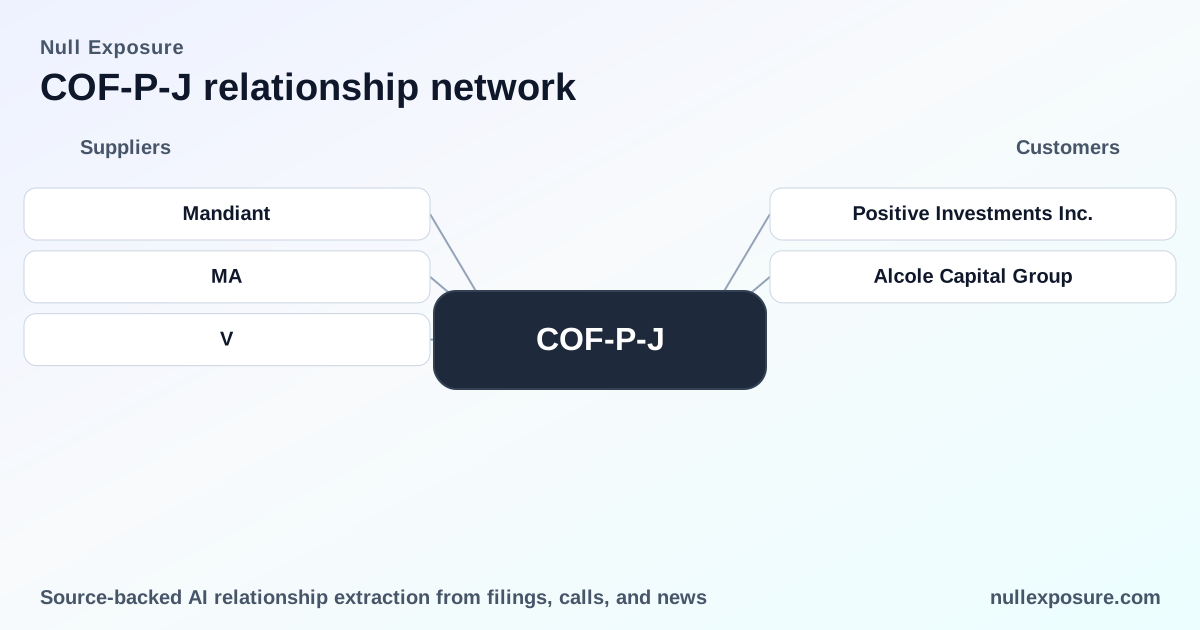
Capital One (COF-P-J): Customer Relationships that Drive Credit and Reputational Risk
Capital One Financial Corporation operates as a large, diversified U.S. bank holding company that originates and services consumer and commercial loans—primarily credit cards, auto loans and commercial real estate financing—and monetizes through net interest income, fees, and loan servicing / syndication. For investors in the COF-P-J preferred tranche, the relevant lens is how customer mix and counterparty relationships affect credit exposure, funding volatility, and franchise reputation.
If you want a structured view of these customer touchpoints and what they imply for risk-adjusted returns, visit https://nullexposure.com/ for the full mapping and source links.
How Capital One’s customer posture shapes the business
Capital One runs a standardized lending and deposit platform: large ticket commercial loans and consumer portfolios are managed with centralized underwriting, automated servicing, and securitization channels. This creates a contracting posture that is transactional and scalable, rather than bespoke, which supports margin efficiency but concentrates risk where loan books tilt toward specific sectors or counterparties.
- Concentration: The bank’s commercial lending plays expose it to episodic pockets of CRE and borrower clusters; single large relationships can move loss expectations at the margin.
- Criticality: As a systemically significant lender in certain U.S. credit verticals, counterparty disruptions or reputational events have outsized funding and franchise implications.
- Maturity and governance: Capital One is a mature incumbent with established underwriting frameworks, which reduces idiosyncratic execution risk but elevates the importance of oversight on large commercial credits and litigation exposures.
These company-level signals inform how to interpret the customer relationships below rather than attributing constraints to any single borrower.
Customer relationships that matter right now
Positive Investments Inc.
Capital One provided a $35.7 million refinancing package to Positive Investments to refinance 17 apartment properties in Southern California, signaling direct CRE exposure through mortgage lending to private real estate operators. Source: Los Angeles Business Journal report (March 2026) — https://labusinessjournal.com/real-estate/positive-investments-secures-36-million-refinancin/
Alcole Capital Group
Local brokerage Alcole Capital Group worked with Capital One to secure financing for a Culver City apartment building, illustrating Capital One’s role as an arranger/credit provider in mid-market multifamily deals. Source: Los Angeles Business Journal (reporting on the transaction; cited 2026) — https://labusinessjournal.com/real-estate/culver-city-apartment-building-lands-20-million-lo/
Trump Organization
A lawsuit filed in March alleges that Capital One closed hundreds of Trump-related accounts in 2021, accusing the bank of politically driven de‑banking; this matter is a reputational and legal vector that can influence regulatory scrutiny and customer flows. Source: Banking Dive coverage (May 2026) — https://www.bankingdive.com/news/capital-one-discover-costs-integration-technology-fairbank-4-point-3-billion-loss/753839/
WaverVanir International LLC
WaverVanir is reported to be opening an institutional trustline with Capital One, an indicator that the bank continues to attract institutional cash-management and trust relationships, supporting deposit diversification and fee income. Source: TradingView post (May 2026) — https://www.tradingview.com/symbols/BSESOF-CFX/ideas/
What these relationships collectively signal for investors
- Credit exposure to U.S. multifamily CRE is tangible. The Positive Investments and Alcole transactions confirm active lending in Southern California multifamily, which is a concentrated, cyclical exposure for the commercial book. That increases sensitivity to local market stress and rent cycles.
- Reputational/legal risk is a real earnings lever. Litigation tied to the Trump Organization relationship elevates regulatory and reputational risk, which has the potential to affect customer acquisition and retention costs and provoke supervisory attention.
- Deposit and treasury diversification remains a counterbalancing force. Institutional trustlines such as the WaverVanir relationship are constructive: institutional cash services and trust business generate low-cost, sticky deposits and noninterest fee revenue, improving funding stability for preferred equity holders.
- Transactional lending posture reduces idiosyncratic negotiation risk but increases sector concentration sensitivity. Capital One’s standardized credit playbook supports scale but places the onus on portfolio mix and underwriting cycle timing to control loss incidence.
Risk factors to monitor for COF-P-J investors
- CRE portfolio concentration and regional risk — monitor delinquencies and valuations in Southern California multifamily markets tied to the Positive Investments and Alcole-style credits.
- Legal and reputational outcomes — track the Trump Organization suit and any regulatory follow-ups; these events can compress franchise value and raise capital or compliance costs.
- Deposit stickiness vs. institutional flows — follow trends in institutional trustlines versus retail deposit attrition; a shift toward wholesale funding would alter liquidity dynamics relevant to preferred holders.
- Underwriting cycle and loss recognition — as Capital One scales commercial book transactions, watch provisions and charge-offs in quarterly filings for evidence of stress transmission.
For a searchable index of these customer relationships and direct source links, see https://nullexposure.com/.
Bottom line: sharpen focus on pockets, not headlines
Capital One’s customer relationships show a dual profile: active commercial real estate lending that raises concentration risk, paired with ongoing institutional treasury relationships that support funding diversity. Investors in COF-P-J should prioritize monitoring regional CRE performance, litigation developments, and deposit composition—these operational levers will determine whether preferred income remains protected or faces compression from credit or reputational shocks.