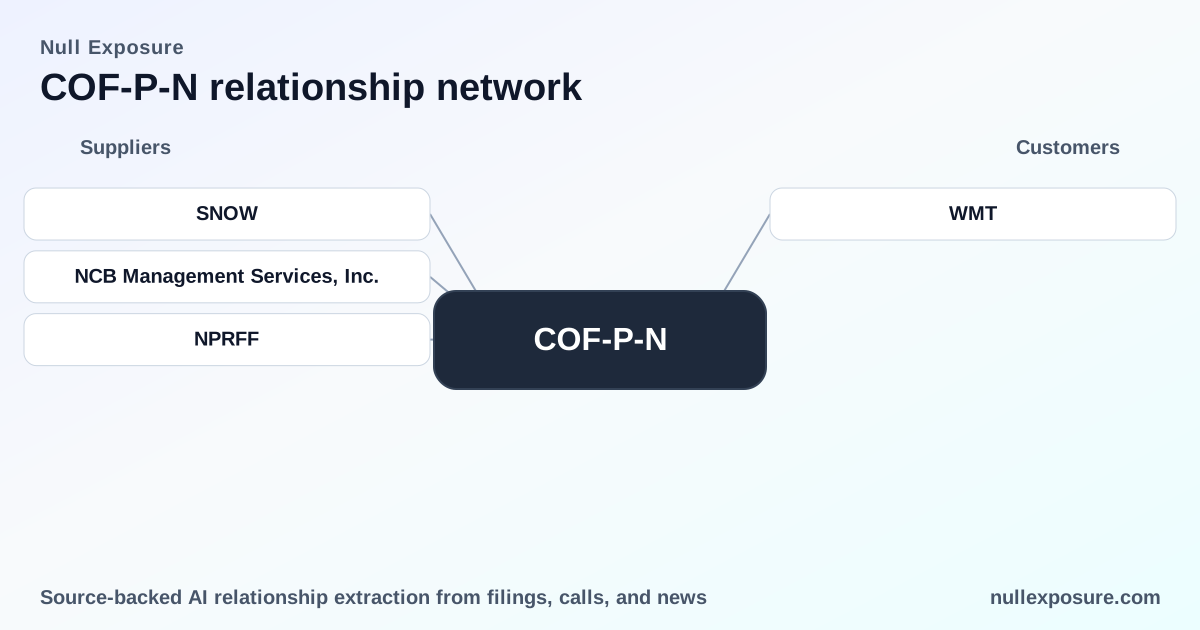
Capital One (COF-P-N) — Customer Relationship Spotlight: Walmart Lawsuit and What It Means for Investors
Capital One operates primarily as a credit card issuer and consumer bank, monetizing through interest income, interchange and fees, and the economics of co-branded card partnerships where merchant partners supply customer access and Capital One supplies underwriting, servicing, and payment rails. For holders of COF‑P‑N preferred shares, the credit and reputational profile of the parent bank is the material driver of value; customer disputes with large partners translate directly into operational strain and potential earnings pressure for the issuer. If you track counterparty concentration and contract durability as drivers of downside risk, this relationship merits immediate attention. For a broader view of our coverage and tools, visit https://nullexposure.com/.
Why a Walmart dispute matters to capital markets
Walmart is among the largest co‑brand partners any bank can have in the U.S. market, delivering scale, transaction volume, and a steady stream of receivables for the issuer. When a dominant partner sues an issuer over servicing and operational performance, the consequences are threefold: reputational damage that affects new account growth, short‑term operational cost and remediation, and potential contractual changes that reduce future margin or remove the partnership altogether. Those outcomes impair the bank’s return on assets and can pressure both common and preferred instruments through either reduced earnings or higher funding costs.
The recent public reporting of litigation tied to the Walmart cobranded card program is therefore a strategic signal, not an idiosyncratic complaint. The dispute highlights concentration risk and service criticality in Capital One’s operating model: a small number of large merchant partners control outsized flows of consumer payments and card originations, while the issuer holds responsibility for customer servicing and regulatory compliance.
The relationships reported in public coverage
The dataset includes two discrete mentions—both pointing to the same incident—in Digital Transactions coverage of a Wall Street Journal‑sourced story. Each mention is listed separately in the results and is summarized below.
-
Digital Transactions reported on March 9, 2026 that Walmart sued Capital One, alleging failures in servicing cobranded cardholders and citing The Wall Street Journal’s reporting on the dispute. The article frames the issue as a contract and service‑quality dispute tied to the bank’s card servicing for Walmart customers. Source: Digital Transactions, citing The Wall Street Journal, March 2026.
-
A second entry in the results is a duplicate mention of the same Digital Transactions piece, recorded with the same March 9, 2026 first‑seen timestamp. The duplicate confirms that multiple news aggregations captured the same WSJ‑sourced development. Source: Digital Transactions, citing The Wall Street Journal, March 2026.
What the public dispute says about Capital One’s operating posture
With no explicit constraint excerpts provided in the available feed, the observable signals operate at the company level. From the Walmart litigation, investors should conclude these characteristics of Capital One’s model:
-
Contracting posture: outsourcer with accountability. Capital One underwrites and services card accounts while large merchants supply customer access; the bank carries operational responsibility for customer experience and compliance under co‑brand agreements.
-
Concentration risk: elevated. A relationship with a top‑tier merchant like Walmart concentrates transactional volumes and brand exposure; disputes therefore carry outsized economic and reputational consequences.
-
Criticality of servicing: high. The litigation centers on servicing quality, underlining that customer‑facing operations (call centers, dispute resolution, billing) are strategic functions whose failures trigger legal and contractual escalation.
-
Maturity and counterparty sophistication: advanced. The partner is a global, sophisticated merchant with the resources to litigate and the incentive to protect its customer proposition, increasing the likelihood that contractual remedies will be pursued aggressively.
These characteristics combine to create a risk profile where operational execution is a financial lever: poor servicing increases legal costs and can force renegotiation of fee structures, while sustained execution drives steady interchange and fee income.
Risk and impact vectors for preferred shareholders
Preferred holders focus on coupon security and the issuer’s capital strength rather than day‑to‑day earnings volatility. Still, the Walmart dispute affects preferred risk through clear channels:
-
Earnings pressure: If Capital One is required to remedy servicing problems, provision for remediation, settlements, or contract concessions will reduce operating income and could compress common equity, indirectly affecting leverage and preferred cushion.
-
Funding and confidence: High‑profile litigation undercuts investor confidence in governance and operations; that can raise funding spreads for a bank and increase the market price sensitivity of hybrid instruments.
-
Regulatory attention: Large partner disputes that touch consumer servicing often attract regulatory scrutiny, which raises compliance costs and can result in enforced remediation programs that are costly and persistent.
Investors should track litigation disclosures, reserve build‑ups in regulatory filings, and any changes to the Walmart cobranded program’s economics as the primary near‑term indicators of material impact.
Near‑term catalysts and what to watch
-
Court filings and settlement announcements. Legal pleadings and settlement terms will reveal the scale of potential remediation and whether contract termination or renegotiation is likely.
-
Capital One investor filings. Quarterly and annual reports will show reserve changes, litigation accruals, or adjustments to card portfolio performance metrics.
-
Partner disclosures. Any statements from Walmart about continuity of the card program, replacement sourcing, or interim measures will indicate the partnership’s durability.
-
Operational KPIs. Customer satisfaction, dispute rates, and servicing KPIs disclosed in earnings calls are leading indicators of whether the problems are systemic or episodic.
For ongoing monitoring and comparative relationship analytics, see the resources at https://nullexposure.com/.
Bottom line: prioritize exposure and execution
The Walmart litigation is a material event for Capital One’s customer footprint because it exposes concentration and execution risk in a core revenue channel. For COF‑P‑N investors, the immediate focus should be on litigation outcomes, reserve impacts, and any contractual concessions. These items directly affect bank earnings and the capital buffer that protects preferred instruments.
Bold takeaway: Operational failures in a single, large co‑brand relationship can convert into multi‑quarter financial and reputational damage; preferred holders should treat partner disputes as systemic risk events rather than isolated headaches. Continue to follow public filings and partner communications for definitive outcomes and financial disclosures that will determine the magnitude of long‑term impact.